All Quiet on the Western Front (2022)
Director: Edward Berger
Screenwriters: Edward Berger, Lesley Paterson, Ian Stokell
Starring: Felix Krammerer, Albrecht Schuch, Daniel Brühl, Moritz Klaus, Adrian Grünewald, Aaron Hilmer, Edin Hasanovic, Devid Streisow, Andreas Döhler, Sebastian Hülk
Erich Maria Remarque’s 1929 novel Im Westen nichts Neues—widely known in English as All Quiet on the Western Front—has long been a defining account of the First World War’s human cost. In 1930 Lewis Milestone adapted it for Hollywood and won Best Picture at the Academy Awards. Now Edward Berger, acclaimed for the television series Deutschland 83, delivers the first German-made feature film adaptation, produced for Netflix. Berger’s version brings a contemporary cinematic language and stark realism to Remarque’s story while remaining faithful to its anti-war heart.
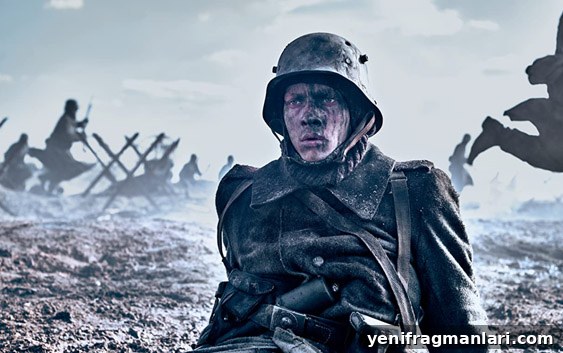
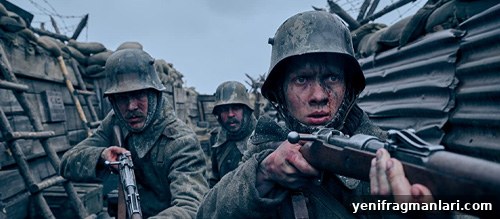
The film follows Paul Bäumer (Felix Krammerer), a 17-year-old schoolboy who, along with his classmates, is swept into patriotic fervor and enlists in the German army in 1917. They are soon dispatched to the Western Front in France, where the daily struggle to survive in waterlogged trenches, mud and shell-shocked silence replaces youthful innocence with brutal experience. From the opening sequence Berger throws the viewer into the chaos: a panoramic alpine tableau dissolves into a battlefield littered with bodies, frost and dust stained by vivid pools of blood, and the shriek of machine-gun fire cutting through an empty field.
Unlike the 1930 film, which begins with youthful optimism and moves toward disillusionment, this adaptation plunges audiences into the immediacy of trench life from the start. The film’s opening battle is unrelenting and unapologetic, then gives way to a stark black title card that sets the tone for the remainder of the story. Berger’s camera work—led by cinematographer James Friend—balances sweeping visuals with intimate close-ups, creating a textured, immersive experience.
One of the most chilling lines in the film comes early, when a schoolmaster addresses his impressionable pupils, declaring, “The Kaiser needs soldiers, not children.” That blunt statement captures how entire generations were conscripted into slaughter. Berger’s cast, while slightly older than their characters, convincingly embody adolescent vulnerability. Facial blemishes, tentative laughter and nervous bravado make them believable as boys thrust into horrific circumstances.
Berger honors Remarque’s panels of quiet detail that carry as much weight as the film’s violent set pieces. A striking image early in the film shows a heap of soldiers’ footwear, stripped from the dead and recycled for the next wave of recruits—an economical, haunting visual that speaks to the industrial scale of loss. Moments of fragile beauty—a snow-dusted field, a fox and her cubs taking refuge—offer brief respites, amplifying the tragedy of interrupted life.
The film does not shy away from the moral and emotional vulnerability of soldiers. There are scenes of stark tenderness, like Paul reading aloud a letter from Kat’s wife to his illiterate friend Katczinsky (Albrecht Schuch), while the two sit exposed and exhausted. These quieter moments reveal the bonds of friendship and the human capacity for care even amid dehumanizing conditions.
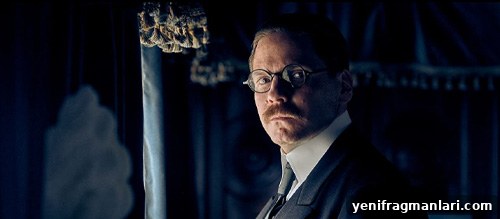
Telling the story from a German perspective allows Berger to include political dimensions often absent from English-language versions. Daniel Brühl appears in a supporting role as Matthias Erzberger, a negotiator who travels to meet Allied representatives in the final week before the November 1918 armistice. This subplot introduces a time-sensitive moral question: can an agreement be reached in time to spare soldiers still fighting, and at what cost to the nation?
Berger’s portrayal of the German high command highlights a stark contrast: generals enjoying comfortable meals, wine and cigars in occupied châteaus while the rank and file endure shelling and starvation at the front. That inequality is a central critique in Remarque’s work and remains potent here, though some sequences—such as an extended tank-and-flamethrower assault—occasionally feel more orchestrated than the otherwise gritty, naturalistic combat scenes. Even so, the film never glamorizes battle. Intense action is quickly followed by harrowing, intimate aftermaths—most devastatingly when Paul is forced into close-quarters killing and must sit beside a dying enemy, listening to the prolonged agony of a life slipping away.
All Quiet on the Western Front joins a lineage of recent war cinema that seeks to confront audiences with an unvarnished view of combat, alongside films like Saving Private Ryan and 1917. Berger’s adaptation is both respectful to Remarque’s anti-war message and innovative in its storytelling, offering fresh perspective through its German-language lens. Its power lies not only in cinematic spectacle but in its persistent humanism—a plea that such futile, violent conflicts should never again consume generations.
Score: 19/24