
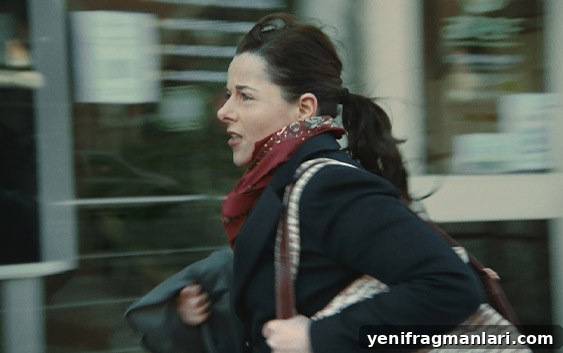

Full Time (2021)
Director: Eric Gravel
Screenwriter: Eric Gravel
Starring: Laure Calamy, Anne Suarez, Geneviève Mnich, Cyril Gueï
Eric Gravel’s Full Time premiered at the Venice Film Festival in September 2021 and has since completed its festival circuit, with one of its later screenings taking place at the 2022 Edinburgh International Film Festival. The film centers on Julie, played by Laure Calamy, a single mother juggling two demanding roles: working as a hotel cleaner at a luxury establishment while competing for a better, life-changing job opportunity. Julie’s week becomes a high-stakes balancing act when a national transit strike complicates every element of her routine.
On its surface, Full Time reads like a restrained, realist drama, yet Gravel’s execution blends intimate character study with tense, propulsive cinematography. The screenplay sketches the many pressures that constrain Julie: the need to keep her current employment, overdue alimony from her estranged husband, the scramble to secure reliable childcare, and the looming job interview that could change everything for her family. These narrative threads converge to portray a woman stretched to her limits, each new obstacle amplifying her vulnerability.
Despite the film’s engagement with social conditions, the strikes themselves remain a background element rather than a political focal point. They are deployed primarily as a plot device to explain delays and heightened stress, but the script rarely allows characters to debate or express clear positions about the strike. This omission leaves a narrative gap: while other political and social pressures are confronted head-on, the transit stoppage functions more as circumstance than as a subject of ethical or social scrutiny.
Julie is drawn with nuance and compassion. Rather than presenting her as a flawless heroine, the screenplay acknowledges her imperfections. She lies at times, makes questionable choices, and takes shortcuts when she feels cornered. These traits do not diminish our sympathy for her; instead, they make her more human and underscore the desperation that can arise when someone feels they have no other options. Calamy’s performance conveys a steadfast determination—by the midpoint of the film she faces situations that would plausibly break many people, yet she persistently keeps herself composed, driven by the need to secure a better future for her children.
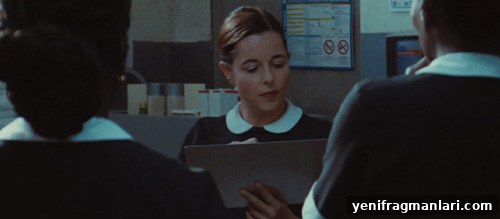
The film’s emotional core emerges from the bittersweet nature of Julie’s pursuit. If she fails to get the new job, her family remains trapped in financial strain. If she succeeds, the role may demand more hours and further reduce the time she spends with her children. Gravel understands this cruel trade-off and frames it as a larger commentary on systems that force parents—particularly single mothers—into impossible choices. The story is not didactic; it quietly exposes how social and economic structures shape private lives and erode simple desires like adequate time with one’s children.
What elevates Full Time beyond a straightforward drama is its visual approach. Cinematographer Victor Seguin employs a largely handheld, documentary-influenced style that plunges the audience into the crowded, frenetic world of Parisian rush hour. The camera moves with an urgent intimacy, weaving through train stations and commuter crowds so that viewers experience the claustrophobia and logistical chaos Julie endures each morning. This kinetic visual strategy, combined with precise editing, transforms routine cityscapes into an environment of mounting pressure. The result feels almost like a psychological thriller: the stakes are ordinary, but the filmmaking intensifies every moment into something suspenseful and immediate.
Gravel’s direction and the film’s production choices create sustained empathy. By placing us in the midst of Julie’s commute and daily labor, Full Time encourages us to inhabit the rhythms and anxieties of a life under constant strain. The film neither simplifies nor sentimentalizes its protagonist; instead, it insists on her complexity and resilience. The tension between practical survival and emotional cost remains with the viewer after the credits, a reminder of the compromises many people—especially single parents—endure.
While Full Time tells a relatively contained story, it does so with clarity and force. The film portrays the extraordinary burden of ordinary tasks and the quiet heroism present in ordinary people. Through an arresting central performance, immersive camerawork, and a script that respects its characters’ flaws and strengths, Eric Gravel delivers a compact, powerful exploration of parenthood and labor. The film invites a renewed appreciation for the sacrifices caregivers make and the social conditions that shape those sacrifices.
Score: 19/24