
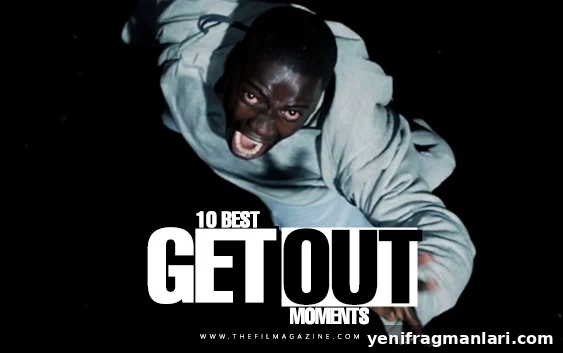
Get Out (2017) marked Jordan Peele’s impressive directorial debut. Known primarily for his work in comedy—whether as a creator of sketch series or a voice actor—Peele surprised audiences by delivering a film that blends horror, suspense and sharp social commentary. Get Out, followed by Peele’s later films, demonstrates his ability to use genre filmmaking to explore racial dynamics, cultural anxieties and systemic bias while still crafting a taut, memorable thriller.
The story follows Chris Washington (Daniel Kaluuya) and Rose Armitage (Allison Williams), a couple preparing for an important step in their relationship: meeting Rose’s family. The Armitages are an affluent white family who live in a secluded area of upstate New York. Rose assures Chris that her family will be welcoming and that his race will not matter. From the moment Chris arrives, however, he senses an unsettling atmosphere in the house and in the town—small gestures, endless curiosity and oddly polite behavior that all hint at something far more sinister than mere awkwardness.
Peele’s film is not dependent on constant jump scares or explicit gore; instead, it builds dread through implication, performance and carefully placed reveals. The horror here is psychological and social: as the plot advances, the movie confronts blunt and uncomfortable forms of racism while blurring the line between satire and painful reality. The film’s restraint makes it scarier precisely because it lingers in the spaces where everyday prejudice becomes predatory.
This feature is a curated list of the most impactful and unforgettable scenes from Jordan Peele’s landmark film: the 10 Best Get Out Moments.
10. “Consider This Handled”
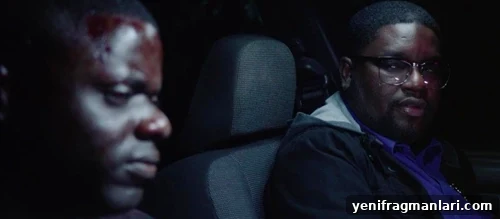
Daniel Kaluuya delivers a raw, physically truthful performance in the film’s closing beats, exhausted and shaken as he collapses into the relative safety of his friend’s car. Rod (Lil Rel Howery) provides the film’s necessary comic relief, bursting into the scene with brash confidence and the line, “consider this shit motherfucking handled.” The line lands as an emotional release—funny and triumphant—yet it leaves a sour aftertaste. Peele closes the film with a bittersweet reminder that rescue and resolution are partial, and the larger social issues the film raises may remain unresolved.
9. “You Know I Can’t Give You the Keys, Right, Babe?”

As the climax approaches, the urgency for Chris and Rose to leave intensifies. Chris suspects Rose’s involvement in the strange events unfolding at her family home but must hide his suspicions while she still holds the car keys. Allison Williams’ performance shifts from tearful sincerity to cold composure as she says, “you know I can’t give you the keys right, babe.” That line, delivered with unsettling calm, is the moment Rose’s duplicity becomes unmistakable. Her emotionless stare is one of the film’s most chilling images.
8. The Brother
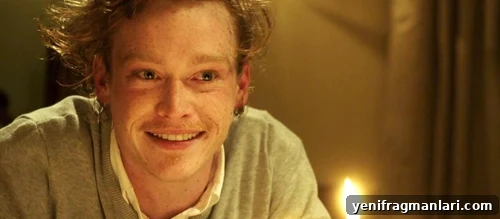
Jeremy (Caleb Landry Jones) bursts into scenes with a volatile unpredictability—grinning, impulsive and unnerving. His crude observations and aggressive curiosity about Chris’ race make him an immediate focal point of unease. Jeremy functions as the most overt face of bigotry in the household and, simultaneously, as a deliberate misdirection. The audience’s attention on him amplifies the shock of later revelations, making those moments land with greater force.
7. The Opening
The film begins with a tense prologue: a man walking alone at night, a car slowing to a stop, and a sudden, brutal attack. The sequence uses classic horror signals—nighttime isolation, an ominous score, a lurking vehicle—to put viewers on edge. Yet Peele’s opening is a clever inversion: it primes the audience to expect one type of horror but then redirects that expectation into a different, more insidious kind of threat. This initial misdirection intensifies the film’s subsequent psychological twists.
6. The Party
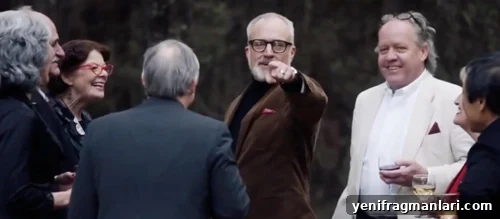
At the Armitage family’s yearly gathering, Chris finds himself presented to an array of white upper-middle-class guests who treat him like an object of fascination. Their polite-but-invasive questions about his physical ability, artistic talent and sexual history read less like curiosity and more like appraisal. Small details—overly enthusiastic compliments, awkward cultural references, and the way Rose smiles—become clues to the household’s deeper intentions. On repeat viewings, these moments reveal how Peele layers foreshadowing throughout the scene.
5. “Get Out”

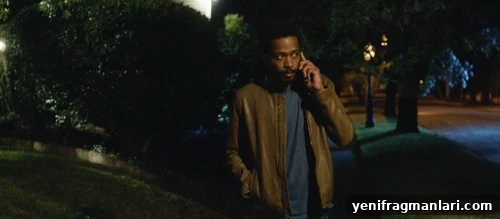
As the garden party reaches a fever pitch, Chris spots Andre (LaKeith Stanfield), the first Black person outside the Armitage household he has seen nearby. Relief floods Chris—until he notices Andre’s blank demeanor, odd choice of partner and unsettling lack of cultural awareness. Chris snaps a photo to send to his friend Rod; the camera flash jolts Andre into motion. Andre lunges and screams the film’s title—“Get out!”—a loaded moment that serves as both literal warning and metaphorical alarm. If only Chris had heeded it sooner.
4. Antlers
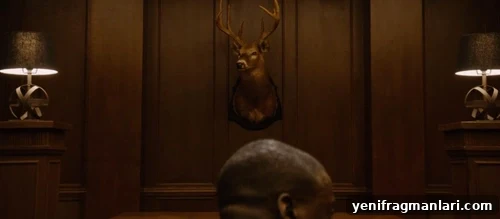
One of the film’s most visceral moments: Chris uses a stag’s antlers in a sudden, brutal act of self-defense. The violence is startling not only for its intensity but for its symbolic resonance. In a scene where Dean Armitage spouts condescending justifications about race and a supposed “plague of deer,” his violent end at the hands of Chris feels like a darkly poetic retribution. The sequence subverts expectations by aligning audience sympathy with the protagonist’s desperate actions.
3. TSA to the Rescue
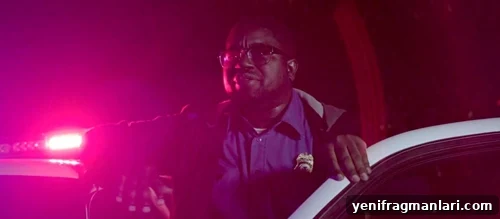
After an exhausting and bloody confrontation, Chris sits handcuffed and defeated beside a seemingly lifeless Rose. As sirens approach, the moment evokes the film’s opening fear of police presence and the real-world dangers Black men face when seen near injured white people. Chris lifts his hands slowly, resigned to what could happen next. Instead of law enforcement, the car door opens and Rod arrives in a clearly marked vehicle—“Airport”—and rescues his friend. The unexpected arrival flips a grim expectation into a cathartic release.
2. Armchair Fluff

Chris is restrained in a chair, forced to watch an old video that explains the Armitage family’s frightening project. His nervous habit of scratching—a tiny, human tic—becomes a crucial detail. Even in extreme terror, Chris remains observant and resourceful; he recognizes that certain sounds and motions will alert his captors. The reveal of what he does next is satisfying and clever, turning a small, personal gesture into a pivotal act of survival.
1. Hypnosis
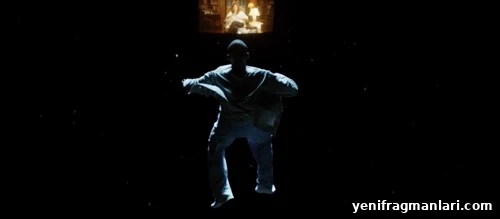
One of the film’s most memorable and unsettling sequences occurs when Missy Armitage (Catherine Keener), a seemingly compassionate therapist, hypnotizes Chris under the guise of helping him quit smoking. Ignoring his discomfort, she probes his traumatic memories and then commands him to “sink” into a mental state the film dubs the “Sunken Place.” The hypnosis scene is expertly staged: intimate, invasive and chilling, it establishes the film’s core metaphor about power, control and the erasure of agency. This moment shifts the film into a new register, blending psychological horror with sci-fi elements and revealing the deeper mechanics of the plot.
Which scenes from Jordan Peele’s directorial debut do you think are the most impactful or inventive? Share your thoughts and favorite moments, and consider revisiting the film to notice how carefully Peele constructs tension, character and commentary throughout. Get Out remains a film that rewards close viewing and thoughtful discussion.