
Intimacy, Estrangement, and the Crow: Chloé Robichaud on her Film, TWO WOMEN
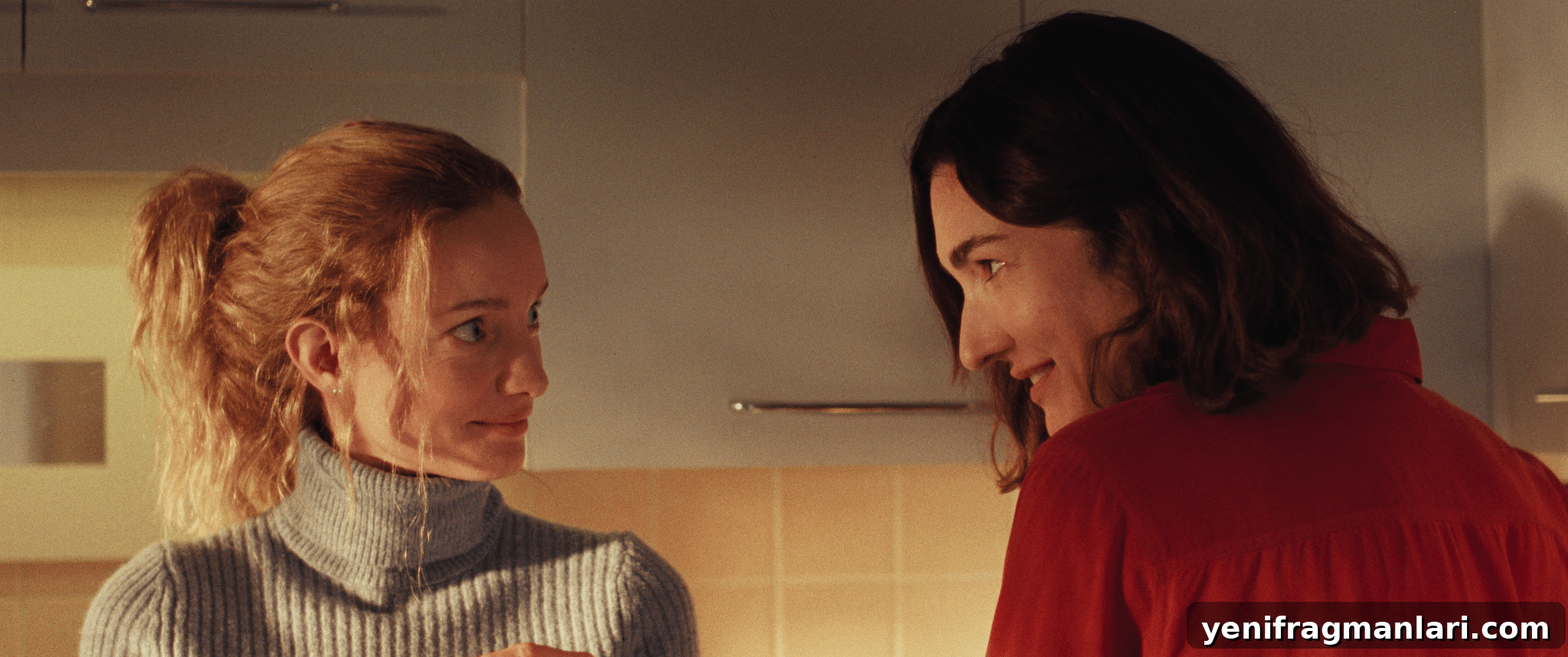
The opening shot of Two Women settles on drifting snow, instantly placing the film in a recognizable Quebec winter. Inside their homes, women watch the world through windows and from behind doors — contained, careful, and inward-looking. For director Chloé Robichaud, that quiet tableau signals the film’s central concern: distance. Two Women is less a melodrama than a study of emotional separation — between partners, neighbours and the selves people thought they would become.
Making its Alberta premiere at CUFF 2025, Two Women (Deux femmes en or) reimagines Claude Fournier’s 1970 comedy Two Women in Gold for the present day. Where Fournier’s original shocked with frank depictions of sex and nudity, Robichaud’s version turns inward. It’s not designed to shock but to examine the private restlessness that lives beneath everyday routines. While Robichaud couldn’t attend CUFF because she was shooting a new project in Toronto, she spoke over Zoom about her approach, the film’s visual language, and the unexpected role of a crow’s call within the story.
Check out 10 Must-Watch Films at CUFF 2025
Tickets forTwo Womenat CUFF 2025 Here
Revisiting a Classic in Two Women in Gold
The project began when screenwriter Catherine Léger suggested adapting her stage version of Two Women in Gold for the screen. Robichaud, who had first encountered the original while in film school, was immediately intrigued. She remembers the earlier film as refreshingly bold — a sort of Quebec New Wave moment that gave housewives a voice about sex and desire in ways that felt radical for its time.
Robichaud’s film respects that spirit but reframes it for contemporary life. Desire and dissatisfaction remain central themes, but the story now lives inside the complexities of modern womanhood. Rather than courting scandal, the film explores emotional estrangement and the subtle social forces that shape intimate lives.
Adapting the Film to a Modern Context
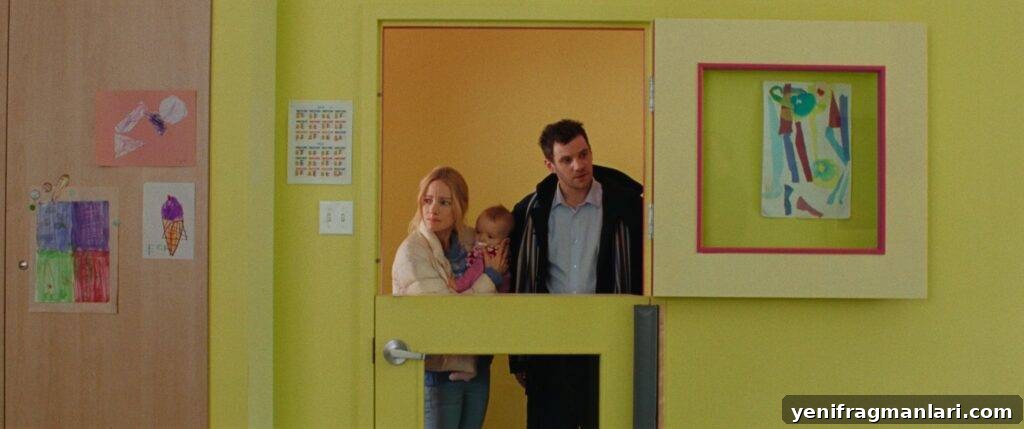
One challenge for Robichaud and Léger was updating the characters’ sense of being “at home.” In 1970 the protagonists were housewives; now the idea of home is more complicated. Florence, played by Karine Gonthier-Hyndman, is on leave from work and struggling with depression. Violette, played by Laurence Leboeuf, is new to motherhood. Robichaud, who has young children herself, describes the isolation many women feel today: trying to be present while feeling inadequate, alone, or invisible.
Importantly, the film avoids reductive judgments. The women are not sanctified or vilified; they are caught in expectations and routines they have internalized. Conversations around consent and agency — sharpened by movements like #MeToo — inform the film’s perspective, particularly in how women’s experiences can be misinterpreted or diminished by others. Here, Robichaud insists on preserving female subjectivity.
Infidelity in the film is treated as an event within a wider process of self-discovery rather than a moral verdict. It becomes one movement in a larger attempt to question everyday norms and the roles people are expected to play.
Framing as a Metaphor for Separation
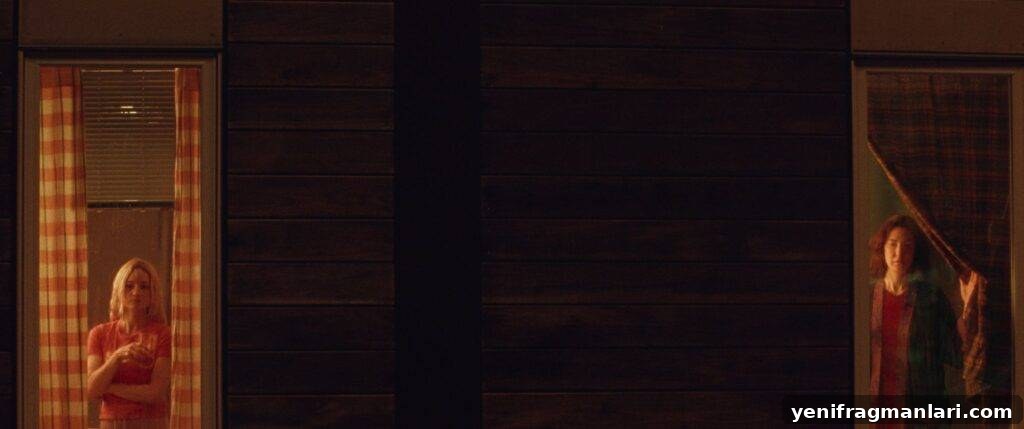
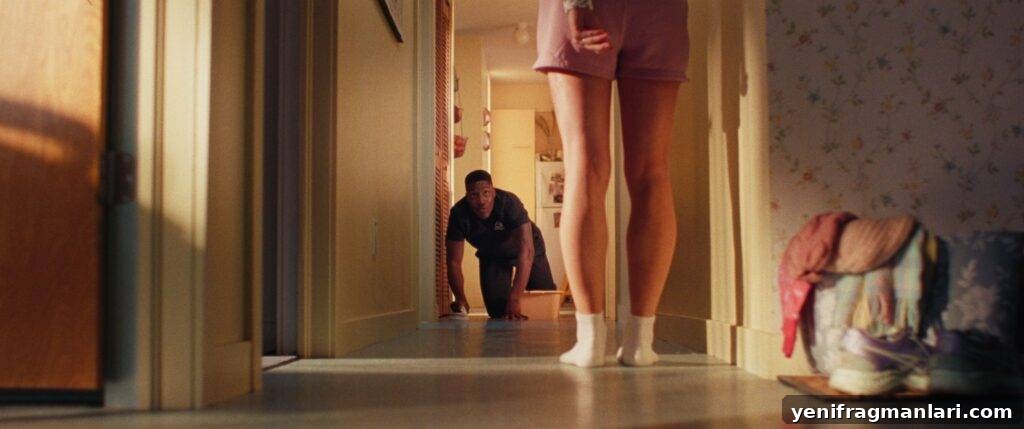
Visually, Two Women is a film of divisions. Robichaud and cinematographer Sara Mishara frequently use doorways, windows and balconies to create natural separations that mirror emotional distance. Characters appear together in shared spaces yet remain isolated from one another: seen but not touched, near but not present.
The architecture becomes a metaphor — compact, communal living that nonetheless feels claustrophobic. Small details reinforce this theme: a hamster named Florence running constantly in its cage functions as a bleak, almost darkly comic symbol of repetition and entrapment. The co-op building looks friendly from the outside but feels constraining from within.
The “Crow” in Two Women
One of the film’s most striking devices is a recurring crow sound that starts as a single note and gradually layers into moments of pleasure and longing, eventually becoming communal. Originating in Léger’s play, the motif worried Robichaud at first — she did not want it to veer into surrealism. But the crow evolved into a powerful metaphor: it stands for the desires the characters refuse to hear in themselves.
At first, each woman hears the sound through the thin walls of their shared building and assumes it comes from the other. The sound becomes an emblem of misreadings and projections — a shared, coded expression of hidden yearning. As the film progresses, the crow’s call blends with sighs and moans until it no longer belongs to a single body; it becomes a collective expression of longing. Robichaud later added a visual of crows in flight as a late, decisive image — a small act of liberation, signaling the opening of something previously closed.
Subverting Expectations of Sex and Nudity
Robichaud resists the typical cinematic treatments of nudity. The camera does not cater to the male gaze. Instead, moments of exposure are intimate, specific and purposeful: a mother pumping milk, a woman confronting her reflection and asking, “Is this my body?” These images prioritize female subjectivity and the estrangement women can feel from their bodies after life changes like childbirth.
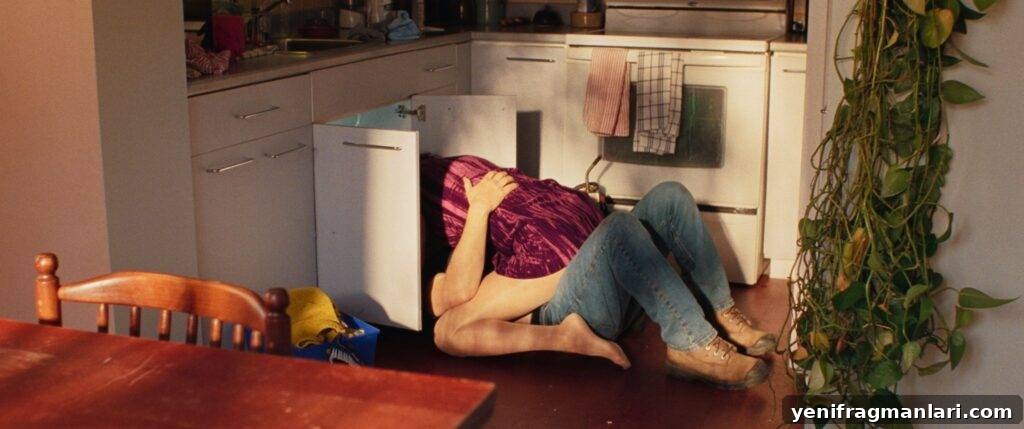
Sex scenes are handled with care and precision. Choreographed with an intimacy coordinator, they emphasize sensation, awkwardness and the desire to be seen rather than erotic spectacle. Small comic moments — such as Florence sniffing a delivery man — operate alongside genuine emotional ache, blending humor and need into a complex portrait of yearning. The film is less about climax and more about the human search for closeness.
A Broader Disconnect: French vs English Canadian Cinema
Two Women’s screening at CUFF highlights another theme in Robichaud’s thinking: the ongoing gap between English- and French-language cinema in Canada. Films made in one linguistic community often struggle to reach the other, not because of quality but because of distribution and cultural divides. Festivals like CUFF play a bridging role, helping to bring Francophone work to Anglophone audiences outside Quebec.
Working with distributor Maison 4:3, Robichaud hopes the film will reach beyond provincial boundaries. “It’s a series of small steps,” she says, “but getting these films seen across Canada is an important conversation.”
Final Thoughts on Two Women
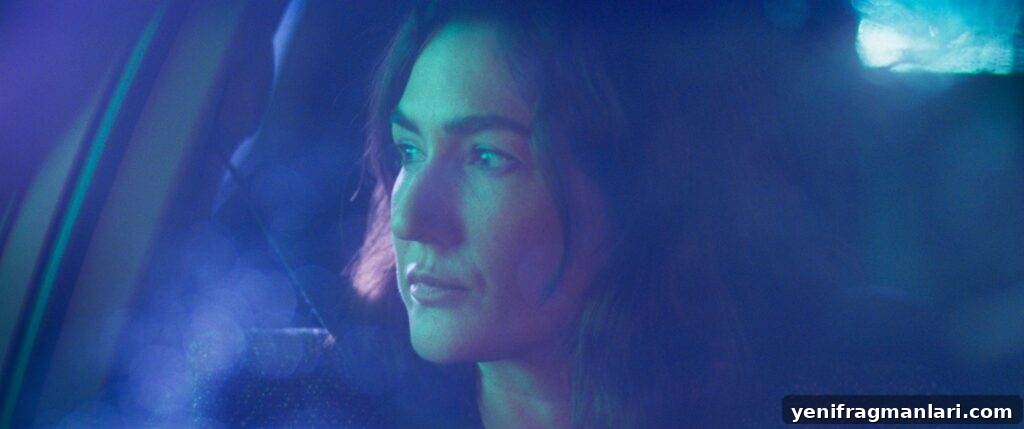
Robichaud emphasizes that Two Women is not prescriptive. It invites different emotional responses: laughter, sorrow, recognition, even discomfort. The film raises questions about connection, fulfillment and the choices that shape ordinary lives rather than offering neat answers. It opens a window rather than insisting you climb out — and for many viewers, that glimpse is what lingers long after the credits roll.
Two Women Trailer
Read More:
- CUFF
- Interviews
- Film Reviews