
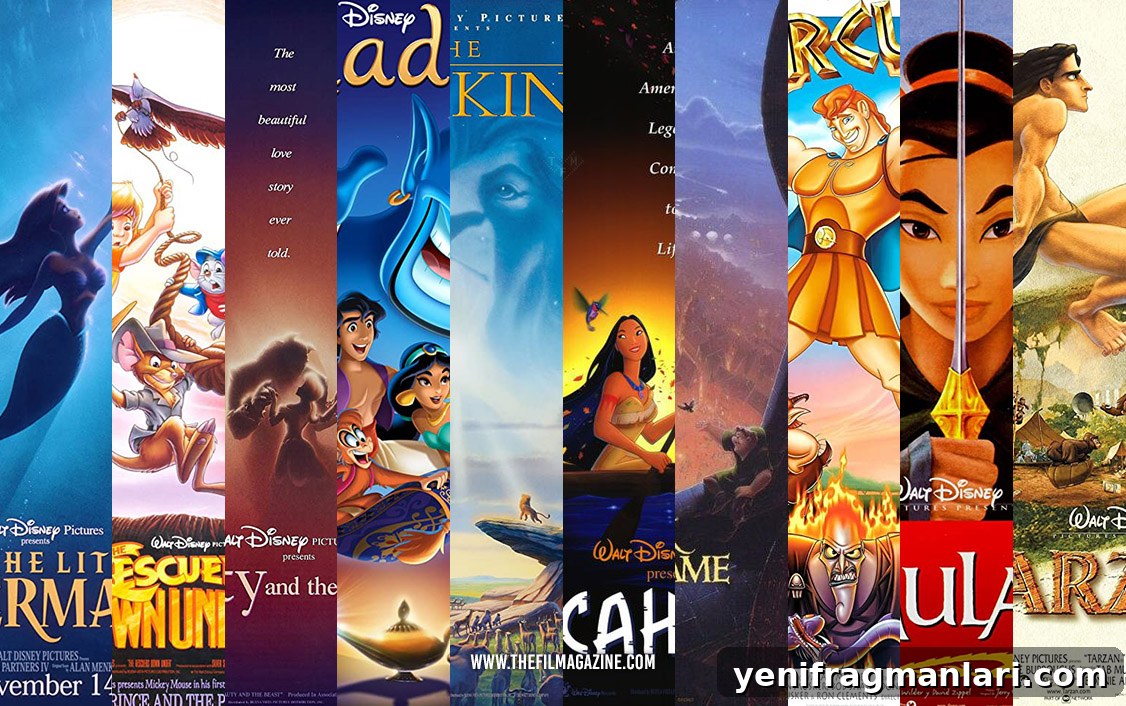
Once upon a time — well, in 1989 — Walt Disney Animation stood at a crossroads. The studio that had dominated feature animation since the 1940s was emerging from a long creative slump. Thanks in large part to directors and writers like John Musker and Ron Clements, the studio soon entered a decade of revival: bold, inventive, emotionally rich films that redefined animated storytelling and produced instantly recognizable characters, memorable songs and a renewed cultural influence.
Below is a concise, chronological ranking of Disney’s feature output during the Disney Renaissance (1989–1999). The list highlights each film’s significance, what made it visually or technically notable, and the moments that lingered long after credits rolled.
Honourable mention: A Goofy Movie (1995)
Although produced during the Renaissance era, A Goofy Movie was developed by a secondary Disney team as an extension of Goofy’s television adventures and didn’t receive the full studio backing or budget of the higher-profile features. It remains a warm, honest portrait of family and growing up—resonant for many millennials—yet it lacks the broad cultural impact of the era’s flagship films.
10. Pocahontas (1995)
Loosely inspired by historical figures, Pocahontas follows the daughter of a Powhatan chief who forms a connection with an Englishman and faces a painful choice as conflict erupts between her people and newcomers.
The film aims for a mature, earnest tone but sometimes reads as patronising in its portrayal of cross-cultural misunderstanding. Still, the visual motifs are striking and the central song “Colours of the Wind” remains a powerful, beautifully animated plea for empathy and respect between cultures.
Why it matters: Pocahontas represented Disney’s first lead character drawn from an indigenous culture and one of the studio’s early attempts to adapt real-life-inspired narratives rather than classic fairy tales.
Standout moment: The “Colours of the Wind” sequence: a flowing, watercolor-like series of images that illustrate the film’s spiritual connection to nature.
9. The Rescuers Down Under (1990)
Adapted from Margery Sharp’s stories, this adventure follows two mice from an international rescue agency as they travel to Australia to save a kidnapped child from a poacher.
As the sole major theatrical sequel of the Renaissance period, this film stands apart from Disney’s prestige releases. It’s a straightforward, kid-friendly environmental adventure—entertaining and sincere, even if it doesn’t aspire to the thematic complexity of the era’s best work.
Why it matters: It was among the first Disney projects to incorporate full computer animation techniques, and Pixar contributed early digital effects.
Standout moment: A comic sequence involving the poacher McLeach and his pet monitor lizard as the lizard’s antics punctuate the chase.
8. Tarzan (1999)
A man raised by gorillas discovers his human origins when explorers enter his jungle and challenges him to reconcile two worlds.
Tarzan is a late-Renaissance standout for its dynamic animation and kinetic action. The film introduced “Deep Canvas,” a technique that lets richly drawn 2D characters move convincingly through three-dimensional background environments, producing some of the era’s most immersive jungle scenes.
Why it matters: The Deep Canvas process helped animate depth and motion in ways that expanded the studio’s visual palette.
Standout moment: The quietly tragic opening montage that charts Tarzan’s origin, scored through an evocative, largely instrumental sequence.
7. The Little Mermaid (1989)
Ariel, a curious mermaid princess, longs to live on land and makes a dangerous bargain with the sea witch Ursula to become human.
The Little Mermaid marked the true revival of Disney animation, with expressive character performances, lush underwater visuals and a diverse musical palette. It set the template for the modern Disney protagonist—a spirited, determined young woman whose emotions drive the story.
Why it matters: The production renewed the studio’s practice of recording actors to inspire character animation and pushed special-effects animators to produce convincing underwater atmospheres.
Standout moment: Ursula’s darkly theatrical “Poor Unfortunate Souls,” a turning point for both plot and tone.
6. Aladdin (1992)
A resourceful street urchin falls for a princess and gains the means to change his fortune when he discovers a magical lamp inhabited by an irrepressible genie.
Aladdin crackles with energy and humor, largely thanks to the unforgettable voice work that inspired much of the Genie’s animated inventiveness. The film blends adventure, romance and comedy with a high-spirited musical score.
Why it matters: Animators adapted on-the-spot to the cast’s performances, especially in translating rapid comedic improvisation into bold visual gags.
Standout moment: The Genie’s exuberant introduction number “Friend Like Me,” which pairs dazzling animation with rapid-fire wit.
5. Mulan (1998)
To spare her aging father, a young woman disguises herself as a man and joins the army to fight an invading force, discovering her own courage and identity along the way.
Mulan is visually striking, drawing from East Asian art traditions to create scenes that resemble ink paintings come to life. The film combines large-scale action, emotional stakes and a memorable training montage that stands as a key moment of growth for the heroine.
Why it matters: Mulan was one of Disney’s first major films to center an Asian lead and incorporate broader cultural aesthetics into its visual design.
Standout moment: The training montage set to “I’ll Make a Man Out of You,” which both entertains and marks Mulan’s transformation.
4. Hercules (1997)
The son of Zeus is stripped of his immortality and must prove himself worthy to reclaim his place among the gods.
Hercules stands out for its bold visual choices and tone—blending ancient Greek iconography with contemporary humor and a gospel-tinged soundtrack. The supporting characters, especially Megara and the witty Hades, bring energy and nuance that often outshine the hero himself.
Why it matters: The production assembled one of the largest animation teams for a single character at the time and mixed classical influences with modern cartoon sensibilities.
Standout moment: The animated storytelling of Greek myths framed through pottery-style vignettes, driven by a rousing gospel score.
3. The Hunchback of Notre Dame (1996)
A deformed bell ringer longs for acceptance and becomes entangled with a spirited gypsy performer while facing a cruel magistrate who embodies fanaticism and abuse of power.
Among Disney’s darkest films of the 1990s, The Hunchback of Notre Dame retains substantial elements of Victor Hugo’s moral complexity. Its themes—prejudice, hypocrisy and compassion—are explored with rare seriousness for an animated studio production, anchored by a chilling antagonist in Judge Frollo.
Why it matters: The film expanded the studio’s use of digital tools, including systems to animate large crowds and richly layered backgrounds.
Standout moment: Frollo’s intense solo “Hellfire,” a haunting sequence that reveals the character’s inner torment and moral corruption.
2. The Lion King (1994)
After the sudden death of his father, a young lion prince is driven into exile and must learn who he is to reclaim his rightful place.
The Lion King combines masterful visual storytelling with a rousing, emotionally rich score. From the iconic “Circle of Life” prologue to its sweeping desert vistas, the film demonstrates how animation can distill animal behavior into vivid character and mythic drama.
Why it matters: As an original story (albeit influenced by classic sources), The Lion King showcased advanced digital techniques—most notably in the stampede sequence—for staging large-scale, cinematic action in animation.
Standout moment: The opening “Circle of Life” sequence, a spectacular and unforgettable cinematic achievement.
1. Beauty and the Beast (1991)
A thoughtful, bookish young woman agrees to live in an enchanted castle as the price for her father’s freedom, discovering the humanity within a fearsome beast.
Beauty and the Beast epitomizes the Disney Renaissance: soaring music, richly drawn characters and sophisticated emotional stakes. Its theatrical scope and technical innovation culminate in the legendary ballroom sequence, which combined traditional hand-drawn animation with emerging digital techniques to achieve unprecedented depth and grace.
Why it matters: The film was a landmark for animation’s acceptance in mainstream cinema, earning recognition at major awards and demonstrating that animated features could deliver the dramatic and artistic weight of live-action films.
Standout moment: The lavish “Be Our Guest” sequence, a jubilant display of character animation, design and musical showmanship that remains quintessential Disney.
How would you rank the Disney Renaissance films? Which moments and characters have stayed with you? Share your thoughts in the comments or connect with us directly through social media.