
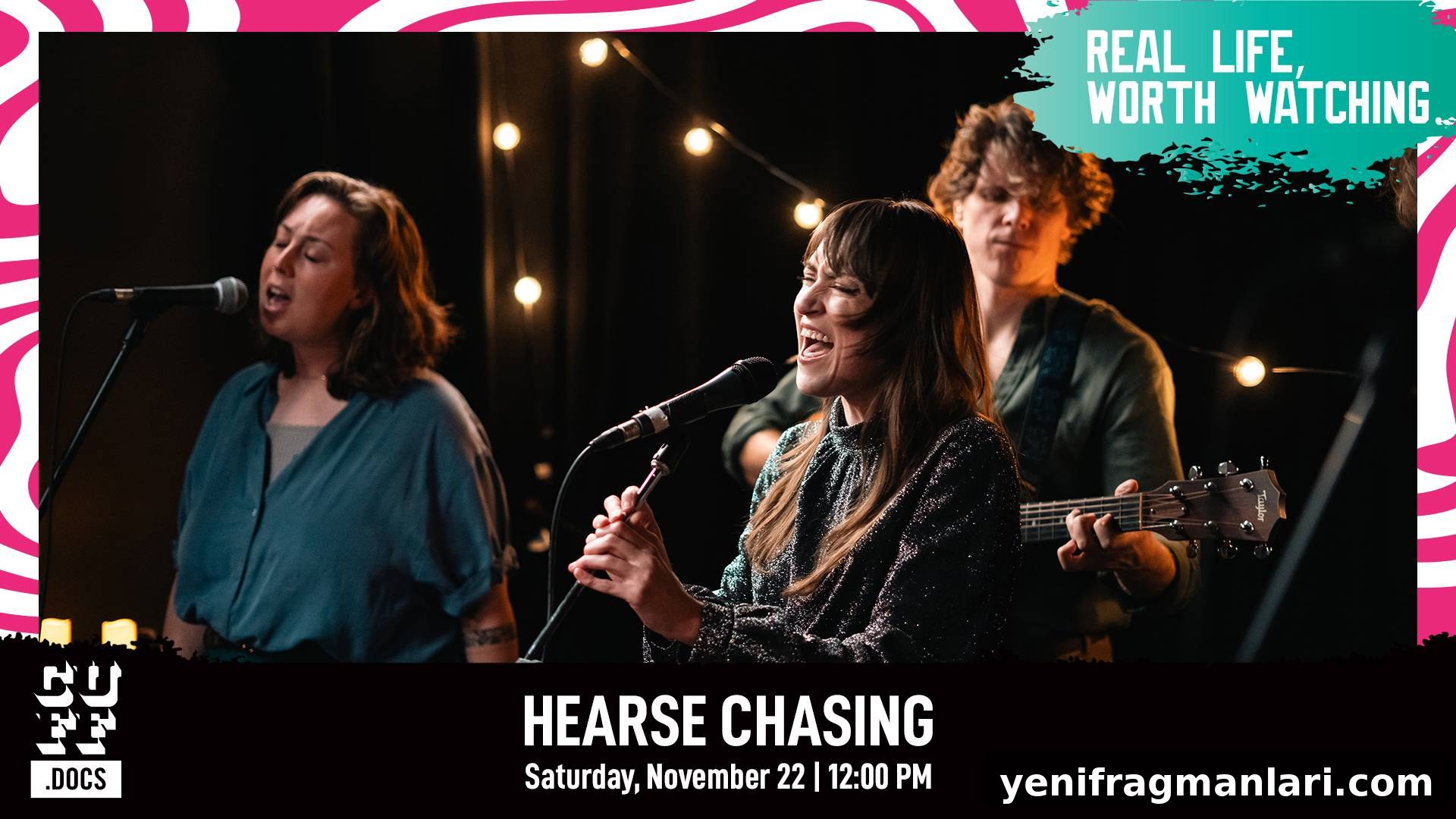
Hearse Chasing: Cassidy Waring and Teresa Alfeld Face Trauma Head-On
Screening this week at CUFF.Docs in Calgary, the short documentary Hearse Chasing follows singer-songwriter Cassidy Waring as she returns to the city where she grew up to confront a childhood marked by addiction, loss, and lingering questions. The film grounds Cassidy’s story in specific places, people, and memories, pairing present-day interviews with family and friends alongside home videos to create a dialogue between who she was and who she is now.
Teresa Alfeld and Cassidy Waring on Their Relationship and the Origins of Hearse Chasing
Adam Manery: Can you describe how this project began and how your relationship developed into a film?
Teresa Alfeld: I met Cassidy in 2021 and we connected immediately, partly because we both live with type 1 diabetes. As our conversations deepened, Cassidy shared pieces of her past—home movies, documents, and the work she’d been doing in therapy—that made it clear this story could be told on film. When she invited me into that process, I knew we had something worth pursuing.
Cassidy Waring: During the pandemic I spent a lot of time reflecting and realized I was dealing with Complex PTSD. Therapy, somatic work, and examining my past helped me understand patterns in my life. Collecting videos and documents felt part of that healing, and when Teresa suggested making a film, it seemed like a natural next step.
Facing Trauma and Showing Therapy on Screen
One of the film’s most striking choices is its frank depiction of Cassidy’s mental health work. Therapy still carries stigma, particularly around diagnoses like complex PTSD, so the decision to include therapeutic moments on camera required careful ethical consideration.
Adam Manery: Cassidy, could you explain what complex PTSD means to you and how therapy informed the film?
Cassidy Waring: I’m not a clinician, but for me complex PTSD came from prolonged trauma in close relationships during formative years. It affected my identity, causing chronic anxiety, panic attacks, emotional flashbacks, and hypervigilance. Talk therapy helped, but somatic approaches—work that reconnects you with your body—were crucial in helping me feel grounded.
Adam Manery: Teresa, how did you handle showing therapy on screen?
Teresa Alfeld: Depicting therapy raises professional and ethical issues, so we collaborated closely with Roma Palmer, a therapist who appears in the film and who has worked with Cassidy. Roma helped us decide what could be shown in a way that respected therapeutic boundaries while illustrating the kind of work Cassidy was doing.
Bridging Past and Present in Hearse Chasing
The film’s emotional core comes from juxtaposing archival footage with present-day interviews, allowing viewers to see Cassidy both as a child and as the adult trying to make sense of that past. Many of the home videos came from Cassidy’s grandfather and were rediscovered during the pandemic, offering fresh perspective when watched years later.
Another pivotal element is “Cooper’s Life Book,” a keepsake created by Cassidy’s brother that she had not seen until researching the film. That simple, plainly written document reads like a child’s narration and became a revealing touchstone for the story—both for Cassidy and for the director crafting the film’s structure.
Director Teresa Alfeld on the Structure of Hearse Chasing
Teresa describes the film’s structure as responsive rather than rigid: the documentary follows Cassidy’s real journey back to Calgary and the conversations she seeks to have. The production aimed to be as unobtrusive as possible—using longer lenses and compact rigs so subjects could speak naturally—while relying on producer Melissa James and the team to identify who might participate.
The filmmakers planned for Cassidy to return home and hoped conversations would occur, but beyond that they allowed events to unfold organically. That balance between preparation and openness is central to how the film captures candid, emotionally honest moments.
Cassidy Waring’s Songwriting and Why We Shouldn’t Hide from Difficult Conversations
Music is woven through the film as a means of emotional inquiry. For Cassidy, songwriting is a way to discover what she’s feeling—improvising melodies and lyrics often reveals clarity or a lesson she hadn’t seen before. That process is both creative and therapeutic: songs allow her to confront beliefs she no longer wants to carry.
Teresa Alfeld: Making this film was a risk for everyone involved—from Cassidy to the production team and the studio that supported it—but their courage paid off. The conversations captured here opened avenues for healing and encouraged reflection. My own family conversations were influenced by the film’s approach: there’s value in opening the pages of difficult stories rather than letting them remain closed.
Cassidy Waring: The level of vulnerability required was immense. I’m grateful to everyone who participated and to the mental health coordinator on our team who made sure people felt supported. My hope is that viewers who grapple with grief or trauma feel seen and less alone.
Those who watch Hearse Chasing will find a quiet but powerful argument for facing hard truths with care and support—and an invitation to listen to Cassidy’s music, which carries the film’s emotional resonance beyond the screen.