
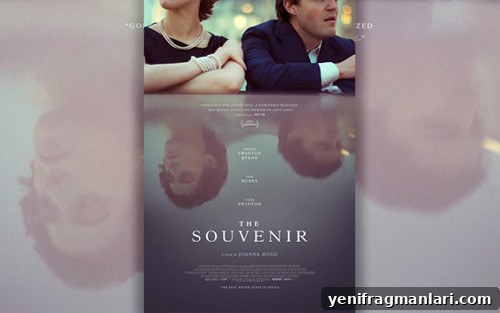
This article was written exclusively for The Film Magazine by thecineblog’s Sophie Butcher.
The Souvenir (2019)
Director: Joanna Hogg
Screenwriter: Joanna Hogg
Starring: Honor Swinton Byrne, Tom Burke, Tilda Swinton
Julie (Honor Swinton Byrne) is a film student in early 1980s London. She wears oversized shirts, carries an Olympus camera to parties, and spends her days at a typewriter trying to bring her first feature to life. When she becomes romantically involved with the older Anthony (Tom Burke), that relationship begins to shape and unsettle her artistic ambitions. The film follows Julie as she negotiates love, creative drive, and the compromises that bind them together.
The Souvenir is deliberately restrained, often feeling cryptic in rhythm and tone. Joanna Hogg’s direction favors quiet, elliptical scenes over conventional exposition: conversations trail off, details accumulate, and the film frequently shows the aftermath of events rather than the events themselves. The muted color palette and low-key dialogue encourage close attention, rewarding viewers who are willing to listen for the subtle shifts in behavior and feeling.
At first, Anthony’s place in Julie’s life is ambiguous. Hogg peels back the relationship in small, deliberate gestures—a domestic argument about taking up too much room in bed, Julie’s passive-aggressive response when she hears about Anthony’s former partners—so that intimacy and unease build gradually. By focusing on these quiet moments, the film creates a tension between what is shown and what remains offscreen, generating curiosity and frustration in equal measure.
A central emotional axis of the film is the relationship between Julie and her mother, played by Tilda Swinton. Swinton’s performance is a steady center for the film: she communicates affection and concern in small, lived-in details—a hand taken and released across a cup of tea, a lamp brought over because “there’s never enough light here,” or a hesitant question about yet another loan that she is obliged to offer. These gestures anchor Julie’s world and reveal the practical, everyday support that sustains her, even as she pursues uncertain artistic ambitions.
Julie’s film project within the film concerns a boy named Tony from Sunderland. She describes his relationship with his mother and suggests that her death could symbolize the decay of the city itself, calling Sunderland “dying, decaying, rotten.” That line, jarring to viewers from the North East, reveals Julie’s distance from the subjects she wishes to portray: her ideas are formed by assumptions and received narratives rather than lived experience. Anthony challenges this perspective, asking whether she wants to “document some received idea of life up there,” and Julie’s defensive answers only underline the film’s exploration of authenticity in art.
The dynamic between Julie and Anthony is paradoxical. On the surface he appears charismatic, cultured, and confident—often seen in a suit, speaking as if he commands any room. As the story progresses, his composure erodes, revealing more troubling aspects of his personality. Julie, meanwhile, is infatuated and attentive, absorbing his conversation as if it were revelation. Their relationship moves through intellectual sparring, petty quarrels, and occasional tenderness, with power shifting in unexpected ways. At times Anthony’s behavior reads as manipulative; Julie can seem privileged, reliant on family support to maintain her artistic pursuits. Yet the film resists easy judgment, trading caricature for observation.
The film’s pacing feels uneven by design—the early sections linger in a measured tempo while later developments rush with quieter force—but patience is rewarded. Small, repeated motifs accumulate into emotional clarity, especially in the film’s closing moments. If you’re paying close attention, the final two shots land with a chill that reframes much of what came before, making the film’s two-hour span feel purposeful and exacting.
16/24
By Sophie Butcher
You can support Sophie at the following links:
Twitter: @sophiefbutcher
Blog: thecineblog
Film & TV Newsletter: What I’m Watching