
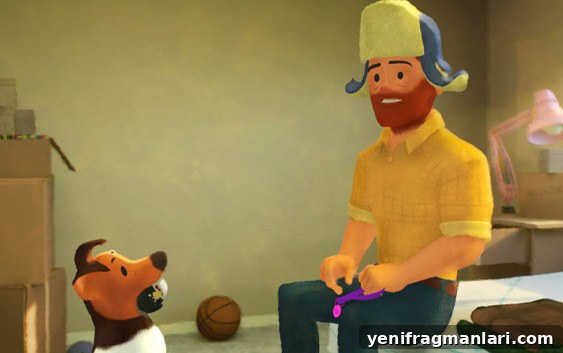
Out (2020)
Director: Steven Clay Hunter
Screenwriter: Steven Clay Hunter
Starring: Bernadette Sullivan, Kyle McDaniel, Caleb Cabrera, Matthew Martin
Out is a Pixar short that premiered on Disney+ and marks an important milestone for the studio: it centers on an LGBTQ+ protagonist. This nine-minute film blends comedy and heart, using a lighthearted body-swap premise to explore the tension of coming out to family. The short stands out both for its narrative choice and for how it handles identity, acceptance, and everyday intimacy in a compact, emotionally effective package.
The story follows Greg, who is preparing to move into a new home with his boyfriend, Manuel. Nervous about telling his parents about their relationship, Greg tries to conceal his photos and mementos when his mother and father arrive unexpectedly to help with packing. In a fantastical twist, a little rainbow-powered magic causes Greg to swap bodies with his dog, Jim, turning a private worry into a chaotic, outwardly visible crisis. The device yields a steady stream of visual gags, but it also heightens the emotional core: Greg must grapple with authenticity, and the short uses the absurdity of the swap to illuminate very real feelings.
As a Pixar short, Out exhibits the studio’s trademark polish. The animation style is warm and inviting, with soft lines and a vivid color palette that complement the film’s emotional beats. The character design is expressive, particularly in the way the animators translate canine mannerisms into human body language when Jim inhabits Greg’s form. That energetic physicality lifts the comedy and gives the film a manic, playful rhythm without ever undercutting its sincerity.
Voice performances are well-suited to the material. The leads communicate a believable intimacy and nervousness; subtle line readings sell both the humor and the vulnerability of coming out. The short wastes no time establishing the relationships that matter, which is essential in such a brief runtime. Emotional payoffs arrive quickly but land with surprising weight because the characters are drawn with clarity and warmth.
One of the most notable achievements of Out is how it normalizes same-sex love in the context of a family story. The narrative does not sensationalize Greg’s relationship; instead, it frames his anxiety as a familiar human experience—fear of rejection, desire for acceptance, and the awkward logistics of revealing a private life to close relatives. That grounded approach makes the short accessible to a broad audience while maintaining the specific perspective of an LGBTQ+ character.
If there is a critique to offer, it’s that the plot device—body swapping—follows a familiar comedic trope. Viewers who have seen similar conceits in other films may anticipate the beats. However, freshness emerges from the combination of that trope with Pixar’s visual sensibility and the tender treatment of a coming-out narrative. The result feels both familiar and new: the trope serves the story rather than defining it.
Technically, the short is tight and economical. The pacing keeps viewers engaged from the opening moments through to a small but satisfying twist at the end that reinforces the themes of family and acceptance. The emotional arc is compact yet complete, and the filmmakers make efficient use of visual storytelling to convey what little dialogue cannot.
In sum, Out is a brave, charming addition to the Pixar Shorts collection. It combines humor, heart, and a clear message about identity and belonging. The short demonstrates that representative stories can be told with levity and love, and it offers a hopeful sign that mainstream animated studios can approach LGBTQ+ narratives with care and creativity. Whether you watch for the laughs, the animation, or the emotional resonance, Out delivers.
22/24
Keep an eye out for a cameo by a well-known Pixar character that appears throughout the short.