
A black screen gives way to the swelling notes of a dramatic score. The music rises and builds until it finally breaks. Waves glide across the frame. A man lies face down on the shoreline as surf laps over him.
This is the opening of Christopher Nolan’s Inception, a sequence that, ten years after its release, still draws audiences into its dream-dominated universe without a single spoken word.
Hovering between genres and defying many blockbuster conventions, Nolan delivered what many consider his most inventive, singularly ambitious film. Inception challenged the notion of a typical summer tentpole, placing thoughtful storytelling and layered ideas front and center rather than relying solely on spectacle.
Released into a market dominated by sequels, reboots and formulaic franchises, Inception stood apart: a complex, original thriller that valued the gradual unspooling of its premise more than nonstop action set pieces. The film earned more than $800 million worldwide, showing that mainstream audiences would embrace a movie that demanded intellectual attention instead of passive consumption. Yet despite its success, Hollywood did not immediately fill the market with similar high-concept originals—aside from a few exceptions and Nolan’s own follow-ups. Still, the film planted an important seed: a mainstream appetite for smarter blockbusters.
Recommended for you: Christopher Nolan Films Ranked
From his early work, Nolan has pushed cinematic boundaries. He earned recognition for idiosyncratic, intellectually driven films such as Memento and The Prestige. But it was the seismic impact of 2008’s The Dark Knight that firmly established him as a major force in contemporary cinema. That success granted him the resources to bring to life a project he had been developing for years: the intricate, ambitious puzzle that became Inception.
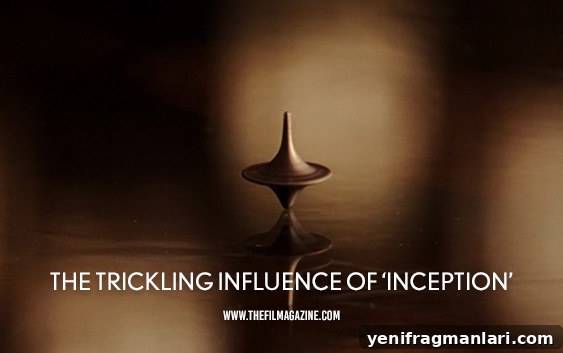
With a talented ensemble and a reported $160 million budget, Nolan constructed a film that deliberately resisted the loud, disposable tendencies of summer blockbusters. He cast Leonardo DiCaprio in a role that pushed him into a more mainstream spotlight, yet the film never simplified its premise for the sake of wider appeal. Nolan ingeniously fused the heist genre with speculative science fiction, asking viewers to invest both emotionally in the characters and intellectually in the rules that govern their world—right down to a spinning top that keeps audiences debating its fate years later.
Inception isn’t deliberately opaque. Nolan provides necessary exposition to explain its dream-within-dream mechanics, but he trusts his audience to follow complex ideas without spoon-feeding every detail. That trust rewards repeat viewings: fresh layers, hidden clues and structural refinements reveal themselves each time.
Across its roughly two-and-a-half hour runtime, Inception explores elaborate dreamscapes without leaning on non-stop action. Nolan avoids the temptation of set pieces that exist only for spectacle; instead, each dramatic moment advances the concept. A flipped car in one level alters gravity in the next; an avalanche in another layer has real consequences for the plot. Action here is functional and conceptual, not ornamental.
Since Inception arrived, there has been a gradual shift toward more nuanced storytelling in big-budget cinema. The idea that mainstream audiences can—and will—engage with challenging, layered narratives has spread, albeit slowly and unevenly. Films like Dawn of the Planet of the Apes and Gravity demonstrated that tentpole filmmaking can elevate its material: character-driven stakes, stylistic restraint and intellectual ambition can coexist with box office success. Nolan himself continued to explore this territory with Interstellar, which further pushed the boundaries of what a mainstream science-fiction epic could be.
That said, Inception did not single-handedly rewrite industry incentives. Studios often face a conservative calculus: will an expensive, idea-driven film perform better than a formula that reliably sells tickets and merchandising? History shows mixed results. Ambitious films like Blade Runner 2049 earned critical acclaim but struggled commercially, while established franchises such as Fast & Furious reliably draw massive audiences and revenue.
Even so, the mainstream can and does accommodate large-scale, intricate storytelling. For example, Avengers: Endgame required audiences to follow a sprawling narrative—with dozens of characters, intersecting arcs and time-jumping plotlines—across nearly three hours. While its tone and intent differ from Nolan’s work, its success further proves that widely popular films can be complex and emotionally resonant.
Ten years on, the blockbuster landscape shows signs of maturation. There remains a market for lean, escapist entertainment, and sequels and franchises will continue to dominate much of the box office. But Inception helped normalize the notion that mainstream viewers will embrace films that ask them to think, reflect and revisit. That influence is subtle: it hasn’t produced an avalanche of direct imitators, but it has contributed to a climate where riskier, smarter projects are at least possible.
With anticipation surrounding Nolan’s next original feature, Tenet, the appetite for intelligent tentpole filmmaking persists. Like Inception, it promises a provocative premise designed to engage and perplex. Whether it becomes the catalyst for a broader shift in mainstream cinema remains to be seen, but Nolan’s films have undeniably nudged the industry toward a more ambitious horizon.
Written by Aaron Bayne