
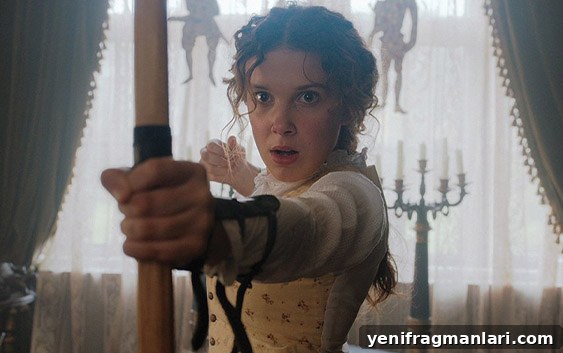
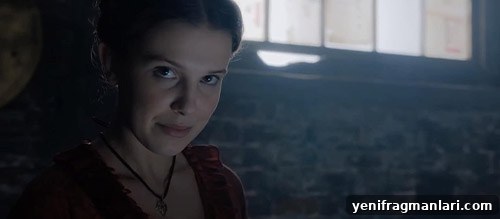
Enola Holmes (2020)
Director: Harry Bradbeer
Screenwriter: Jack Thorne
Starring: Millie Bobby Brown, Henry Cavill, Sam Claflin, Louis Partridge, Fiona Shaw, Susan Wokoma, Frances de la Tour, Helena Bonham Carter
“He’s worth more, but you give me greater pleasure.”
Harry Bradbeer’s feature-length adaptation brings a fresh, contemporary energy to a classic detective tale. Based on the first book of Nancy Springer’s six-part series, The Enola Holmes Mysteries, Enola Holmes re-centers the familiar world of Sherlock Holmes around his headstrong younger sister. Set in the late 19th century to match Arthur Conan Doyle’s era, the film follows 16-year-old Enola as she embarks on a determined search for her missing mother while resisting the expectations placed on her by society and family.
Bradbeer’s signature style is evident throughout: the film frequently breaks the fourth wall, letting Enola address the audience directly with wit and warmth. These asides, reminiscent of the director’s work on other character-led dramas, are engaging rather than intrusive, and they help build a close rapport between Enola and the viewer. The screenplay by Jack Thorne keeps the tone lively and accessible, blending mystery, action and coming-of-age themes as Enola sharpens her powers of observation and deduction.
Millie Bobby Brown is ideally cast as Enola. Her performance balances youthful exuberance with an underlying seriousness that suits the film’s blend of adventure and emotional stakes. Brown handles both the quieter, character-driven moments and the action-oriented sequences with confidence, portraying a heroine who is clever, resourceful and defiantly independent. The film gives her a chance to inhabit a role that combines intelligence, physicality and moral conviction.
Enola is presented as someone unwilling to accept a preordained life. Her older brother, Mycroft (Sam Claflin), is insistent that she be sent to a finishing school to suppress her unconventional ideas; this clash represents the film’s central tension between control and autonomy. Opposing forces include Sherlock (Henry Cavill), who occupies his own brilliant, somewhat aloof space; and a cast of supporting characters who each reflect different aspects of the social order. Through these relationships, the story explores gender, agency and the limits placed on young women in that historical period.
Thematically, the film is concerned with emancipation and self-determination. Scenes that foreground Enola’s education — both formal and experiential — emphasize how knowledge, curiosity and resilience equip her to make choices for herself. Susan Wokoma’s character, Edith, voices a key sentiment when she tells Sherlock, “You don’t know what it is to be without power,” a line that underscores generations of women confronting entrenched patriarchal structures. The film does not present these issues heavy-handedly; rather, it weaves them into the mystery and Enola’s personal growth.
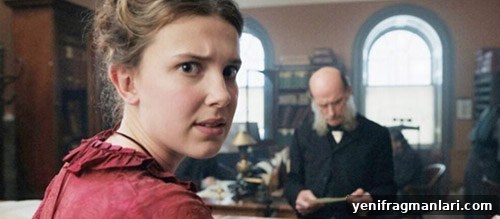
Compared with previous cinematic and television treatments of Conan Doyle’s works — from the modernized BBC series to more theatrical adaptations — Enola Holmes deliberately shifts perspective. Jack Thorne’s script places Enola in the driver’s seat, making familiar characters and conventions play supporting roles to her journey. While the film’s intent to be progressive is clear and often effective, some viewers may feel that certain character dynamics and subplots are only lightly sketched and could have benefited from deeper development. There is a sense that a few narrative stones remain unturned, leaving space for further exploration in sequels or extended storytelling.
Still, Enola Holmes joins a broader wave of 21st-century films that foreground women’s stories and foreground social issues alongside entertainment. It stands alongside contemporary period adaptations that revisit history with a modern sensibility, asserting that women’s perspectives and ambitions deserve center stage. Films like Little Women, Emma. and The Favourite similarly engage with gender and power, and in that company Enola Holmes contributes a youthful, adventurous voice.
The film’s strengths lie in its lead performance, its brisk pacing and its sympathetic treatment of a young woman learning to claim her own life. It blends mystery and movement with moments of charm and earnest reflection, and it leaves the audience with a clear message: sometimes the search for someone else reveals the courage and identity you already carry within. For viewers seeking a spirited, feminist-leaning mystery in period costume, Enola Holmes offers an enjoyable and thoughtful experience.
15/24