
The Ten Commandments (1923)
Director: Cecil B. DeMille
Screenwriter: Jeanie Macpherson
Starring: Theodore Roberts, Leatrice Joy, Richard Dix, Rod LaRocque, Nita Naldi
The opening 45 minutes of Cecil B. DeMille’s 1923 silent epic The Ten Commandments are breathtaking. The film’s art direction, cinematography and technical effects reveal a level of craftsmanship that still impresses a century later. Directed by a formative figure in early cinema, this original version stands as a landmark of innovation and visual ambition. For many years it was Paramount’s top-grossing picture, and while the 1956 remake starring Charlton Heston and Yul Brynner may be better known to modern audiences, the 1923 film is equally spectacular and deserving of recognition.
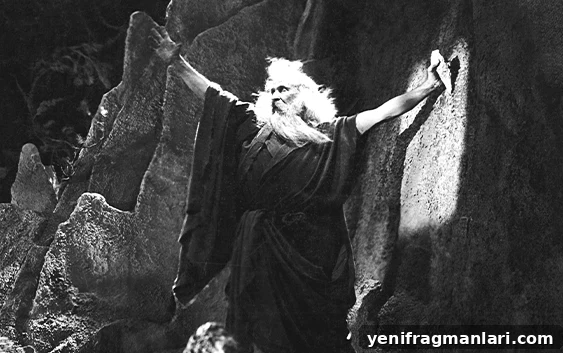
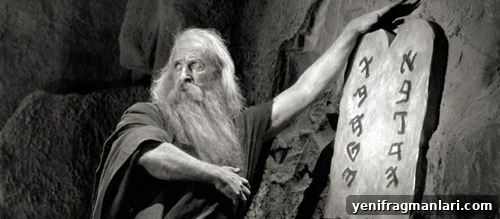
The film opens with an explanatory title card: after the mass suffering of World War I, the world that once dismissed the laws of God as outmoded now seeks guidance and meaning. DeMille then delivers a forty-five minute prologue that retells the Exodus. Theodore Roberts plays Moses, who leads the enslaved Israelites out of Egypt. Pharaoh’s son pursues them when the gods cannot revive him; Moses parts the Red Sea and ascends the mountain to receive the Ten Commandments. When he returns, he discovers the Israelites worshipping a golden ram; divine wrath descends and the sinners are struck down by lightning.
After this monumental prologue, the film shifts to the modern era. Devout Martha McTavish, played by Edythe Chapman, recounts the story of the Ten Commandments to her sons John (Richard Dix) and Dan (Rod La Rocque). John is a humble carpenter content with his life; Dan dreams of wealth and status and is openly dismissive of religious teaching. Both brothers fall in love with Mary (Leatrice Joy), and their rivalry triggers a moral and emotional descent that culminates in tragedy.
The second half of the picture functions as a morality play warning against the consequences of abandoning faith. Its message is blunt—often heavy-handed—and the intertitles and staging can feel overly didactic by contemporary standards. Scenes that insistently underline virtue and vice can verge on melodrama; for instance, the moment when Martha smashes a record against her Bible as punishment for dancing on Sunday feels exaggerated. Critics of the day found this portion less compelling than the epic prologue, and some reviews described it as ordinary compared to the spectacle that precedes it.
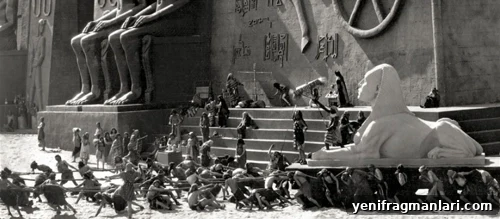
There is a clear reason the 1956 remake reserves the Exodus sequence for the climax: the parting of the Red Sea and the mass action sequences are the film’s most thrilling achievements. By opening with that sequence in 1923, DeMille set expectations very high, and the subsequent domestic drama cannot match its grand spectacle. The production scale was enormous: hundreds of craftsmen built massive sets, including a 120-foot temple. Several key scenes in the prologue were presented in color using period techniques such as tinting and spot-coloring, giving the silent film a visual richness often forgotten today. Restoration work, including materials from DeMille’s personal 35mm copy, helps preserve many of those color elements for modern viewers.
Despite its slower, more sermonizing second half, the film contains notable sequences that remain gripping. The destruction of a church near the end of the story and a tense scene where Mary ascends an elevator to the church rooftop both demonstrate DeMille’s talent for staging dramatic set pieces. Richard Dix’s performance as John is especially affecting—his naturalism and charisma anchor the human drama and foreshadow his later success in sound films. Many performances in the picture avoid the exaggerated gestures often associated with early silent acting; by the 1920s screen acting had already developed toward a more subtle style, and this film reflects that evolution.
Censorship and morality in early Hollywood provide an interesting backdrop to the film’s production. Will Hays had recently been appointed to lead the industry’s efforts to manage critics and public concern over on-screen morality, and studios faced various local censorship boards. Remarkably, Paramount released The Ten Commandments without cuts, despite scenes that presented morally charged content, including moments of sensuality and depictions of murder, adultery and greed. DeMille balanced devout religious themes with vivid portrayals of vice, demonstrating both his faith and his sense of spectacle.
Preservation of silent films is a fraught history; many early works were lost to neglect or fire. The Ten Commandments is fortunate to survive and to benefit from careful restoration. Its scale and technical ambition make it one of Hollywood’s most dazzling early epics. While the running time can feel excessive and the modern-story portion is sometimes one-dimensional, the movie’s prologue remains an extraordinary achievement in cinematic storytelling and visual design. For anyone interested in film history, DeMille’s original Ten Commandments offers an essential example of how early filmmakers combined religious narrative, large-scale production and evolving cinematic technique to create unforgettable images.
Score: 21/24
Rating: 4 out of 5.
Recommended for you: Read More Retrospective Reviews