Undine (2020) — Film Review
Director: Christian Petzold
Screenwriter: Christian Petzold
Starring: Paula Beer, Franz Rogowski, Maryam Zaree, Jacob Matschenz, Anne Ratte-Polle
Undine, directed and written by Christian Petzold and released in 2020, is a Berlin-set drama that moves between social realism and a darker, modern fairy tale. Nominated for the Golden Bear at the Berlin International Film Festival, the film attempts to weave personal romance with broader cultural and historical themes, particularly the city’s fractured past. Its ambition is notable: Petzold blends intimate character work with mythic undertones to explore love, memory, and identity against the cityscape of Berlin.
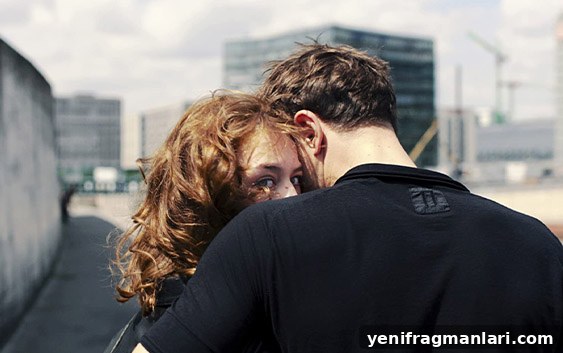
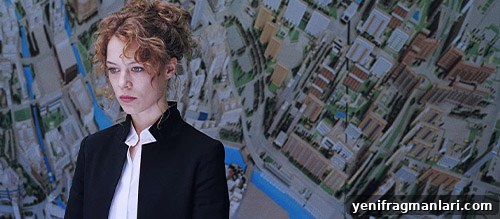
The film centers on Undine (Paula Beer), a historian employed by Berlin’s senate whose job is to give talks on the city’s architectural development and the legacies of East and West Berlin. Undine’s professional life anchors the film in documentary-like detail, while her personal story opens into something stranger. At a café, she confronts a cheating lover (Jacob Matschenz). When he leaves her, Undine warns that she will have to kill him if he abandons her—a line that shifts the film’s tone from realist drama toward mythic dread. Her pursuit of him around the café leads to an unexpected encounter with Christoph (Franz Rogowski), a diver, and their tentative relationship becomes the emotional center of the film.
Paula Beer’s performance is one of the film’s greatest strengths. From the first frame she brings a measured intensity, translating subtle internal shifts into visible gestures and expressions. Beer balances melancholy and restraint with moments of radiant warmth; her portrayal won her a Silver Bear for Best Actress at the Berlinale, recognition that highlights how effectively she carries the film’s emotional weight. Opposite her, Franz Rogowski provides a grounded, quietly charismatic counterpart. Rogowski’s distinct presence—often framed with Petzold’s careful eye—adds texture to their relationship, especially through scenes that contrast domestic intimacy with Christoph’s work as a diver.
Their chemistry is believable and watchable, filled with small, tender moments that make the couple’s attachment feel real rather than schematic. Early on, the film’s tone recalls a contemporary European relationship drama: conversations, silences, and the everyday friction of two people trying to connect. But Petzold gradually shifts the film’s grammar. Subtle foreshadowing becomes explicit metaphor, and the narrative arcs toward a darker, more allegorical second half in which myth and reality collide.
Water functions as a central motif throughout Undine. Initially a recurring visual and thematic presence—through references to Berlin’s canals, pool sequences, and Christoph’s diving—water later becomes the medium through which the film’s mythic elements emerge. Petzold reimagines the mermaid legend in reverse: Undine’s identity and fate are entwined with aquatic imagery, and the film reframes earlier metaphors into concrete, sometimes unsettling consequences for the characters. This tonal pivot will divide viewers: some will appreciate the film’s daring fusion of everyday life and supernatural logic, while others may find the transition abrupt or unsatisfyingly opaque.
Stylistically, Petzold favors a cool, precise visual approach that echoes the film’s thematic concerns. The cinematography aligns with the screenplay’s twin obsessions—history and longing—by pairing wide, architectural frames with close, intimate shots of the leads. Berlin itself feels like a character, its built environment and recent political history woven into the narrative rather than merely serving as backdrop. The screenplay uses Undine’s public lectures about the city’s past to mirror her private attempts to reconcile longing and betrayal, past and present.
While Undine does not resolve all of its tensions neatly, and some symbolic turns risk slipping into ambiguity, it remains a compelling experiment in fusing realism with fable. The film’s strengths lie in its central performances and its willingness to take narrative risks. Petzold’s hybrid of social commentary and dark fairy tale produces moments of genuine beauty and unease, even if the overall ambitions occasionally outstrip emotional payoff.
15/24