
The Trial of the Chicago 7 (2020)
Director: Aaron Sorkin
Screenwriter: Aaron Sorkin
Starring: Eddie Redmayne, Alex Sharp, Sacha Baron Cohen, Jeremy Strong, John Carroll Lynch, Yahya Abdul-Mateen II, Mark Rylance, Joseph Gordon-Levitt, Frank Langella
Aaron Sorkin is a writer and director whose work tends to arrive sparingly but with impact. After landmark screenplays such as A Few Good Men, expectations run high each time he returns to the screen. His 2020 Netflix film, The Trial of the Chicago 7, tackles a historic courtroom drama: the trial following the 1968 Democratic National Convention protests, in which a group of activists—commonly referred to as the Chicago Seven—faced charges of inciting riots. Released at a moment when protest and civil rights conversations remain urgent, the film resonates with contemporary movements while rooted in its era.
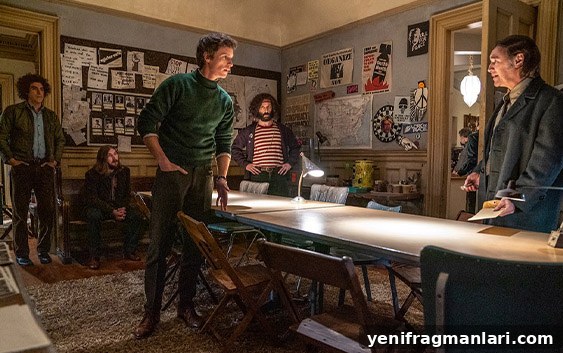
The ensemble cast is one of the picture’s greatest strengths. Eddie Redmayne portrays Tom Hayden with a measured clarity—principled, occasionally impassioned, and often the film’s moral anchor. Joseph Gordon-Levitt, in a supporting yet memorable role, delivers quiet nuance and a stirring moment late in the story that lingers. Frank Langella embodies Judge Julius Hoffman with a cold, imposing presence that makes courtroom scenes tense and unpredictable. But the film’s most magnetic performance comes from Sacha Baron Cohen as Abbie Hoffman. Known for his comedic work, Cohen balances showmanship with genuine emotional heft, shifting from comic choreography to unexpectedly raw dramatic beats and frequently commanding the screen.
Sorkin’s script is character-driven and packed with sharp dialogue. It reframes political theater as both legal contest and cultural clash, contrasting the activists’ theatrical protest tactics with a justice system that often seems determined to maintain order at any cost. The screenplay captures the era’s rhetoric and the personalities involved, while emphasizing themes of civil disobedience, governmental power, and the media’s role in shaping public perception.
Visually, the film benefits from Phedon Papamichael’s cinematography, which subtly charts the trial’s descent into darkness. As the proceedings unfold, lighting and composition grow darker and tighter, reflecting how the courtroom becomes a pressure cooker for both ideology and personal conflict. Color and costume design—especially in the park and protest flashbacks—evoke the late 1960s with authenticity: the flower-power palette, period tailoring, and textures that place viewers firmly in that historical moment.
That said, directorial choices occasionally feel functional rather than daring. Many sequences settle into straightforward coverage—dialogue-driven shots or long tracking moves that, while competent, rarely surprise. Over a runtime north of two hours, the film’s momentum sometimes slows; transitions from courtroom debate to memory-driven flashbacks are effective at times, but other stretches lean toward talky exposition, which can blunt the emotional rise the script aims for.
Editing both helps and hinders. Cuts that splice contemporary testimony with riot footage create urgent, effective juxtapositions, but other segments fall into hurried or overly clipped rhythms that reduce charged exchanges to talking-head exchanges. The film achieves its strongest emotional clarity when it allows scenes to breathe—when performances and visuals are given space to accumulate meaning. In contrast, scenes that are heavily edited for pace occasionally undercut their own drama.
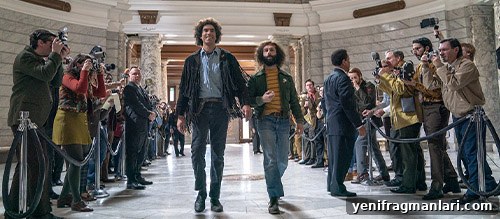
The Trial of the Chicago 7 offers numerous powerful moments: courtroom fireworks, intimate flashes of doubt and conviction, and sweeping images of protest and police. These sequences show the filmmakers’ ability to craft memorable set pieces. Yet the picture doesn’t always sustain the same level of care across its length—some scenes feel meticulously constructed while others receive only serviceable treatment, making the film feel uneven at times.
Ultimately, The Trial of the Chicago 7 is a strong, compelling drama with an exceptional cast and resonant themes. It may not fully reach the highest peaks of courtroom cinema, but it delivers sustained intelligence, passion, and several standout performances—most notably from Sacha Baron Cohen and Eddie Redmayne. If you seek a well-acted political drama that engages both historically and emotionally, this film is well worth watching.
17/24