
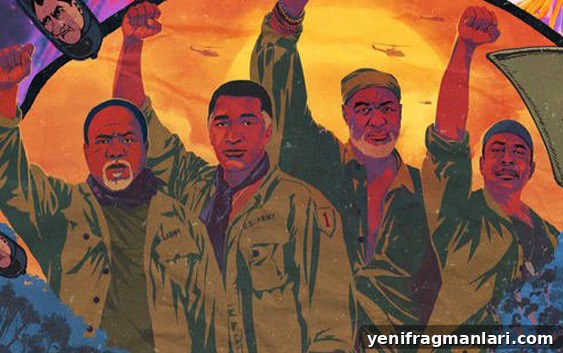
Da 5 Bloods (2020) — Review
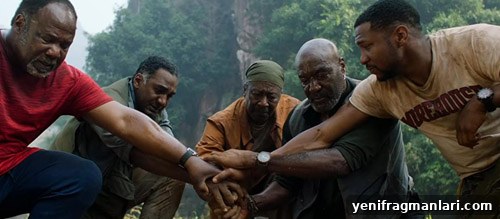
Da 5 Bloods (2020)
Director: Spike Lee
Screenwriters: Danny Bilson, Paul De Meo, Kevin Willmott, Spike Lee
Starring: Delroy Lindo, Jonathan Majors, Clarke Peters, Norm Lewis, Isiah Whitlock Jr., Chadwick Boseman, Mélanie Thierry, Johnny Tri Nguyen, Paul Walter Hauser, Jean Reno
2020 has been a difficult year for film audiences: theatrical delays and closures have shifted many high-profile releases into unfamiliar release windows, and streaming platforms have taken on a larger share of premieres. Amid that upheaval, Spike Lee’s Netflix original Da 5 Bloods emerges as one of the most compelling and timely films of the year. It combines Lee’s formal inventiveness with urgent social commentary, examining the legacy of the Vietnam War and its continuing echoes in America.
The plot follows four African American Vietnam veterans who return to Vietnam decades after the war to recover a cache of gold they hid during their tour. Their journey through the jungle alternates with flashbacks to their wartime experiences alongside their fallen comrade, Stormin’ Norman (Chadwick Boseman). As they search for the treasure, the veterans confront the physical and moral wreckage left by the war: landmines, the effects on local communities, and the cultural aftershocks that link past and present.
Lee layers the narrative with documentary footage from the era, using archival clips of figures such as Muhammad Ali, Malcolm X, and Bobby Seale to frame the characters’ political and personal struggles. Those inserts sharpen the film’s historical argument: the Vietnam era was a moment of intense social and political contestation, and the experiences of black Americans—both on the front lines and at home—remain central to understanding that period. The archival material functions like on-screen citation, guiding viewers to the historical currents the characters discuss and prompting further reflection.
Formally, Da 5 Bloods is notable for the way it distinguishes past and present. Lee uses aspect ratio and compositional choices to separate the flashbacks from the present-day story: the wartime memories are often framed tighter while contemporary scenes expand into wider ratios. Instead of digitally de-aging actors, Lee lets the surviving veterans remain their current age in memory sequences, which reinforces the subjective, psychological nature of recollection. These flashbacks frequently feel cinematic and heroic—complete with stirring music—yet they also reveal themselves as filtered through the veterans’ trauma and nostalgia.
Visual and narrative references to earlier Vietnam films—most obviously to Francis Ford Coppola’s Apocalypse Now—appear throughout, from river-bound sequences to musical cues and encounters with French-Vietnamese characters. Those nods serve Lee’s double purpose: to place his film in a cinematic conversation about the war and to rework anti-war and anti-imperial themes from a distinctly Black American perspective.
Beyond questions of craft, the film tackles identity, memory, and intergenerational conflict. Delroy Lindo’s portrayal of Paul, a veteran struggling with post-traumatic stress and political disorientation, is the emotional core of the film. Paul’s volatility, contradictory loyalties, and eventual reconnection with his past drive much of the story. Jonathan Majors plays David, Paul’s son, whose steady presence and moral clarity offer an alternative to his father’s anger. Lee resists simple caricatures: Paul’s attraction to nationalist rhetoric is shown as a product of trauma and media influence, and the film argues that compassion and patience—rather than alienation—are necessary to reclaim a more humane civic life.
The film also examines cross-cultural and interracial dynamics. Characters such as Hedy (Mélanie Thierry) and the French-Vietnamese landmine-clearance workers complicate a binary reading of the story, suggesting that solidarity and responsibility must cross national and racial lines. The damage left behind by war—literal and social—affects everyone in different ways, and Lee uses these relationships to broaden the film’s ethical concerns.
Da 5 Bloods is not subtle in its messaging; Lee’s directness has always been a defining trait. For some viewers this bluntness enhances the film’s power; for others it can feel didactic. Audience responses have varied—on platforms that aggregate viewer ratings the film holds mixed scores—and some critics and viewers have described the film as heavy-handed. Still, the movie’s willingness to confront history head-on, its formal ambition, and the strength of its performances keep it compelling.
At its best, the film is both a gripping character study and a larger meditation on memory, trauma, and the unfinished business of American history. It reminds viewers that the past is present: political movements, media influence, and racial inequality are not merely historical footnotes but active forces shaping lives today. Spike Lee blends archival evidence, personal drama, and cinematic homage into a film that is as much a social inquiry as it is a war movie.
While it may divide audiences with its tone and rhetoric, Da 5 Bloods is hard to dismiss. It combines passionate performances—particularly from Delroy Lindo—with determined formal choices and a pointed historical perspective. For many reasons, it stands out among 2020’s releases as one of the most relevant and provocative films of the year.
21/24