

Possessor (2020)
Director: Brandon Cronenberg
Screenwriter: Brandon Cronenberg
Starring: Andrea Riseborough, Christopher Abbott, Jennifer Jason Leigh, Sean Bean, Tuppence Middleton
Brandon Cronenberg’s Possessor is a cold, exacting exploration of identity, violence, and voyeurism that digs into the machinery of the human mind. Part science-fiction, part psychological horror, the film follows Tanya Vos (Andrea Riseborough), an operative employed to take over other people’s bodies to carry out high-profile assassinations for wealthy clients. Cronenberg uses this unsettling premise to examine what happens when consciousness is invaded and loyalties blur—where external control collides with inner desire.
The film opens with an unflinching demonstration of the possession process, immediately establishing the clinical, mechanical nature of the work. After each assignment, Vos returns to her own body; she wakes up, debriefs, and tries to reassemble her identity while the aftereffects of other people’s lives linger. Jennifer Jason Leigh plays Girder, a manager who coaches and monitors possessors; she treats Vos as a star performer while also pushing her back into dangerous assignments. Despite Girder’s confidence in Vos’ abilities, it soon becomes clear that the toll of occupying strangers has begun to erode Vos’ sense of self.
Vos’s latest target is John Parse (Sean Bean), an influential industrialist. To reach him, she inhabits Colin Tate (Christopher Abbott), a low-level employee who also happens to be dating Parse’s daughter, Ava (Tuppence Middleton). Vos must learn Colin’s gestures, memories, and habits so the substitution will be seamless. The process of attaching a device to Colin’s skull is brutal and visceral—Cronenberg treats these moments with clinical detachment, emphasizing the procedure’s invasive, mechanized cruelty.
What follows is a tense psychological duel. For reasons the film never fully explains—whether due to Vos’ strain, Colin’s resistance, gendered dynamics of possession, or a combination of factors—the takeover does not go as planned. Vos and Colin begin to fight for control from within the same body. As their thoughts and impulses entangle, the narrative becomes a study of blurred authorship: who is acting when the body moves, who owns the memories and desires that surface, and whether prolonged occupation reshapes identity itself.
Cronenberg resists tidy answers. The film purposely keeps both protagonists partially unknowable, forcing viewers to interpret their actions through others’ observations and through brief, fragmented interior moments. This ambiguity is central to the film’s power. Vos’s behavior while occupying Colin—her sexual encounters with Ava, the relish she takes in violent acts—may reveal Vos’ own hidden fantasies, or they may emerge from Colin’s resentments and yearnings. As their psyches intermingle, the line between aggressor and host dissolves until the viewer cannot reliably tell who is driving the body.
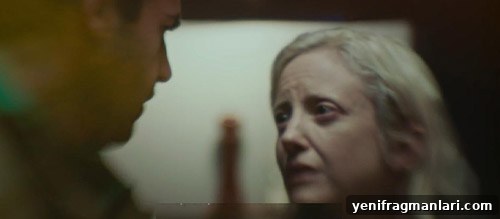
Visually, Possessor is striking. Cinematographer Karim Hussain employs rotating camera work and close-up compositions that make the world feel off-kilter, emphasizing dislocation and paranoia. The film’s color palette leans toward otherworldly pinks and blues, adding an eerie, almost synthetic sheen to scenes of intimate brutality. Hussain renders blood and injury in a paradoxically aesthetic way—violence looks cold and beautiful, which intensifies the film’s moral discomfort. Long takes of oppressive corporate spaces further underscore themes of isolation and dehumanization.
The performances are central to the film’s success. Andrea Riseborough delivers a chilling, layered portrayal of a woman who is simultaneously professional, damaged, and dangerously detached. Christopher Abbott matches her intensity with a portrayal that mixes vulnerability and volatility as Colin struggles against invasion. Jennifer Jason Leigh’s Girder provides a cool, administrative counterpoint, representing the corporate structures that monetize psychological intrusion. Sean Bean and Tuppence Middleton fill crucial supporting roles that heighten the stakes and human cost of the possession industry.
Possessor also pays subtle attention to power dynamics, including gendered facets of control and vulnerability. The film’s imagery and performances suggest that the battle for agency is not only technological but also social: who gets to occupy whose body, who is expendable, and how corporate interests exploit both flesh and mind. Cronenberg does not sermonize; instead, he offers a stark, uncompromising vision that invites reflection.
While the film is unapologetically brutal, its violence serves narrative and thematic purposes rather than existing for spectacle. Cronenberg crafts a film that unsettles and provokes—one that lingers in the mind long after the credits. Possessor is a distinctive, confident work that confirms Brandon Cronenberg as a filmmaker willing to push boundaries while forging his own cinematic identity.
20/24