
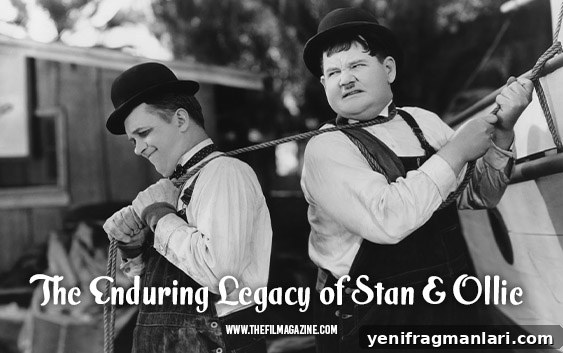
It can be difficult to explain why Laurel & Hardy remain so cherished more than a century after their first Hollywood appearances. They were neither politically driven like Charlie Chaplin nor the athletic daredevils of Buster Keaton. They did not trade on satire the way Abbott & Costello sometimes did, nor were they lauded as great dancers. Yet Stan Laurel and Oliver Hardy continue to captivate modern audiences both on-screen and off, and the reason lies in something simple and rare: honesty.
Their films never felt like a mask separating artist from audience. Instead, Stan and Ollie allowed their real personalities to shine through their comic personas, making their routines feel disarmingly authentic. Whether portraying down-and-outs, soldiers, aristocrats, or Oxford students, they seldom changed their mannerisms, appearance, or names. Their screen characters were extensions of themselves—exaggerated, to be sure, but true to life.
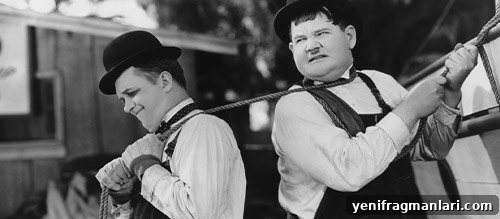
Laurel brought a gentle, bewildered innocence to his roles: a scatterbrained, humble underdog with a knack for comic timing. Hardy played the pompous but vulnerable foil: a self-important bully with a fragile ego and a fondness for small vanities. Many of their comic gestures—Laurel’s habit of tugging his bowler hat or Hardy’s exaggerated manner of sipping a drink—came from real habits that translated perfectly to film. Jackie Gleason, for example, once observed that Hardy’s drinking mannerisms were indistinguishable from his on-screen character, down to the raised pinkie.
The pair never truly left character, even in public appearances. Film clips of live shows and personal appearances show them slipping seamlessly from staged routines into everyday interactions, turning a mundane event—such as opening a door or cutting a ribbon—into a Laurel & Hardy sketch. Those moments reinforced the sense that what viewers saw on film was a truthful portrait, not merely make-believe.
Behind the laughter, their relationship was not always easy. As dramatised in the 2018 biopic Stan & Ollie, real-life disputes over contracts, health, and career direction sometimes strained their partnership. Yet their frequent on-screen bickering always carried a warmth that suggested a deep bond. The pair’s constant squabbles—so artfully rendered—never erased the affection beneath them. In scene after scene they demonstrated how close friendship can withstand irritation, pride, and absurd setbacks.
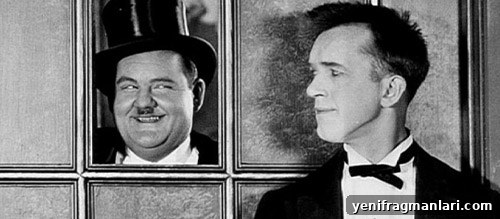
The arrival of sound films proved to be a turning point that played to their strengths. While other silent-era performers struggled with the transition, Laurel & Hardy thrived. Their voices fit their characters naturally—Laurel’s delicate British lilt suggested vulnerability and innocence, while Hardy’s Southern-tinged drawl underscored his bombastic self-assurance. The introduction of spoken dialogue allowed greater spontaneity in their interplay, producing catchphrases and verbal gags that became essential to their comedic identity.
Sound also revealed lesser-known talents, like Hardy’s rich singing voice. Their duet “Blue Ridge Mountains” in the Western parody Way Out West (1937) is a standout moment: a sincere, beautifully harmonized piece that can unexpectedly move viewers even amid the laughs. Those moments of genuine feeling—scattered throughout their films—are part of what gives their work emotional depth as well as humour.
Their writing, led by Laurel’s keen comic sensibility, blossomed with talkies. Lines that had been conveyed via title cards in silent shorts now came alive in exchange and timing, enhancing both wit and pathos. Famous lines like Hardy’s exasperated “Why don’t you do something to help me?!” and Laurel’s expressive, crumpling facial reactions became part of the popular lexicon, testifying to the duo’s ability to blend visual and verbal comedy.
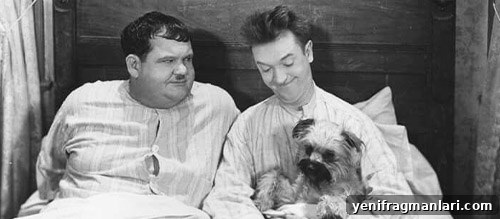
Despite their theatrical quarrels, what cemented their timeless appeal was an unmistakable affection. Whether sharing a duet, laughing together at another’s misfortune, or even sharing a bed in Laughing Gravy (1930), their chemistry read as genuine companionship. Audiences were not just laughing at their foibles; they were witnessing the bond of two performers who trusted each other and drew strength from that trust for their comedy.
Outside of the studio, Laurel & Hardy treated fans with warmth and humour. Stan Laurel remained approachable late into his life—his phone number was listed in the Los Angeles directory and he would often chat with admirers. Small gestures and signed photographs preserved in households around the world are testament to how personally they connected with their followers.
Their final feature, Atoll K (1951), received mixed reviews and reflected the physical toll the years had taken on both men. Heavy smoking and declining health marked their later lives: Oliver Hardy suffered a heart attack and later a series of strokes, passing in 1957; Stan Laurel lived until 1965 and, deeply attached to his friend, refused to perform without him. At Laurel’s funeral, peers like Buster Keaton acknowledged the profound comic gift Laurel possessed.
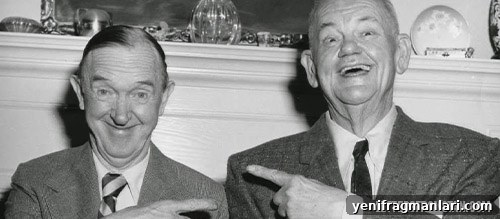
Laurel & Hardy’s legacy endures because their comedy reaches beyond gags and slapstick to something fundamentally human. They mastered the art of looking foolish in order to make others laugh, but never lost sight of compassion and humility. Their films remind us that true comedy often stems from simple, childlike impulses—mischief, frustration, surprise—and from two performers who were willing to be utterly themselves on screen.
Their enduring influence is felt in how audiences still respond to their films: with laughter, tenderness, and the recognition of a rare creative partnership that celebrated both the comic and the human.
Stan said of Ollie:
“Hardy inspires me. He is like the character he portrays because of certain individual traits. To me, he is refreshing, so darned human! His humour lies in the funny way he thinks. I can look at him and know just what he is thinking. His moods are very funny to me, the moods of a born comedian.”
And Ollie, of Stan:
“Laurel is the most unselfish man that ever lived and the funniest man in the world, as a comedian, as a writer and as a human being. He is so distinctive that he stands absolutely alone. He doesn’t depend upon funny clothes to make him funny, he is funny in himself. And I have sense enough to stand back and let him be funny.”
You can support Louis B Scheuer in the following places:
Twitter – @louisbscheuer
Instagram – @louisbscheuer
Written by Louis B Scheuer