
Zombieland (2009)
Director: Ruben Fleischer
Screenwriters: Rhett Reese, Paul Wernick
Starring: Jesse Eisenberg, Woody Harrelson, Emma Stone, Abigail Breslin
Imagine, for a moment, that the world has collapsed into a full-scale zombie apocalypse. Streets are deserted, internet access is unreliable if it exists at all, and the people you once trusted could turn on you in an instant. In most scenarios, the outlook would be grim: survival would be a daily grind filled with loneliness and fear. Ruben Fleischer’s 2009 horror-comedy Zombieland offers a different perspective. By balancing dark, violent moments with self-aware humor and strong character dynamics, the film turns bleak circumstances into a surprisingly enjoyable ride.
“The first time I let a girl into my life, and she starts to eat me.”
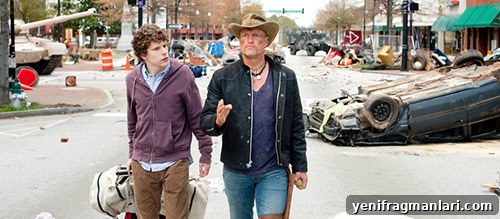
At its center is Columbus (Jesse Eisenberg), a neurotic, rule-driven survivor whose awkwardness and observational humor are reminiscent of Eisenberg’s earlier work. Columbus catalogues survival rules and adheres to routines that keep him alive, yet he’s unprepared for the strange new reality of human relationships after society’s collapse. His arc becomes less about the logistics of survival and more about learning to connect with others again.
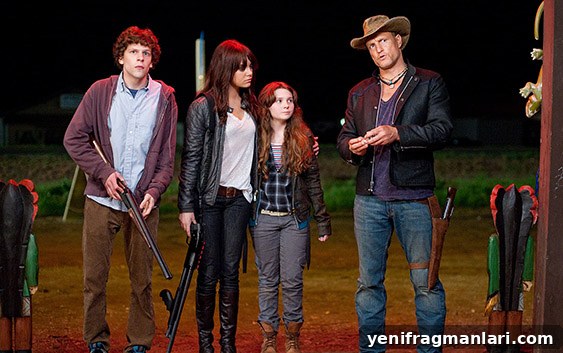
Opposite him is Tallahassee, played with exuberant bravado by Woody Harrelson. Tallahassee is a Twinkie-loving, shotgun-toting force of nature who brings comic energy and a reckless sort of confidence to every scene. Their partnership—part mentorship, part rivalry—drives much of the film’s humor. When they cross paths with sisters Wichita and Little Rock, portrayed respectively by Emma Stone and Abigail Breslin, the group forms a makeshift family whose chemistry provides the film’s emotional core.
Emma Stone’s Wichita is guarded and sharp, a character who relies on wits and self-preservation. Abigail Breslin’s Little Rock, younger and more vulnerable, gradually rediscovers childlike pleasures under the influence of the older survivors. The dynamics among the four lead characters develop naturally: mistrust and manipulation give way to simpler, quieter moments of affection and camaraderie. The film allows its characters to remain flawed and defensive while still opening the door to real warmth and humor.
Zombieland is best described as a brisk, witty take on the zombie genre that plays with expectations. Director Ruben Fleischer leans into visual gags and kinetic editing to amplify slapstick violence, but the film rarely feels gratuitous. Instead, it uses violent set pieces to underscore absurdity and to poke fun at genre clichés. One of the film’s most talked-about sequences—the cameo involving Bill Murray—underscores this playful tone. The scene subverts celebrity cameos and nails the movie’s willingness to be self-referential without losing momentum.
The screenplay by Rhett Reese and Paul Wernick balances set-piece comedy with character beats. While some moments dip into sentimentality, they generally land because the cast’s chemistry sells them. Eisenberg’s neurotic energy contrasts perfectly with Harrelson’s loud bravado; Stone brings an edge that keeps the film grounded, while Breslin adds the film’s most honest moments. Together they form an ensemble that makes even the quieter, more reflective scenes worthwhile.
Humor in Zombieland is often situational and dark, leaning on the shock value of slapstick death and ironic dialogue. That means it won’t trigger belly laughs every minute, but many scenes stick in the memory thanks to clever staging and timing. The film also lampoons apocalypse tropes—travel montages, pop-culture references, and survival checklists make routine genre conventions feel fresh. Overall, it’s both a tribute to and a send-up of zombie films.
There are small flaws: tonal shifts occasionally feel abrupt, and a few dramatic beats are more bittersweet than necessary. Yet those imperfections don’t derail the experience. Zombieland earns its reputation as a modern cult favorite by blending horror and comedy with strong performances and an attention to character chemistry.
Score: 17/24
Written by Libby Briggs
You can support Libby Briggs in the following places:
Twitter – @libbyjxde
Recommended for you: Zombieland – Double Tap Review