The Forgiven (2021)
Director: John Michael McDonagh
Screenwriter: John Michael McDonagh
Starring: Ralph Fiennes, Jessica Chastain, Matt Smith, Saïd Taghmaoui, Mourad Zaoui, Ismael Kanater, Caleb Landry Jones, Christopher Abbott
After the commercial disappointment of his previous film, War on Everyone, John Michael McDonagh returns to the director’s chair with The Forgiven, an adaptation of Lawrence Osborne’s novel. McDonagh—who built his reputation with distinctive films such as The Guard and Calvary—revisits familiar territory: a mixture of dark humour and moral gravity. The Forgiven continues his pattern of oscillating between comedy and drama, but it does so with a steadying seriousness that remains threaded with wry satire.
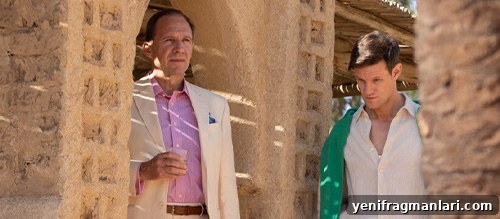
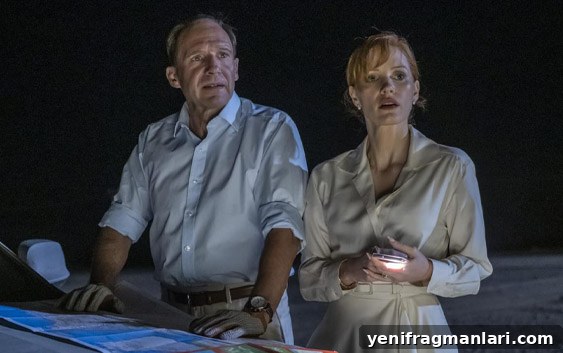
The Forgiven centers on David and Jo Henninger (Ralph Fiennes and Jessica Chastain), a self-absorbed couple spending the weekend at a wealthy friend’s remote Moroccan estate. Late one night, their car strikes and kills a local teenage boy. What follows is an exploration of responsibility, class indifference and the collision of two worlds. The film traces the fallout among the visiting guests, the local community, and most poignantly, the injured family — especially the boy’s father, Anouar (Saïd Taghmaoui).
Although marketed as a solemn, almost austere drama, McDonagh uses his adaptation as a vehicle for sharp social critique. The scenes that follow the accident expose the casual cruelty and entitlement of the privileged guests. Despite the gravity of the event, many of the partygoers react with annoyance and social posturing rather than genuine remorse. McDonagh captures how performative compassion can be a veneer for selfishness, and how tragedy reveals underlying character more than it elicits true contrition.
The film is at its core a character study. McDonagh structures the narrative to contrast those who remain in denial with those forced into moral reckoning. Through measured pacing and economical storytelling, he allows individual transformations — or failures to transform — to speak louder than cinematic spectacle. This restraint divides audiences: viewers expecting a conventional drama or a neatly packaged moral resolution may find the film uncompromising and uneven, while those open to a subtle, observational approach will likely appreciate its disciplinary focus.
Visually, McDonagh makes strong, deliberate choices. Wide, luminous shots of Morocco’s landscapes emphasize both the isolation of the luxury villa and the vastness of the world outside the guests’ insulated lives. The cinematography frames the environment almost as a character, a reminder of the world that continues beyond the bubble of privilege. This sense of space reinforces the film’s themes: the hollowness of excess and the dissonance between transient pleasure and enduring consequence.
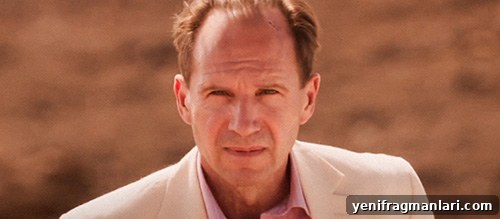
Performance-wise, The Forgiven benefits from committed work by its cast. Ralph Fiennes stands out, delivering a restrained, complex portrayal of a man increasingly confronted by his own limitations and privileges. His interactions with Saïd Taghmaoui’s Anouar are particularly compelling; the tension between them drives some of the film’s most affecting scenes. Their exchanges avoid melodrama, favoring subtext and small gestures that build emotional weight.
Jessica Chastain provides a layered performance as Jo, balancing brittle social poise with flashes of vulnerability. Their developing relationship with local characters, including Hamid (Mourad Zaoui), adds quieter, tender moments that contrast with the film’s darker satire. However, not all of the ensemble is given equal opportunity: actors like Matt Smith and Caleb Landry Jones are underused, their characters given limited depth and little room to develop beyond surface-level irritations or provocations. In some respects, this choice underscores McDonagh’s critique of shallow social types, but it can also feel like a missed opportunity to broaden the film’s emotional reach.
Structurally disciplined and tonally precise, The Forgiven does not attempt to moralize with heavy-handed rhetoric. Instead, McDonagh trusts the audience to observe and judge. The result is a thoughtful, occasionally uncomfortable film that lingers after the credits roll. It asks difficult questions about accountability, compassion and the ways social status can distort ethical responses to tragedy.
While the film has imperfections — notably the uneven use of its supporting cast — it represents a confident return for McDonagh. The Forgiven is a provocative and polished adaptation that combines elegant visuals, sharp writing and strong central performances. It may not suit every taste, but for viewers willing to engage with its measured critique of privilege, it offers a rich, contemplative experience.
Score: 17/24