
This article was written exclusively for The Film Magazine by Sophie Cook.
Penguin Bloom (2021)
Director: Glendyn Ivin
Screenwriters: Shaun Grant, Harry Cripps
Starring: Naomi Watts, Andrew Lincoln, Jacki Weaver, Griffin Murray-Johnston, Essi Murray-Johnston
“It must be weird to have wings but not be able to fly.”
Penguin Bloom, released on Netflix, is a quietly powerful true-story drama directed by Australian filmmaker Glendyn Ivin. Adapted from the best-selling memoir, the film follows Sam Bloom (Naomi Watts) and her family after a life-altering accident. With Andrew Lincoln as her husband and strong supporting work from Jacki Weaver and the young Murray-Johnston siblings, the film examines grief, resilience, and the surprising ways hope can return.
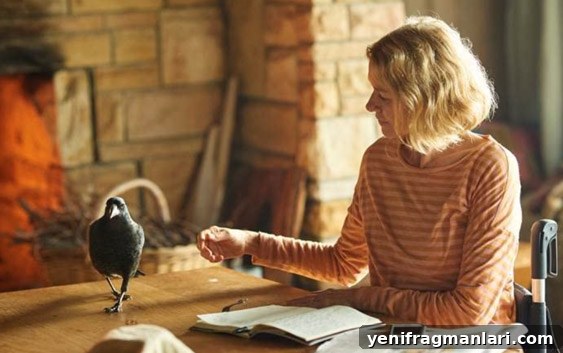
The story begins during a family vacation in Thailand when Sam is injured in a fall that leaves her paralysed from the chest down. The narrative focuses on how Sam, her husband, and their children cope with the sudden shift to a new daily reality. Into their lives comes an injured baby magpie—nicknamed Penguin—whose presence becomes a catalyst for connection and recovery. The film draws a deliberate parallel between Sam’s inability to walk and Penguin’s inability to fly, a metaphor that runs throughout the movie and underscores its emotional core.
Naomi Watts delivers a measured, heartfelt performance as Sam. Her portrayal avoids melodrama while conveying the real confusion, anger, and gradual acceptance that follow severe injury. Watts brings nuance to moments of frustration and tenderness alike, and her chemistry with the family ensemble makes the emotional milestones feel authentic rather than contrived. The film benefits from the decision to ground difficult scenes in everyday interactions—therapy sessions, family meals, and small rituals—so the audience can witness recovery as a series of tiny victories rather than a single triumphant moment.
The film’s use of perspective is one of its strengths. Much of the story is filtered through the eyes of Noah (Griffin Murray-Johnston), Sam’s eldest son, whose voiceover narration offers a child’s candid observations and questions. This viewpoint softens the film’s heavier themes while increasing our empathy: seeing trauma through a child’s perspective emphasizes confusion, resourcefulness, and the ways families adapt. The decision to center a child’s point of view gives the film a unique emotional texture and keeps the drama intimate and relatable.
Visually and tonally, Penguin Bloom leans into gentle symbolism. Penguin the magpie becomes more than a pet—she represents agency, companionship, and a reminder that life can still contain moments of freedom. Scenes of Sam learning to kayak for the first time are particularly effective; they are filmed with care and convey both fear and exhilaration. These moments strike a balance between realism and metaphor, showing how small acts of courage can reshape identity after loss.
Some viewers may find the film’s sentimentality deliberate and, at times, heavy-handed. The parallels between Sam and the bird are obvious, and the film occasionally favors emotional clarity over ambiguity. Yet for many, this directness will be part of the film’s appeal: it provides reassurance and an emotional throughline that helps viewers process difficult subject matter. Where the film could have taken greater artistic risks, it instead opts for accessibility, choosing to prioritize audience connection over stylistic experimentation.
Comparisons with other contemporary Australian dramas, such as Shannon Murphy’s Babyteeth, are useful for context. While Babyteeth embraces a more provocative, rule-breaking energy in its depiction of illness and youth, Penguin Bloom is steadier and more restorative. Both films explore how people confronted with serious health challenges search for meaning and reclaim agency, but they do so through markedly different tones and narrative choices.
Ultimately, Penguin Bloom is a thoughtful and compassionate film about family, recovery, and the unpredictable ways healing can arrive. It does not shy away from sadness, but it repeatedly returns to small acts of grace—shared meals, therapy sessions, and the quiet companionship of an animal that refuses to be dismissed. Naomi Watts anchors the film with a performance that is both vulnerable and controlled, and the ensemble cast supports a story that privileges warmth and authenticity.
This is a film that will resonate with viewers who appreciate character-driven drama and true-life resilience stories. It’s not flashy, but it is moving, artfully acted, and emotionally honest—an addition worth considering for any Netflix watchlist.
17/24
Written by Sophie Cook
You can support Sophie in the following places:
Twitter – @sophbc_
Blog – sophiebeatricesblog