
Jumbo (2021)
Director: Zoé Wittock
Screenwriter: Zoé Wittock
Starring: Noémie Merlant, Emmanuelle Bercot, Bastien Bouillon
At first blush, a story about a woman who falls in love with a fairground ride sounds like an absurd premise for a feature film. Yet Zoé Wittock’s Jumbo treats that premise with sincerity, curiosity and a surprising tenderness. The film centers on Jeanne, played with striking subtlety by Noémie Merlant, a young woman who finds work maintaining attractions at a traveling funfair. There she becomes enamored of a new tilt-a-whirl style ride she nicknames “Jumbo,” and Wittock uses this unusual romance to explore desire, otherness and the varied forms that love can take.
Jeanne is quietly eccentric: she lives with her mother, Margarette (Emmanuelle Bercot), has a short, earnest haircut, and constructs miniature carnival rides in her bedroom. Isolated from typical social or romantic networks and lacking a father figure in her life, Jeanne’s attachment to the metallic, pulsating machine feels less like sensationalism and more like an expression of genuine emotional need. The film approaches objectophilia—the attraction to inanimate objects—with a blend of realism and empathy rather than ridicule.
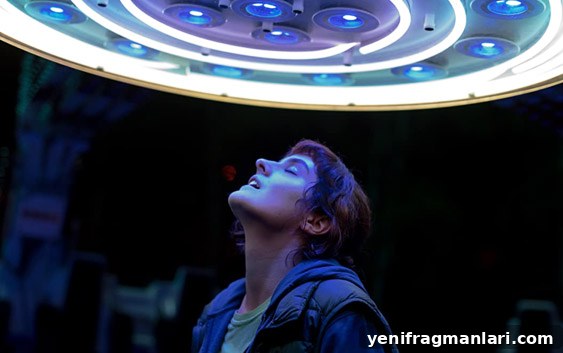
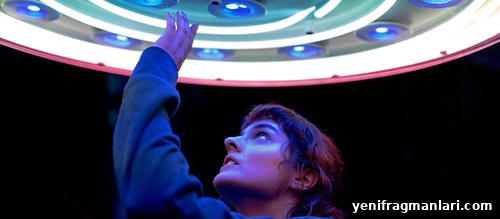
Wittock stages Jeanne’s relationship with Jumbo with surprising delicacy. The ride’s lights, movements and mechanical hum become a language of affection; the film invents simple signals—green for yes, red for no—to permit communication between woman and machine. These moments are handled with a shy, almost adolescent sweetness, and the director allows the audience to witness how Jeanne’s longing is both intimate and unapologetic. There’s humor, but the humor never undermines the humanity of Jeanne’s feelings.
The physicality of Jeanne’s bond with Jumbo moves into erotic territory, and cinematographer Thomas Buelens frames these sequences with an unexpected beauty. Close-ups, reflective surfaces and the contrast between cold metal and warm skin create a tender eroticism that avoids sensational exploitation. Persistent sensory detail—the glint of lights, the sheen of hydraulic oil, the motion of the ride—grounds the film in material reality even as it invites viewers to accept a romance that defies convention.
Performance is the film’s strongest asset. Noémie Merlant gives a nuanced portrayal of a woman whose internal life is intense but introverted. Margarette, as Jeanne’s pragmatic mother, oscillates between concern and support; her reaction to her daughter’s attachment reveals generational tensions about normalcy and love. Bastien Bouillon’s Marc, the funfair boss, offers a foil to Jeanne’s mechanical lover—representing the human suitor who cannot penetrate her heart in the same way. The supporting cast, including a handful of antagonistic teenagers who bully Jeanne, underline how society can react with dismissal or hostility to atypical expressions of love.
Beyond its literal plot, Jumbo functions as an allegory about queer longing and social othering. Jeanne’s experience—defending her love to those who refuse to understand it, facing the threat of institutionalization, and navigating shame that others project onto her—mirrors many narratives of people whose relationships fall outside heteronormative expectations. Wittock does not force a single interpretation, but the film invites empathy for anyone who has been told their love is invalid.
The film’s pacing is measured, focused on mood and character rather than conventional plot twists. A few narrative threads feel underdeveloped—the bullying subplot and some secondary characters could have been given more depth—but these minor distractions do not derail the film’s emotional core. Wittock’s direction remains assured: she commits to an original premise and resists easy punchlines or moralizing judgments.
Visually and tonally, Jumbo is a distinctive entry in contemporary European cinema. It blends offbeat humor with frank sensuality and offers a refreshing, humane portrait of desire that refuses to be easily categorized. For viewers willing to surrender to its singular logic, the film is at once touching, provocative and oddly uplifting.
Score: 18/24