
One Flew Over the Cuckoo’s Nest (1975)
Director: Miloš Forman
Screenwriters: Lawrence Hauben, Bo Goldman
Starring: Jack Nicholson, Louise Fletcher, William Redfield, Will Sampson, Danny DeVito, Brad Dourif, Christopher Lloyd, Scatman Crothers, Sydney Lassick
Few films have left as indelible an impression on cinema and popular culture as One Flew Over the Cuckoo’s Nest. A rare Academy success, the film won the five major Oscars — Best Picture, Best Actor, Best Actress, Best Director, and Best Screenplay (Adapted) — joining an elite group of pictures that achieved the same sweep. Its enduring power comes from a perfect convergence of performances, direction, and writing that balance warmth, humour, and genuine menace.
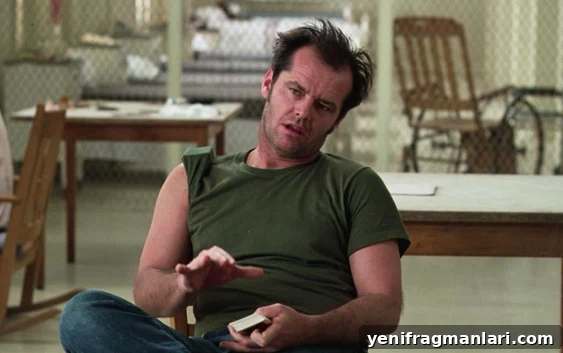
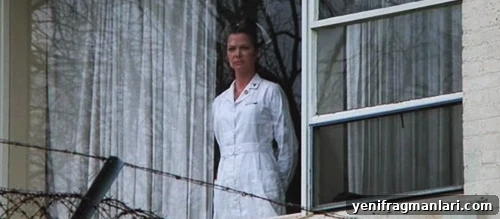
Jack Nicholson stars as Randle Patrick McMurphy, a brash and unpredictable convict who feigns mental illness to escape the backbreaking routine of a prison work farm. Transferred to a psychiatric hospital, McMurphy’s rebellious energy quickly transforms the ward. He challenges the passive resignation of the other patients and stands in direct opposition to the ward’s iron-willed supervisor, Nurse Ratched, played with chilling restraint by Louise Fletcher. Their conflict is not merely personal; it becomes a larger struggle over authority, dignity, and human agency.
Director Miloš Forman brings a measured, unflashy approach that suits the material perfectly. Forman, who grew up under an oppressive regime, understood the dynamics of control and the yearning for liberation. His direction favors psychological realism over theatrical spectacle, allowing character interactions and small gestures to carry emotional weight. The film’s camera work, edited pacing, and unobtrusive compositions emphasize the claustrophobic atmosphere of the institution while giving space for moments of laughter and tenderness.
The central performances are the film’s greatest strength. Nicholson’s McMurphy is charismatic and irreverent, a force of nature who brings life to the ward and awakens a sense of possibility in the other patients. Nicholson blends humour and vulnerability, making McMurphy at once infuriating and deeply sympathetic. Louise Fletcher’s Nurse Ratched is an equally remarkable creation: controlled, icy, and quietly manipulative. She rarely raises her voice, yet every calm phrase and small, precise move communicates power. The dynamic between Nicholson and Fletcher creates an electric tension that drives the narrative.
Around them, the supporting cast enriches the world of the ward. Each inmate is drawn with empathy and individuality, which turns the ensemble into a community you come to care about. Performances from actors such as Christopher Lloyd, Danny DeVito, Brad Dourif, Scatman Crothers and others contribute nuanced, memorable moments that range from comic relief to heartbreaking honesty. Their chemistry makes the friendship, games, and shared escapes—both literal and emotional—feel convincingly human.
The film does not shy away from darker material. Its depiction of institutional power includes scenes that are deeply unsettling, staged with deliberate sensitivity so the audience cannot look away. One particularly infamous sequence involving electroconvulsive therapy is handled with stark realism: the build-up, camera choices and performances combine to make the moment wrenching and unforgettable. That scene crystallizes the film’s moral core — the cost of resisting systems that strip people of autonomy.
Beyond individual scenes, the script balances tones skillfully. It alternates moments of exuberant rebellion—card games, a boat excursion, secretive late-night visits—with quieter, more reflective passages that reveal the characters’ histories and vulnerabilities. These contrasts deepen the emotional impact, making the eventual consequences of the central conflict feel both inevitable and tragic.
One Flew Over the Cuckoo’s Nest has become a touchstone for films about institutions, leadership, and the human spirit. Actors studying how to portray camaraderie, defiance, or institutional cruelty still look to this film as a model for how to combine subtlety and forcefulness. Its influence extends into how directors stage groups, how screenwriters build ensemble empathy, and how performers find truth in characters who are marginalized or misunderstood.
Decades after its release, the film remains powerful because its core questions are timeless: who has the right to decide what’s “normal,” and what happens when authority is exercised without compassion? The movie’s clarity of purpose, its finely tuned performances, and its humane perspective secure its place as a classic. It is a film that continues to provoke thought, move viewers, and withstand repeated viewings.
Score: 23/24
Rating: 5 out of 5.