
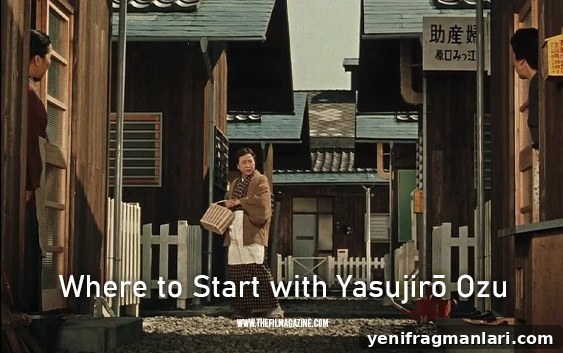
Alongside Akira Kurosawa and Kenji Mizoguchi, Yasujirō Ozu stands among the most celebrated Japanese filmmakers in history. Born in Tokyo in 1903, Ozu built a career spanning four decades—from the silent era of the 1920s through the transformative 1960s—producing intimate, sharply observed portraits of Japanese life. His films examine family ties, marriage, social expectations and daily rituals with a restraint and emotional clarity that have made them enduringly influential. Critics and audiences in Japan have long called him “the most Japanese of all Japanese directors,” a recognition of his unique ability to render cultural nuance and human feeling on screen.
This article highlights three essential Ozu films that serve as excellent entry points into his work: Late Spring (Banshun, 1949), Tokyo Story (Tōkyō Monogatari, 1953) and Good Morning (Ohayō, 1959). All three exemplify Ozu’s trademarks—his approach to composition, camera placement, use of music and recurring themes—even as they address different facets of family life and social change. The films are presented here chronologically to show how Ozu’s concerns and techniques evolved while retaining a consistent authorial voice.
1. Late Spring (Banshun, 1949)
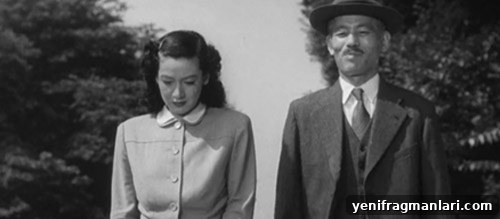
Late Spring centers on the relationship between a widower, Shukichi Somiya, and his devoted daughter Noriko. As Shukichi and Noriko navigate the expectations of family and society, relatives press the father to remarry so Noriko can move on with her life. Noriko, however, resists leaving her father, and the film charts the emotional negotiation that follows.
Marriage and social obligation are at the heart of Late Spring, as Ozu examines how personal affections and public expectations collide. Stylistically, Ozu favors static, carefully composed shots that often resemble documentary observation. He uses wide exterior framings to establish place and medium or “American” shots indoors, but he rarely relies on camera movement. Notably, Ozu sometimes breaks the conventional 180-degree rule during conversations to produce a more intimate, immersive perspective.
Several sequences in Late Spring capture Ozu’s subtle method of conveying emotion through camera placement and sound. A scene at a Noh performance, for example, intercuts lingering views of Noriko and her father with fragments of the stage and the performance’s diegetic music. By allowing the characters and the audience to hear the same sounds, Ozu invites empathy: the music and the actors’ dialogue mirror Noriko’s inner life, while a closing shot of a solitary tree quietly evokes her growing isolation.
Another key moment occurs when Mr. Somiya announces his intention to remarry. Noriko’s tears and resistance give way to a conversation about happiness—described as something to be built and believed in—which encapsulates Ozu’s humane perspective. Rather than dramatizing conflict with melodrama, Ozu presents gradual emotional adjustments and the tacit compromises that sustain family life.
2. Tokyo Story (Tōkyō Monogatari, 1953)
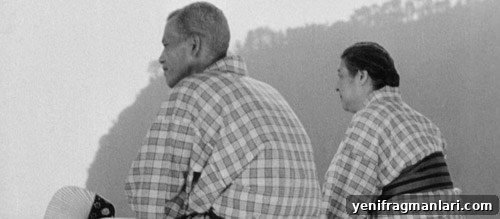
Tokyo Story is widely regarded as one of Ozu’s masterpieces and a cornerstone of world cinema. The film follows an elderly couple, Shūkichi and Tomi Hirayama, who travel from their provincial town to Tokyo to visit their grown children. Their trip reveals a silent gulf: the children are preoccupied with their own lives and often treat the parents as inconveniences. The most compassionate figure is Noriko, the widowed daughter-in-law, whose gentle kindness contrasts with the family’s indifferent younger generation.
Ozu again employs static compositions and low, meditative camera positions, while interweaving diegetic and non-diegetic music to underscore the emotional tone. Everyday moments—a meal, a drink with friends, a stay at hot springs—become sites for quiet revelation about social change and generational distance. Ozu often shoots scenes from behind characters’ heads or from low angles, deliberately departing from Hollywood conventions to place viewers within the relational dynamics onscreen.
Where Late Spring presents a tender, reluctant separation in a single household, Tokyo Story widens the frame to show how modernization and changing priorities affect family bonds across generations. The film’s restrained approach makes its moments of grief and regret all the more affecting.
3. Good Morning (Ohayō, 1959)
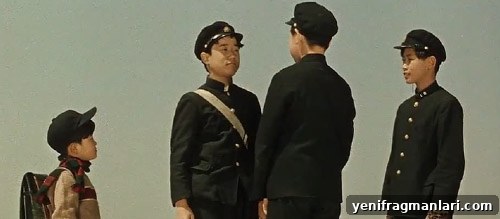
Ozu’s Good Morning—his second color feature—shifts perspective to suburban life and the world of children. The story follows two young brothers, Minoru and Isamu Hayashi, who want their parents to buy a television. When their parents refuse, the boys stage a playful, stubborn protest by refusing to speak. The premise allows Ozu to explore postwar changes in Japanese society with a lighter touch than his earlier domestic dramas.
Although more comedic in tone, Good Morning continues Ozu’s investigation of modernity versus tradition. The film treats television, western fashions and consumer culture as markers of social transformation, and it examines how these forces reshape everyday routines and communication within neighborhoods and families. Technically, Ozu’s camera work remains recognizably consistent—measured framing, deliberate pacing and the blend of diegetic and non-diegetic sound—so the film reads as a natural extension of his themes despite its brighter mood.
Together, these three films illustrate Ozu’s enduring concerns: the architecture of family life, the quiet dramas of domestic decision-making and the subtle effects of social change. His visual grammar—static frames, low camera angles, and careful attention to objects and interiors—supports a storytelling method that prizes observation over spectacle. Viewing Ozu requires patience and close attention, but the reward is profound: a cinema of small gestures that reveals complex emotional economies and the lived textures of Japanese society.
In contrast to Akira Kurosawa’s dynamic and often theatrical style, Ozu’s films may at first seem restrained or austere. Yet that restraint is intentional. Ozu’s cinema asks the viewer to slow down, to notice the ordinary, and to reflect on how social expectations and family ties shape our lives. As a result, his films remain timeless studies of human connection and a central pillar of Japanese film history.