
This article was written exclusively for The Film Magazine by Shona Leigh Pope.
Representing autism on screen has long been a challenge for filmmakers. For decades one film in particular—1988’s Oscar-winning Rain Man—dominated the public imagination as the primary cinematic depiction of autism. While it helped raise visibility for autistic people, it also shaped a narrow stereotype: the notion that autistic people are invariably savants with extraordinary abilities but poor social skills.
Autistic savants are individuals on the autism spectrum who demonstrate exceptional skills in specific areas that far exceed the norm. In Rain Man, Dustin Hoffman’s character Raymond displays an eidetic memory and prodigious mathematical talent. That portrayal reinforced a misconception that all autistic people are born with similar prodigies, even though estimates suggest that fewer than a hundred autistic savants exist today.
More than thirty years after Rain Man, authentic, nuanced portrayals of autism in mainstream cinema remain scarce. A recent flashpoint was the controversy surrounding Australian singer-songwriter Sia’s directorial debut, Music, released in Australia on January 14, 2021.
Public Criticism
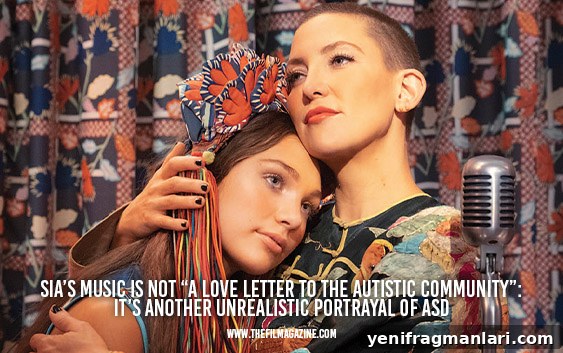
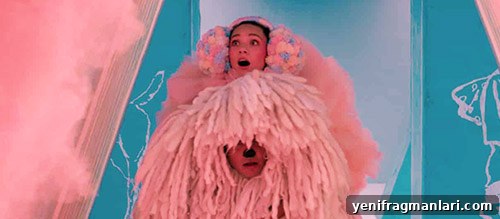
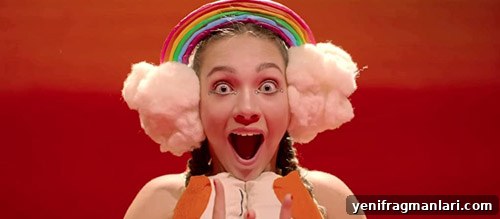
Music tells the story of Zu (Kate Hudson), a newly sober drug dealer who becomes the guardian of her autistic younger sister, Music (played by Maddie Ziegler), after their grandmother dies. The film intersperses musical sequences that attempt to represent Music’s sensory and emotional experience through simplified shapes, bright colors and textures, with songs performed by Sia herself.
Although the film received two Golden Globe nominations, it drew widespread criticism from reviewers and disability advocates. Some critics argued that the film’s tone and depiction bordered on mockery rather than respectful representation; one prominent review described it as “indistinguishable from mockery.” Beyond professional reviews, members of the autistic community raised strong objections, and a petition calling for the rescinding of the Golden Globe nominations gathered significant support, with over 65,000 signatures.
Much of the backlash focused on casting. The character of Music was played by Maddie Ziegler, a neurotypical performer who has frequently collaborated with Sia. Critics and autistic advocates said the role should have been offered to an autistic actor. Sia replied that she had attempted to work with autistic actors but found the process “unpleasant and stressful,” a comment that prompted concern and further criticism from autism organizations. Representatives pointed out that suggesting autistic actors could not cope with such a role perpetuates exclusion and undercuts opportunities for authentic representation.
Where Did Music Go Wrong?
Neither Sia nor Maddie Ziegler is autistic. Ziegler reportedly prepared by spending time at the Child Mind Institute to learn about autistic behaviors, communication styles, and stimming (repetitive physical movements). Her performance shows attempts to capture some mannerisms associated with autism, but the deeper problems with the film are structural and conceptual rather than solely performative.
Two recurring issues appear in Music and in many films that center autism. The first is the romanticization of non-neurotypical behavior: reducing autistic experience to visual gimmicks or exceptional abilities. The second is the dehumanization or lack of agency afforded to autistic characters—the tendency to present them as props whose primary function is to challenge or emotionally educate neurotypical characters.
In Music, the narrative often sidelines the lived challenges autistic people face, opting instead for stylized sequences that emphasize otherness. This approach risks reinforcing the idea that autism is either a spectacle or a narrative device. Too many films highlight savant-like traits or “seeing the world differently” tropes while giving autistic characters little inner life or decision-making power. Autistic people are not uniformly gifted or isolated; they are full people with a range of strengths and difficulties that deserve complex, human portrayals.
Good representation should acknowledge both the joys and the real challenges of autism without flattening characters into symbols. Autistic characters should be allowed complexity, autonomy and the dignity of fully-rounded narratives.
Making Autism Understood
The crux of the problem is captured in Sia’s own words: “The movie is both a love letter to caregivers and to the autism community. I have my own unique view of the community.” While well-intentioned, that perspective highlights a broader issue—too often neurotypical creators speak for autistic communities without meaningful input from autistic people themselves.
Authentic representation requires the inclusion of autistic creators at every stage: writers, directors, consultants, actors, editors and producers. When autistic people shape their own stories, films are more likely to reflect nuanced realities rather than stereotypes. Representation should move beyond visibility toward genuine understanding, giving audiences insight into lived experiences grounded in truth rather than spectacle.
Music is not the only award-nominated film to fall short of appropriate representation, but its visibility and celebrity backing make the shortcomings especially notable. While Rain Man no longer stands alone as the primary reference for autism in film, the controversy around Music shows that progress toward accurate, respectful portrayals is still incomplete.
Written by Shona Leigh Pope
You can support Shona at the following links:
Twitter – @ShonaLeighPope