
Greyhound (2020)
Director: Aaron Schneider
Screenwriter: Tom Hanks
Starring: Tom Hanks, Stephen Graham
Tom Hanks returns to the writer’s chair with Greyhound, a concentrated World War II naval drama released on Apple TV+. Best known as an actor, Hanks has previously written for the screen and published popular short stories; in this film his screenplay focuses tightly on the tension and technical detail of a single convoy mission in the Battle of the Atlantic.
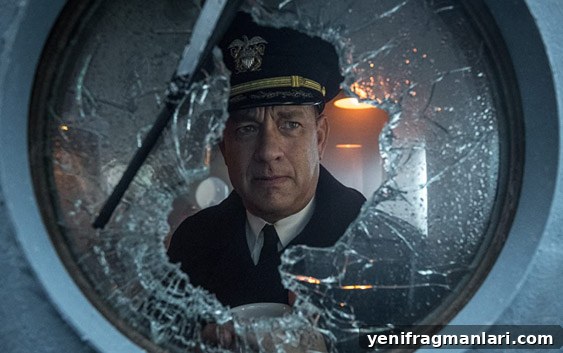
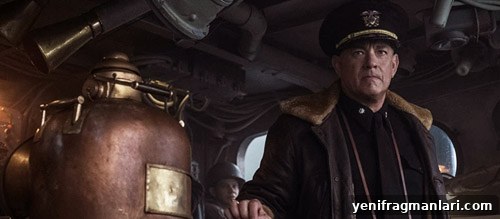
Set in the North Atlantic in 1942, the story follows Captain Ernie Krause, played by Hanks, who commands the destroyer Greyhound as it escorts a convoy of supply ships from North America to Britain. Tasked with protecting vulnerable merchant vessels across a stretch of ocean nicknamed “the Black Pit,” Krause must lead his crew through a sudden and relentless U-boat assault. The narrative is built almost entirely around those high-stakes hours, with most scenes taking place on the bridge or in cramped combat positions.
Hanks’ portrayal of Captain Krause is restrained and believable. The character is established as a devout, disciplined officer—he prays, observes small rituals and maintains strict standards—but the screenplay only occasionally ties these traits to a deeper emotional arc. A few flashbacks hint at a more complicated personal life, including a brief scene in which Krause proposes to a woman who refuses him, but those moments are fleeting and don’t receive the dramatic payoff one might expect. Still, Hanks’ measured performance anchors the film and gives the tense moments a steady center.
Stephen Graham provides vital support as Charlie, the ship’s first mate. Graham’s delivery—marked by a forceful, accented cadence—injects energy and urgency into exchange-heavy scenes. The chemistry between Hanks and Graham, though limited by screen time, supplies the relationship the movie needs: a working partnership tested under strain. Other members of the supporting cast are serviceable but often faceless; many crewmen go unnamed, credited only as messenger or gunner, which reduces opportunities for broader character development and human drama.
The film’s strength lies in its technical execution. Cinematography and visual effects make the closed quarters feel cinematic rather than claustrophobic, and the battle sequences are staged with practical clarity. The sound design and musical score are particularly noteworthy; the film’s audio landscape—clanging metal, shouted commands, depth charges and the omnipresent ocean—creates an immersive atmosphere that heightens tension more effectively than additional subplots might have.
Voiceover and radio communication drive much of the storytelling. The film depends on terse reports, sonar pings and running updates between ships to convey the tactical situation, so clear, purposeful audio is essential. That emphasis on sound makes the technical elements of Greyhound its standout feature, and it is easy to see why the film’s audio work drew recognition during awards season.
At roughly feature length, the film’s compressed runtime is both an asset and a limitation. The tight focus keeps the pace brisk and the suspense continuous, but it also leaves little room to deepen characters or expand the dramatic stakes beyond the bridge. For viewers seeking a dense, seconds-by-seconds wartime procedural, the approach is satisfying. For those looking for more human backstory or emotional complexity, the film may feel thin.
The screenplay embraces authenticity in military procedure and nautical jargon, which will please viewers interested in tactical detail but might alienate those who prefer broader, character-driven drama. Where the script excels is in creating a palpable sense of peril: the convoy’s vulnerability is constant, and the film convincingly conveys how small decisions and split-second reactions matter in life-or-death combat.
Overall, Greyhound is a technically accomplished, well-acted naval thriller that prioritizes atmosphere and procedural realism over sentiment. Its greatest achievements are the cohesion of Hanks’ central performance and a soundscape that delivers relentless immediacy. The film’s shortcomings—limited character development and an occasionally clinical tone—prevent it from becoming a fully rounded drama, but it remains a compelling, well-crafted depiction of convoy warfare.
10/24