
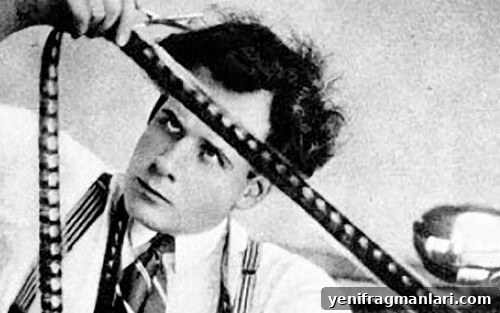
Introduction to Soviet Montage and Sergei Eisenstein
This short essay introduces Soviet Montage and the work of Sergei Eisenstein within the Soviet School of cinema. It is intended as an accessible overview rather than an exhaustive history of the subject.
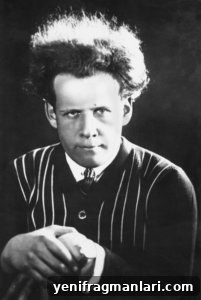
During the early twentieth century, avant-garde movements spread across Europe and found a particularly vibrant expression in Russia. The Russian avant-garde reached a peak in the years surrounding World War I and the Russian Civil War (1917–1922), and its influence continued into the early Soviet era. This cultural surge brought new ideas across literature, theatre, and the visual arts: Formalism reshaped literary theory, Constructivism transformed visual practice, and Vsevolod Meyerhold’s biomechanics revolutionized stage acting. Many important Soviet filmmakers, including Eisenstein, trained in Meyerhold’s theatre in Moscow and drew on those theatrical methods to develop cinematic techniques.
In cinema, Lev Kuleshov is widely recognized as a pioneer. As a leading figure at the Moscow Film School—the world’s first dedicated film school—Kuleshov explored the psychological power of editing, producing what became known as the Kuleshov effect. His experiments laid the groundwork for Soviet Montage theory, which Eisenstein and contemporaries such as Vsevolod Pudovkin would expand into distinct artistic systems.
Eisenstein’s first feature, Strike (1924), introduced the “montage of attractions,” a method that juxtaposed contrasting images to create symbolic meaning and heighten emotional impact. One striking sequence alternates between footage of a slaughtered cow and scenes of factory workers being shot during a riot. By placing these images in direct relation, Eisenstein condensed social critique—linking hunger, exploitation, and violent repression into a single, forceful statement.
Over the following years Eisenstein refined these editing strategies into what he called “intellectual montage,” a more complex technique that built meaning not only from the contrast between shots, but also from the internal composition of each frame. Battleship Potemkin (1925) and October (1927) are landmark films in which this approach is fully realized. Intellectual montage asks viewers to draw associations between disparate visual elements, producing concepts that no single image could convey on its own.
One example appears in a sequence where a sailor in a striped shirt smashes a plate. Eisenstein arranges shots so that the sailor’s stripes contrast with vertical stripes on a wall behind him. The director fragments the moment into multiple angles—a long shot of the action, then a close-up that freezes and prolongs the gesture—so the audience experiences the act as both immediate and analytically observed. The plate carries a printed plea: “Give us this day our daily bread.” The repetitive, overlapping depiction of the action transforms a simple outburst into a charged political symbol.
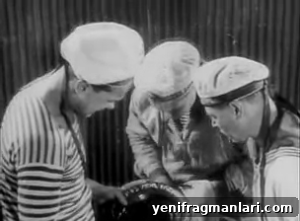
Eisenstein often overlapped time, presenting the same event from several viewpoints in rapid succession. These snappy cuts and repeated angles disrupt cinematic continuity on purpose: the technique is not realistic but deliberately rhetorical. By fragmenting time and perspective, Eisenstein sought to provoke the viewer’s intellect and emotions simultaneously, compelling audiences to interpret political and social meanings embedded in the montage.
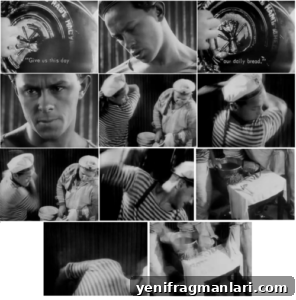
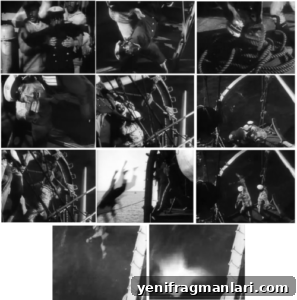
Another instance of overlapping time occurs during a scene in which sailors throw a doctor overboard. The sequence repeats the action from different vantage points, using discontinuous cutting to emphasize the violence and moral judgment of the crowd. These editing choices are not just stylistic flourishes but rhetorical tools intended to mobilize feeling and thought.
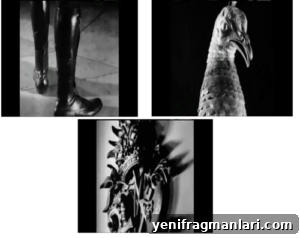
October continues this pattern. Eisenstein juxtaposes images of Alexander Kerensky with a peacock to suggest vanity and self-display, then cross-cuts to boots and the Romanov coat of arms to imply continuity between Kerensky and the ancien régime. These rapid associations, presented without conventional narrative continuity, work alongside intertitles to invert the film’s explicit captions and reveal a deeper political interpretation: the revolution betrayed by false democrats and lingering symbols of oppression.
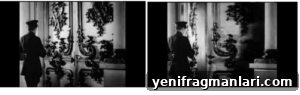
Beyond editing, Eisenstein believed montage principles applied across all cinematic elements, including lighting and color. Two notable examples are Alexander Nevsky (1938) and Ivan the Terrible (Part One, 1944; Part Two, 1958). In Alexander Nevsky he uses costume and tonal contrast—white-clad knights to imply oppression and darker tones for patriotic defenders—to demonstrate how color and composition can be recontextualized to carry ideological meaning.
In Ivan the Terrible Eisenstein famously reserves color for a single, dramatic episode—the death of a character—while the rest of the film is in black and white. The selective use of color intensifies emotion and registers as a deliberate aesthetic and conceptual choice. Such experiments in form contributed to Eisenstein’s reputation for intellectual rigor, a quality that sometimes left broader audiences estranged from his most abstract work.
Although Eisenstein’s close association with the Soviet state complicated his reception in the West, his theories eventually received wide recognition. Many later filmmakers have adopted aspects of his approach—selective color usage and associative montage remain central tools in global cinema. The staircase sequence in Battleship Potemkin and Eisenstein’s intellectual editing can be seen echoed in films across decades, while the emotional power of color contrast influenced directors exploring dramatic emphasis.
Eisenstein’s legacy endures: his innovations in montage, his integration of theatrical training into cinematic form, and his belief that editing, image composition, light, and color together can produce powerful ideological meanings continue to shape how filmmakers think about film language.
Recommended for you: Our “Where to Start with” Series
Bibliography and further reading
Ejzenštejn, Sergej. Il montaggio (The Montage). Marsilio, 1986.
Ejzenštejn, Sergej. La regia (Directing). Marsilio, 1989.
Somaini, Antonio. Ejzenštejn. Einaudi, 2011.