
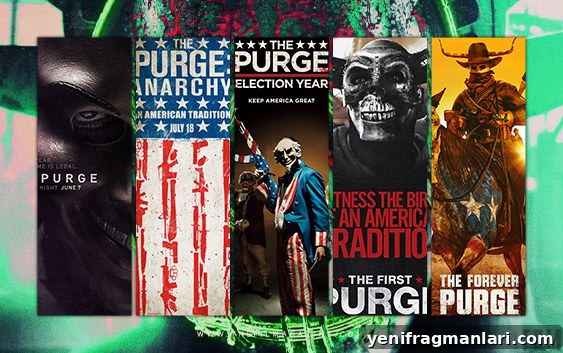
The Purge series is an alternate-history thriller-horror phenomenon that has earned large box-office returns on relatively modest budgets. The franchise includes five films and a two-season television series. Each entry varies in focus, but the central premise remains consistent: one night a year, most crimes are legal in the United States, with a few narrowly defined exceptions such as the use of explosives or the targeting of certain protected officials. The films never fully explain how those exceptions are enforced or how emergency services are handled during the Purge night. The stated rationale for the Purge is that it lowers crime and poverty for the rest of the year, but the franchise rarely examines the mechanisms behind those claims or treats them with strong skepticism.
The original film, The Purge, uses the premise to stage a contained home-invasion thriller. The concept of unrestricted crime is mostly expressed through violence and murder, rather than a broader exploration of the wide array of crimes people could theoretically commit on Purge night. The franchise gestures toward issues such as the wealth gap, racism, and policies that disproportionately harm marginalized communities, but the earliest installments present these themes in a rather thin, underdeveloped way. The dystopian framework often feels like set dressing used to drive suspenseful sequences rather than serving as a vehicle for rigorous social critique.
Director James DeMonaco has said his inspiration included watching American news and noticing patterns in portrayals of violence, but the films oscillate between reflecting contemporary anxieties and exploiting sensationalized violence for commercial success. The fictional political movement known as the New Founding Fathers of America embodies a peculiar blend of populism and utopian certainty, and promotional materials presented the Purge as backed by scientific research and social benefits — claims the films themselves rarely interrogate in depth. Characters in the films often accept the ritualized violence of Purge night with a surprising level of resignation, which weakens the franchise’s potential to explore moral or civic resistance in a convincing way. Later entries make more deliberate efforts to address these shortcomings.
Whether you view the series as a legitimate critique wrapped in entertainment or simply a popcorn-friendly horror-action franchise, there is a clear ranking among the films based on how effectively they use the premise and engage with real-world themes. The following list presents the movies from least to most successful in those respects.
5. The Purge (2013)

The original film is the weakest of the series. Featuring actors such as Ethan Hawke and Lena Headey, it centers on a wealthy family that believes its security will protect them during Purge night — until the household takes in a stranger against the head of the family’s wishes. The premise adds novelty, but the film feels claustrophobic and offers only superficial discussion of the Purge’s moral and political implications. Aside from a few brief conversations and promotional tie-ins that expand the world, the story remains limited to a single house, which reinforces the film’s insular perspective.
Much of the film’s tension relies on masked attackers lurking outside security cameras and the spectacle of ritualized violence. The villains’ theatricality and the family’s internal conflicts could have supported a darker social critique, but the movie opts for standard home-invasion beats and misses an opportunity to explore the larger societal context of the Purge. Performances are adequate but rarely transcendent, and the film’s core idea is overshadowed by its focus on violent spectacle.
4. The Purge: Anarchy (2014)
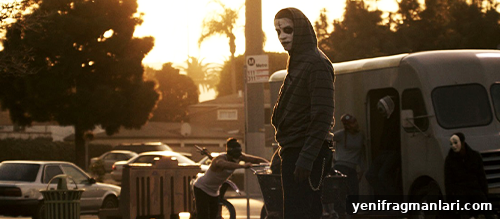
The second film expands the world by setting much of the action out in the streets on Purge night. Its straightforward premise follows three groups of people who become stranded and must survive escalating violence. The wider scope is an improvement over the original’s narrow setting, but the characters often feel like archetypes running from one action set piece to the next, with limited emotional or thematic payoff.
The movie includes striking ideas, such as a wealthy silent auction in which rich participants can buy victims, but these elements are often shoehorned into action sequences rather than examined as disturbing consequences of structural inequality. While it captures a chaotic urban atmosphere and offers more physical stakes, it still functions primarily as a genre action film rather than a deeper exploration of the Purge’s social ramifications.
3. The Purge: Election Year (2016)

This installment frames its plot around a political campaign: a presidential candidate who opposes the Purge becomes a target of the ruling regime. Released in a politically charged year, the film introduces elements such as Purge insurance and protection for certain political classes, and it follows a store owner pulled into the campaign’s protection detail. The movie does a better job showing the New Founding Fathers as an organized political force rather than relying solely on cartoonish villains.
However, its political commentary is uneven and rarely pointed. The film sometimes feels opportunistic in how it uses the election backdrop, and certain character arcs and plot conveniences limit its impact. Nonetheless, it offers clearer stakes and a more direct engagement with power, policy, and resistance than the first two films.
2. The First Purge (2018)
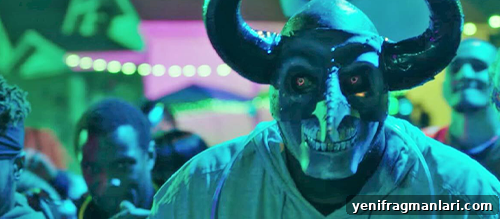
The First Purge is the most focused examination of what the series could achieve thematically. As a prequel, it dramatizes the Purge’s origin as a staged experiment targeting a marginalized community. The premise — offering financial incentives for participation and equipping participants with recording contacts — renders the experiment plausibly bureaucratic and chilling.
By concentrating on how the Purge was used to divide and harm a Black Staten Island neighborhood, the film gives the franchise a clearer moral center. It still leans on a familiar antagonist — a brutal serial killer figure — and at times falls back on the franchise’s tendency to depict violence without nuance. Visually, however, the film benefits from more stylized lighting and direction, which enhances its tone and helps it stand out from earlier entries.
1. The Forever Purge (2021)
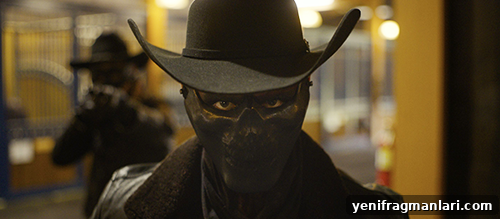
The Forever Purge marks a clear pivot toward addressing contemporary political anxieties more directly. It continues the prequel’s focus on communities disproportionately affected by the Purge while adding new thematic weight: in this film, the Purge does not end with the night but continues as an organized, violent movement. The story follows ranch hands and owners fleeing toward Mexico in search of safety, creating a stark, often uneasy contrast between xenophobic locals and immigrant workers.
The movie’s depiction of growing authoritarian movements and civil breakdown feels more intentional and urgent than previous installments. It introduces geographic variety — desert highways, border tensions, and rural landscapes — and asks characters to make moral and diplomatic choices under extreme pressure. While still an action film, it uses its set pieces to explore social division, political radicalization, and the consequences of normalized violence.
The franchise has improved over time by gradually centering stories about the communities most harmed by the Purge and by sharpening its political focus. As of this writing, another film in the series is in development. If the series continues, its greatest challenge will be balancing the adrenaline-driven demands of genre filmmaking with a sustained, thoughtful engagement with the social and political questions that inspired its premise. When the films foreground spectacle at the expense of worldbuilding or coherent social logic, they undercut the very critiques they claim to make. At their best, however, these films can provoke discussion about inequality, policy, and the fragility of civic life.