
It’s a Wonderful Life (1946)
Director: Frank Capra
Screenwriters: Frances Goodrich, Albert Hackett, Frank Capra
Starring: James Stewart, Donna Reed, Lionel Barrymore, Thomas Mitchell, Henry Travers
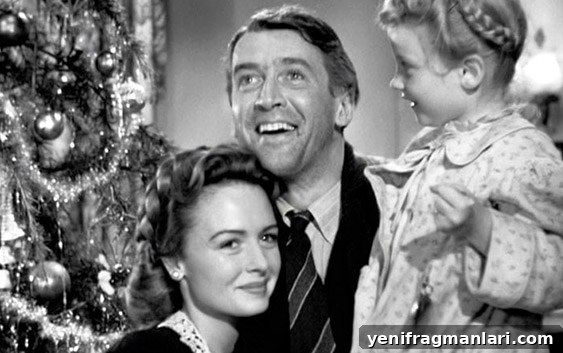
Although it failed to recoup its budget during its initial 1946 release, It’s a Wonderful Life has grown steadily in stature and affection over the decades. Thanks largely to regular television broadcasts during the Christmas season, Frank Capra’s initial box-office disappointment evolved into a perennial favorite. Now, more than seventy years after its debut, the film is widely recognized as one of the most beloved holiday classics.
Produced by Liberty Films—the short-lived company founded by Frank Capra, William Wyler and George Stevens—It’s a Wonderful Life was conceived as a moral and emotional balm in the immediate aftermath of World War II. Its themes of sacrifice, community, and redemption struck a deep chord with audiences then and continue to resonate today. The film’s sincerity and clear moral center give it a timeless quality that crosses generations: young viewers can still recognize echoes of their grandparents’ lives in George Bailey and Mary Hatch, and modern viewers connect with the film’s enduring human truths.

The story’s origin is often misrepresented as coming from a greeting card, but it actually began with Philip Van Doren Stern’s short story “The Greatest Gift,” which he circulated as a private Christmas card after being unable to find a publisher. The story eventually reached Hollywood and passed through several hands before RKO bought the rights. After numerous rewrites and casting considerations, the project ended up with Frank Capra and marked a significant return to feature filmmaking for both Capra and James Stewart, who had been involved in wartime service and work.
The film centers on George Bailey (James Stewart), a man who sacrifices his own dreams to run the Bailey Brothers Building and Loan in the small town of Bedford Falls. Although George once dreamed of traveling the world and studying architecture, he repeatedly sets aside personal ambition to protect his community. The Building and Loan provides working families the means to buy homes and resist the predatory control of the town’s wealthy banker, Henry F. Potter (Lionel Barrymore). George’s choices, motivated by compassion and duty, gradually shape his life and define his legacy.
On Christmas Eve, a crisis threatens everything George has worked for: eight thousand dollars goes missing from the Building and Loan’s accounts, and the town bank examiner is in town. Faced with the possibility of financial ruin, scandal, and even prison, George becomes overwhelmed and contemplates suicide. It is at this low point that Clarence, an earnest second-class angel, arrives to show George what the world would be like had he never been born. This alternate reality sequence reveals the uncountable ways George’s life has positively affected others and ultimately restores his sense of purpose.
Beneath its festive façade, It’s a Wonderful Life explores darker themes—poverty, despair, and the temptation of giving up—while maintaining a fundamentally hopeful message. The film can be seen as an updated take on Charles Dickens’s A Christmas Carol, using supernatural elements and alternate realities to highlight moral lessons, but it remains distinctly Capra: intimate, heartfelt, and focused on the dignity of ordinary lives.
Capra’s direction and the film’s screenplay, which went through a complicated development process, combine to create a consistent philosophical core: the celebration of ordinary life. Capra’s earlier work—screwball comedies and populist dramas such as It Happened One Night and Mr. Smith Goes to Washington—shares similar themes, but It’s a Wonderful Life carries a deeper, sometimes darker tone shaped by wartime experience. Moments of joyful whimsy alternate with sudden tragedy, mimicking the highs and lows of real life and giving George’s sacrifices authentic emotional weight.
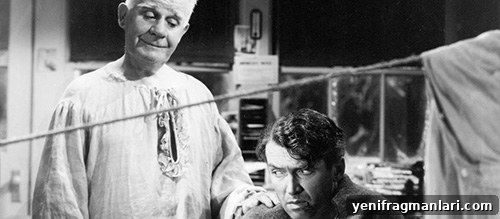
“Well, you look about the kind of angel I’d get.”
Technically, the film broke new ground in several ways. Much of the story unfolds in flashback, a bold structural choice at the time that allows the movie to compress a lifetime into a two-hour narrative. Capra also made inventive use of freeze frames and narration to emphasize turning points in George’s life. One notable technical innovation was the creation of silent falling snow: filmed in summer on a soundstage, the production used a mixture of foamite, soap and water blown by wind machines to create snow that would not interfere with live sound recording. This silent snowfall enhances the emotional power of key scenes, especially the final sequence when George’s restored hope is accompanied by a gentle, hushed snow.
Performance is another pillar of the film’s enduring success. James Stewart and Donna Reed deliver deeply felt portrayals of George and Mary. Their chemistry conveys both weary realism and abiding warmth—the two dominant emotional forces in postwar America. Stewart’s George is more world-weary than his prewar screen persona, reflecting the broader change in tone across American cinema after the war. One of the film’s most affecting moments—George’s prayer in despair—was captured in a single, raw take that Stewart later refused to repeat, and that unguarded vulnerability remains profoundly moving.

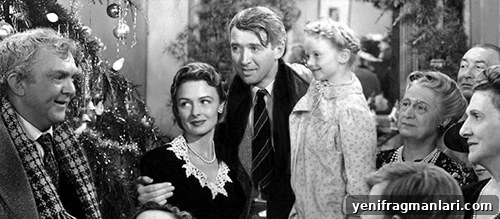
The film’s resolution is earned rather than miraculous. Clarence does not magically fix George’s problems; instead, George returns to a reality where the value of his life is made visible through the gratitude and assistance of the people he has helped. The townspeople of Bedford Falls rally to support him, demonstrating the film’s central truth: generosity begets community, and a life lived in service to others creates far-reaching, tangible effects.
Seventy-five years on, It’s a Wonderful Life remains relevant because its message is enduring. In moments of societal strain or personal despair, the film reminds us that ordinary acts of kindness matter. People who care for others—whether through small daily sacrifices or dramatic interventions—shape countless lives in ways they may never fully see. As the movie concludes: “No man is a failure who has friends.” That belief in human connection and communal responsibility continues to be the heart of this timeless holiday classic.
24/24