
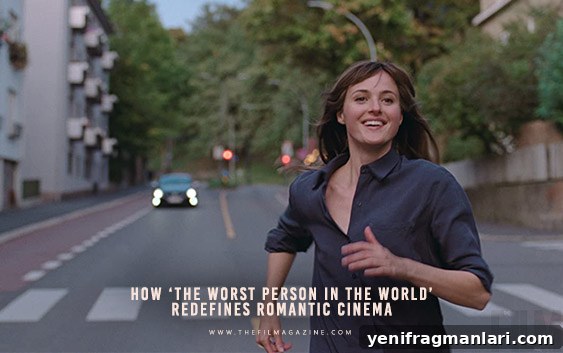
Since its premiere at the Cannes International Film Festival in 2021, Joachim Trier’s The Worst Person in the World has been embraced like the first warm day of spring. The film has won praise for its truthful portrayal of millennial life, its evocative depiction of Oslo, and the outstanding performances from its cast, led by BAFTA-nominated Renate Reinsve.
MUBI, the film’s UK distributor, promoted it as a deeply romantic picture and even organized Valentine’s screenings in London. Critics quoted on promotional material described it as “a tender relationship comedy with a wonderful freshness” and “one of the best romantic films of recent times.” Those responses are widespread and deserved: the film is moving, sensual, and romantic. Yet it also challenges many conventions of the romance genre, offering a more thoughtful, mature approach to love and personal growth.
The Worst Person in the World centers on Julie, a woman in her late twenties who stumbles through life trying to discover who she is. At different times she’s a medical student, a psychology student, a photographer, and a bookshop assistant. She drifts in and out of relationships before entering a serious romance with Aksel, a celebrated author about fifteen years her senior whose work carries a faintly sexist tone. Julie later meets Eivind, a younger barista, at a wedding and begins another meaningful relationship. Over roughly two hours, the film tracks Julie navigating these two loves while also searching for a sense of self. In the end, she stands alone—and remarkably, at peace.
Both of Julie’s central relationships are compelling and richly observed. Each contains sparks of passion, moments of frustration, tenderness, and joy, yet they are strikingly different in tone and function. The romance with Aksel and the one with Eivind could each be their own movie, but writers Joachim Trier and Eskil Vogt use both to explore Julie’s development. This is primarily Julie’s coming-of-age story; the romances illuminate facets of her identity rather than serving as the film’s sole focus.
This structural choice defies typical rom-com formulas. While many romantic films focus on a single love interest, Julie’s life contains two significant relationships that coexist without the usual love-triangle melodrama. There is temporal overlap, but never outright competition; the story avoids melodramatic rivalries in favor of a more realistic depiction of parallel emotional commitments. Instead of positioning “The One” as the only valid path to fulfillment, the film acknowledges how multiple meaningful connections can shape a person.
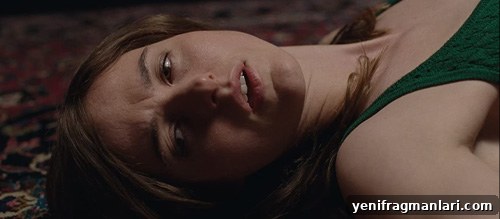
The film also asks viewers to rethink intimacy. One standout chapter shows how Julie and Eivind meet while both are technically involved with other partners. They agree to flirt without crossing the line into conventional cheating, spending a night growing closer while technically maintaining boundaries. Scenes of them sharing cigarette smoke or sitting together in a small bathroom accumulate more heat than explicit physicality ever could; the sequence becomes one of the most charged and memorable in the film precisely because it explores emotional, not merely physical, closeness.
Another quieter, subtler investigation of intimacy appears in Julie’s later interactions with Aksel. Although they are no longer romantically entwined, their bond remains deep and clear. They seem to understand one another more fully after parting, which raises the delicate distinction between romantic love and a deep, enduring kinship. It’s unusual for a romance to depict such a strong connection between two people who won’t end up together—and to do so without lingering regret. The film accepts that some relationships change shape rather than simply fail.
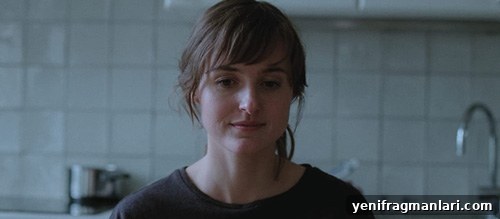
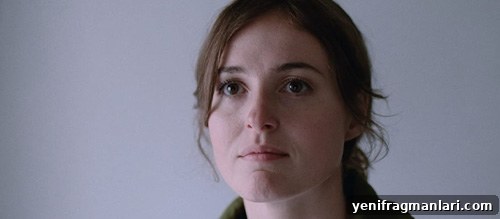
Julie’s insecurity and self-doubt are central to the emotional landscape of the movie. She often feels compelled to apologize and even labels herself, as the title suggests, “the worst person in the world.” Yet the film refuses to condemn her. Instead, it presents a flawed, messy protagonist who remains sympathetic and relatable. This approach reflects recent shifts in how female characters are written on screen: messy, contradictory women are allowed complexity and compassion. Julie’s choices—her indecision, her restlessness—feel authentic rather than villainous.
Renate Reinsve’s performance is crucial to this effect. She brings intimacy, energy, ferocity, and fragility to Julie, making her feel vividly human. We never truly believe Julie is irredeemable; to do so would be to deny the ordinary, recognizable mix of fears and desires she expresses. Her life could easily be any of ours, which is precisely why the film’s emotional truths hit so hard.
At the film’s close, Julie moves forward alone. That resolution may confound viewers expecting a conventional match-made ending, but Trier frames her solitude as a valid and fulfilling outcome. By the end, Julie appears more grounded in her own life and clearer about who she wishes to be. The relationships she forged along the way have helped her understand herself better—and in many ways that self-understanding is the film’s central love story.
The Worst Person in the World stands among the most memorable romantic dramas of recent years. Its moments of yearning and sensuality linger, but its true achievement lies in redefining intimacy and celebrating an imperfect protagonist who learns, through love and loss, how to stand on her own. The film feels honest, humane, and refreshingly modern.
Written by Rehana Nurmahi
You can support the author of this article, Rehana Nurmahi, via social accounts listed as: Twitter – @Han_notsolo, Letterboxd – hana_banana97, Portfolio – Authory