

One Fine Morning (2022)
Director: Mia Hansen-Løve
Screenwriter: Mia Hansen-Løve
Starring: Léa Seydoux, Melvil Poupaud, Pascal Greggory, Camille Leban Martins
Mia Hansen-Løve’s One Fine Morning is a quietly powerful drama that premiered at the 2022 Cannes Film Festival. The film explores grief, love, and the fragile balance of everyday life through the experience of Sandra, a Parisian single mother portrayed by Léa Seydoux. Hansen-Løve described the project as born from the juxtaposition of contradictory moments in life — a strange morning that can also feel like a rebirth — and that sensibility shapes the film’s tone and structure.
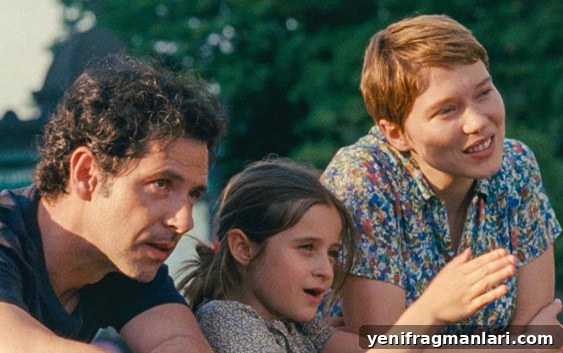
The story opens when Sandra unexpectedly reconnects with Clément (Melvil Poupaud), a man who awakens a part of her that has been closed off since her husband’s death five years earlier. Their relationship becomes a catalyst for Sandra’s emotional and sexual reawakening, bringing joy and tenderness back into her life. Clément’s warm interactions with Sandra’s daughter, Linn (Camille Leban Martins), show him fitting into their small family at first, while Linn’s candid childlike reactions capture the bewilderment children feel when a parent begins a new relationship.
Hansen-Løve resists melodrama, instead offering a realistic portrait of intimacy and family care. Clément’s existing marriage gradually intrudes on the lovers’ private space, revealing the fragility of their bond. Moments of elation — a message received, a fleeting embrace — sit alongside the pain of farewells, reflecting the volatility of human emotion. At the same time Sandra is balancing a very different responsibility: caring for her father (Pascal Greggory), who is suffering from a neurodegenerative condition that affects his vision and cognitive faculties. Sandra must make the painful decisions about moving him between care facilities as his condition deteriorates.
Greggory’s portrayal of Sandra’s father is understated and deeply moving. As the actor has said, this role required surrendering to the character in a new way. The film’s attention to the interior life of a person with progressive illness is most palpable in quiet details: Sandra’s visits to his bookshelves, the way she finds intimacy with him through his books. One line in the film captures this poignantly: Sandra tells her daughter she feels closer to her father among his books than at the hospital — “there is his envelope body, here is his soul.” This observation resonates: when the mind fades, the objects and passions that defined a person can become the truest reflection of who they were.
The screenplay balances sorrow with tenderness and occasional levity. Hansen-Løve uses small domestic scenes to reveal the characters’ humanity — for instance, a charming sequence where parents stage a mock Santa visit for their children. These lighter moments prevent the film from becoming relentlessly heavy while deepening its emotional truth.
Visually, One Fine Morning contrasts the drab interiors of hospitals and care homes with the luminous beauty of Parisian mornings. Hansen-Løve shot much of the film on 35mm film stock, deliberately choosing a texture that she felt would give even the less attractive locations a greater sense of soul. The result is an aesthetic that mirrors the film’s thematic contrasts: the bleakness of illness and institutional care set against small, radiant instants of daily life.
Léa Seydoux commented at Cannes that playing Sandra allowed her to embody a “normal woman” audiences would instantly relate to — a departure from more glamorized or extreme roles. Her performance grounds the film; Sandra’s mixture of vulnerability, resilience, desire and sorrow feels immediate and credible. Viewers are invited to witness her confusion and hope in equal measure as she navigates unexpected love amid ongoing loss.
Ultimately, One Fine Morning is a film about transitions: how endings and beginnings coexist, how grief and love can arrive at the same time, and how ordinary life continues in the shadow of sorrow. Hansen-Løve’s restrained direction, combined with intimate performances from Seydoux and the supporting cast, creates a bittersweet meditation on memory, identity, and the small rituals that keep us connected to those we love.
Score: 22/24
Written by Gala Woolley
Support Gala Woolley:
Twitter – @GalaWoolley
Blog – screenqueens.co.uk