

For decades, cinema has used the body’s resistance to patriarchal norms and the visceral upheaval of adolescence as devices to explore identity and otherness. Coming-of-age stories fused with horror offer a purification ritual against the violent, confusing changes of puberty — a trend visible in Julia Ducournau’s Raw (2016) and Karyn Kusama’s Jennifer’s Body (2009). Horror, with its ability to dismantle dominant social narratives, often exposes monstrous rebirths beneath the surface. Lisa Brühlmann’s Blue My Mind (2017) joins this lineage, combining visceral body horror with a cisgender female perspective to redefine what it means to be “the other” and to reimagine the flow of the monstrous feminine.

The mermaid or siren figure traditionally symbolizes biological anomaly: tails, scales, webbed limbs, and fins signal otherness, drawing a simultaneous reaction of fascination and disgust. When those traits emerge within an adolescent body already in flux, the result is a magnetizing spectacle that blends attraction and repulsion.
Blue My Mind follows Mia (Luna Wedler), a teenage girl whose slow transformation into a mermaid forces her to confront identity, desire, and isolation. Brühlmann opens on Mia’s quiet melancholy: she stares out at a construction site from the window of her new house, then struggles through an awkward first day at a new school. High school’s micro-hierarchies soon show themselves—performative bravado, sexual posturing, and a confident girl named Gianna (Zoë Pastelle Holthuizen), whose boldness and indifference both unsettle and intrigue Mia. Gianna’s presence ignites in Mia a yearning to reject familiar identities and explore a dangerous, transgressive femininity.
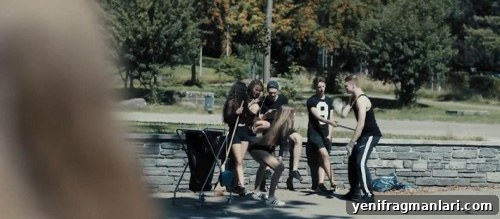
Puberty is often experienced as abjection: the body becomes a site of taboo sensations and biological unpredictability. Mia’s reactions—sudden strength, rage toward her mother, fascination with a fish tank—mark the start of her metamorphosis. Invited into Gianna’s circle, Mia participates in risky games and dangerous experiments that pull her further from safety. When she surpasses expectations—blackouts, reckless behavior—Gianna realizes Mia is different in a way no one else is.

Mia’s family tensions and Gianna’s influence align coming-of-age with otherness. She hungers—both literally and figuratively—breaking into the fish tank and attempting to eat a live goldfish. That episode of regurgitation, relief, and shame marks a point of no return. Her experimentation escalates: shoplifting, alcohol, encounters with older men, and casual sex become outlets for a confusing desire to feel. As her toes begin to fuse and painful bruises spread across her legs, the film positions the female body as simultaneously punitive folklore and a source of power. Menstruation and bodily change here are part of a larger, more complex metamorphosis rather than the sole trigger for catastrophe.
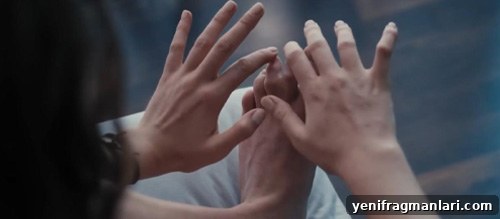
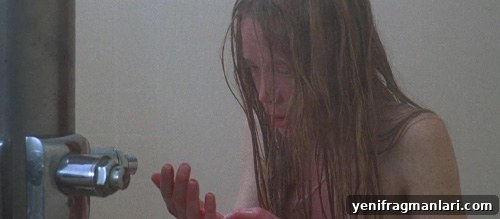
Traditional monstrous-feminine narratives, like The Hunger (1983), tie female desire to destruction; Miriam (Catherine Deneuve) merges erotic appetites with predatory violence. Blue My Mind shares the genre’s fascination with fear and desire but reframes the transition into womanhood as something less sensationally punitive. Unlike Carrie (1976), where menstruation becomes a death sentence and violent carnage, Mia’s transformation is inward, layered, and ultimately seeks acceptance rather than annihilation.
Horror has long dramatized adolescence, but many films reduce girls’ experiences to spectacle or male-authored hysteria. Brühlmann’s film bridges that gap by centering Mia’s interiority: her confusion, shame, and moments of tenderness. Rather than letting change explode outward in indiscriminate violence, Blue My Mind treats transformation as both a source of anguish and a pathway to autonomy. Mia’s fragility coexists with an emergent power that unsettles patriarchal categories of behavior.
The film also addresses how male presence and violence accelerate Mia’s physical transformation. Sexual encounters and emotional violations correlate with the outward growth of her mermaid traits: veins, bruises, gills, and webbed skin become more pronounced after encounters with men. By contrast, intimacy and safety are found in Gianna, whose consolation and eventual acceptance underline the film’s argument that comfort and community often come from other women.

Blue My Mind belongs to a subset of monstrous horror that refuses simple moralistic rules—where female sexuality is not punished with death and where protagonists may be sexual and complex without being reduced to stereotype. Films such as Raw, Excision, and Teeth similarly complicate gendered narratives by giving female characters agency, desire, and moral ambiguity. Brühlmann challenges the persistent binary that demands women be either cold and controlled or hypersexualized objects; Mia and Gianna are allowed to be both vulnerable and assertive, tender and fierce.
The film’s concluding sequence delivers a powerful, graceful resolution. After a traumatic party where Mia’s condition is exposed and she narrowly escapes a violent assault, the transformation finalizes: her legs have fused into a mermaid tail. The scene is filmed with compassion rather than spectacle. Rather than retaliating with mass violence, Mia chooses escape and acceptance. With Gianna’s help, she returns to the sea—a symbolic rebirth that reads as a reclaiming of self rather than a punitive erasure.
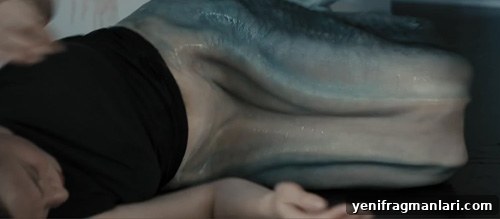
Brühlmann’s approach reframes the monstrous feminine: transformation becomes a complex, personal act instead of a cultural warning. Mia’s metamorphosis is a response to pressure, violence, and misunderstanding, but it also functions as liberation. Blue My Mind joins contemporary films that interrogate the representation of young women in horror—In My Skin, American Mary, A Girl Walks Home Alone at Night, Prevenge, The Love Witch, and Revenge—by exposing and resisting discriminatory narratives about female bodies.

The film’s final image—Mia returning to the ocean under looming cliffs—reads as a quiet, defiant act: a withdrawal from an unsafe world and a return to a body and space where she can exist authentically. There are no victims beyond herself; there is no spectacle of vengeance. Instead, Mia’s choice to embrace her change reframes monstrousness as a valid form of survival and a route to self-determination.
Blue My Mind is a thoughtful recalibration of how cinema depicts puberty, gender, and the monstrous feminine. It refuses sensationalist punishment and offers a nuanced portrayal of a young woman navigating pain, desire, and alienation. By centering Mia’s interior experience and by allowing compassion rather than spectacle to shape its conclusion, the film expands the possibilities for female-led horror and offers a fresh, empathetic perspective on adolescence and transformation.
Written by Grace Britten
You can support Grace Britten in the following places:
Blog – Film9Online
Instagram – @film_overload_