
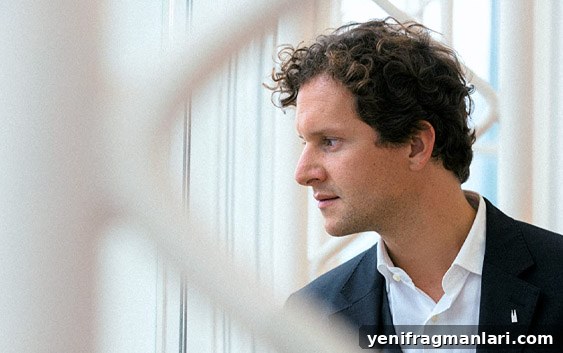

Axiom (2022)
Director: Jöns Jönsson
Screenwriter: Jöns Jönsson
Starring: Moritz von Treuenfels, Thomas Schubert
Axiom, the sophomore feature from Swedish writer-director Jöns Jönsson, follows Julius, a charismatic young museum attendant whose small acts and evolving deceptions transform an otherwise ordinary group outing into a quietly unsettling character study. The film unfolds with a deliberate, observant pace, revealing its central premise through subtle inconsistencies and the slow unspooling of a pathological habit: lying.
The film opens in the intimate, hushed spaces of an art exhibition where Julius (Moritz von Treuenfels) is guiding a new colleague, Erik (Thomas Schubert), through the routines of their job. Jönsson stages this early sequence with an ear for naturalistic dialogue and an eye for small, telling details. What begins as a straightforward workplace exchange becomes a revealing portrait of social dynamics and the rhythms of small talk. The conversational beats feel lived-in, and the director’s careful attention to performance draws the viewer into the characters’ lives before the drama begins.
From the gallery the action moves to the sea: Julius invites his coworkers on a sailing trip aboard his family’s boat. This change of setting is gentle but important. Out on the water, the film allows conversations to breathe and character traits to surface. At first, Julius appears warm and generous — entertaining friends, steering the group, and telling stories to fill silences. But cracks start to appear. He repeats a tale Erik told him the day before, presenting it as his own. He insists everyone brought life jackets when his companions deny doing so. He misidentifies a building at the port as a members’ club when it is clearly a shop. Each discrepancy could pass as a human lapse; together they suggest a pattern.
Jönsson’s screenplay is quietly ingenious in how it reveals Julius’s compulsion. Lies are introduced as minor shifts in narrative—small details changed or omitted—and then echoed later in ways that create unease. Rather than employing conspicuous plot twists, the film builds tension by layering repeated moments and altered details. This approach invites the audience to participate, to notice the mismatches and to slowly redraw their impressions of the protagonist. The cumulative effect is more disquieting than any overt reveal.
The dialogue across the film is another of its strengths. Conversations feel authentic and alive, but they also carry subtext that grows stronger with each scene. Lines that seem casual at first develop new meaning as Julius’s unreliability becomes more apparent. Jönsson uses talk not only to characterize but also to manipulate the viewer’s trust, turning ordinary exchanges into tools for revelation.

Visually, Axiom is restrained and meticulous. Jönsson and his cinematographer favor long takes and lingering frames that allow performances to breathe and small gestures to register. Many scenes unfold in extended single shots, giving the film a contemplative rhythm and letting tension arise organically from the actors’ interactions. As the story progresses and Julius’s grip on the narrative loosens, editing grows slightly more fragmented, reflecting his unraveling control. The result is a measured visual language that supports the screenplay’s psychological precision.
Moritz von Treuenfels anchors the film with an exceptional turn as Julius. He crafts a character who is simultaneously magnetic and morally ambiguous. Treuenfels’s charisma explains why people are drawn to Julius, even as his behavior becomes increasingly troubling. Where his performance is most compelling is in the quiet, solitary moments: Julius alone in a room, stripped of social cover, the actor revealing flashes of vulnerability and menace without resorting to melodrama. These scenes hint at deeper interior currents while keeping ambiguity intact.
Jönsson’s direction and Treuenfels’s performance together create a film that rewards close attention. Axiom is not built around big plot mechanics or sensational turns; it is a study of character and the corrosive power of deception. Its strength lies in small, accumulative choices—phrasing shifted, memories repackaged, social gestures recalibrated—that gradually erode the protagonist’s credibility and invite ethical reflection from the viewer.
This is a deliberate, slow-burning picture that asks patience but delivers a rich, unsettling portrait of a man whose truth is malleable. While that tone may not appeal to every viewer, the film marks Jöns Jönsson as a filmmaker with a keen sense of psychological detail and formal control. Axiom suggests a director on the rise, capable of mining quiet social encounters for profound dramatic effect.
Score: 20/24