

Pan’s Labyrinth/El laberinto del fauno (2006)
Director: Guillermo del Toro
Screenwriter: Guillermo del Toro
Starring: Ivana Baquero, Ariadna Gil, Sergi López, Maribel Verdú, Doug Jones, Álex Angulo, Manolo Solo
“A long time ago, in the Underground Realm, where there are no lies or pain, there lived a princess who dreamt of the human world.”
Guillermo del Toro, the Mexican filmmaker known for his sympathy toward monsters, created one of his most celebrated films with Pan’s Labyrinth. The movie blends historical drama and dark fantasy to tell a story that is at once harrowing and hauntingly beautiful. Released in 2006 and nominated for multiple Academy Awards, it remains a powerful example of del Toro’s skill at mixing political reality with mythic imagination. Fifteen years on, the film still stands as a modern classic that speaks both to the horrors of war and the resilience of the human spirit.
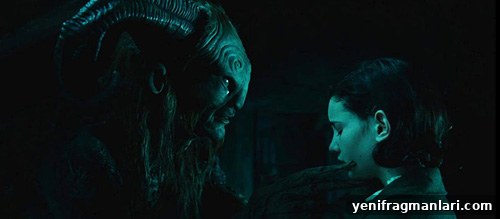
Set in Spain in 1944, the film follows ten-year-old Ofelia (Ivana Baquero), who travels with her pregnant mother (Ariadna Gil) to live with her new stepfather, Captain Vidal (Sergi López). Vidal is an officer in Franco’s forces, tasked with eliminating the remaining leftist guerrillas in the area. As Ofelia explores the countryside, she discovers an ancient labyrinth and meets a mysterious Faun (Doug Jones). The Faun tells her that she is the missing princess of an underground realm and must complete three tasks to reclaim her place and return to her kingdom.
Pan’s Labyrinth plays with the familiar pattern of a child discovering a secret world, similar to classic tales like Alice in Wonderland or Peter Pan, but del Toro’s version is darker and far more ambiguous. The narrative leaves room for interpretation: the fantasy elements may be real, or they may be Ofelia’s way of coping with upheaval, fear and loss. This ambiguity is central to the film’s emotional power, allowing viewers to decide whether the magic is literal or symbolic of Ofelia’s inner life.
Javier Navarrete’s score is pivotal in shaping the film’s atmosphere. His music moves seamlessly between enchanting lullabies and ominous, brooding themes, mirroring Ofelia’s journey through wonder and danger. The soundtrack supports the film’s tone, never overpowering but always present, reinforcing the sense of an unsettling fairy tale unfolding against a grim historical backdrop.
Del Toro has often used fantasy to process Spain’s troubled past, and Pan’s Labyrinth continues that tradition. Where The Devil’s Backbone explored the ghostly aftermath of violence at an orphanage, Pan’s Labyrinth examines how a child negotiates trauma and change—new home, a domineering stepfather, and the impending arrival of a sibling—through imagination. The film treats both the real-world brutality and the magical sequences with seriousness, refusing to trivialize the suffering of people caught in wartime violence.
One of the film’s strengths is its casting. Ivana Baquero’s performance as Ofelia anchors the narrative with natural curiosity and emotional depth beyond her years. Opposite her, Sergi López gives a chilling portrayal of Captain Vidal, an emblem of cruel authoritarianism whose obsession with order and legacy devolves into monstrous acts. Vidal’s brutality—displayed through small, intimate cruelties and large acts of violence—grounds the film’s human evil in a way that is terrifying precisely because it feels disturbingly plausible.
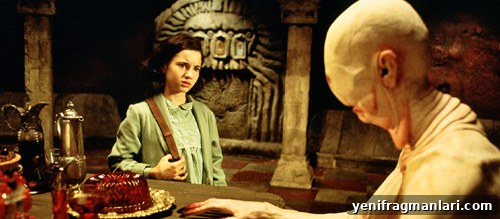
Del Toro’s monsters are another highlight. Realized through a mix of practical effects, makeup and performance, creatures like the Faun and the grotesque Pale Man remain vivid and unsettling. The Pale Man, in particular, stands out as a nightmare figure: eyeless, sagging, and ghastly, he represents forbidden temptation and the consequences of disobedience in one unforgettable sequence. Yet even these fantastical beings are portrayed with complexity rather than one-dimensional malice.
The film also makes a deliberate stylistic choice to separate its fantastical incidents from the wartime reality. The military violence and suffering of ordinary people are depicted with stark, realistic violence, often shown independently of the fantasy scenes. This separation preserves the weight of Spain’s historical trauma while allowing the fantasy to function as Ofelia’s personal refuge—or perhaps her reckoning. Lines between escapism and confrontation blur, prompting audiences to ponder the true purpose of storytelling in times of crisis.
Technically and artistically, Pan’s Labyrinth excels. Production design, creature effects, cinematography and sound design combine to create a fully realized world that is both beautiful and terrifying. The film’s emotional core—Ofelia’s courage, Vidal’s cruelty, and the ambiguous motives of the fantasy realm—remains deeply affecting. Pan’s Labyrinth endures as a striking, personal work from del Toro: a film that merges folklore, political history and the inner life of a child into an unforgettable cinematic experience.
23/24
Recommended for you: Guillermo del Toro Movies Ranked