
The vampire has occupied our imagination for centuries. While vampire mythology has shifted with time, our fascination with mortality and the darker corners of the human mind keeps these figures alive in popular culture. We are drawn to them—attracted to their danger, their power, their mystery. We invite them in, wander into the night, and dare them to taste.
On film, the modern vampire embodies those impulses. They represent desire, guilt, repression, and the taboo. From Victorian London to 1980s California, the cinema has given us vampires who seduce, terrify, and compel us. Below are ten of the most seductive and memorable movie vampires, characters that tempt us, excite us, and haunt our imaginations.
10. Mimi – Kiss of the Damned (2013)

Xan Cassavetes’ Kiss of the Damned is a gothic, modern-horror love story that echoes the aesthetic of midcentury Hammer films. The plot follows Djuna (Joséphine de La Baume), a reclusive vampire who falls for Paolo (Milo Ventimiglia), a human screenwriter, then turns him into one of her own. Their fragile romance is disrupted by Mimi (Roxane Mesquida), Djuna’s younger sister.
Mimi is impulsive, selfish, and unrepentant. Where Djuna hides behind lace and restraint, Mimi wears short, tight clothing with unapologetic confidence, appearing like a nocturnal rock star in sunglasses and leather. She drains lives with the eagerness of an addict, yet her attitude and style are intoxicating. Mimi is the unbridled, sensual reflection of Djuna’s suppressed self.
Her scenes are both alluring and unsettling: a three-way with a couple, the seduction of other vampires, and a heated encounter with Paolo in the shower. Mimi’s sexuality is fierce and immediate—she’s thrilling company for a single night, though one suspects survival past dawn is unlikely.
9. Dracula – Dracula (1931)
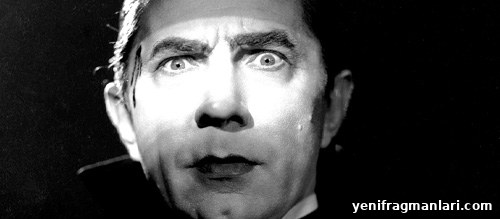
Bela Lugosi’s portrayal of Dracula in Universal’s 1931 film remains one of cinema’s most iconic images. Though later viewers may see elements of camp, at the time Lugosi’s Count was mysterious, exotic, and deeply unsettling.
In the 1931 film the vampire bite substitutes for explicit sexual activity—a coded, forbidden intimacy in a society with strict moral constraints. Lugosi’s Dracula is elegant and foreign, often framed in shadow with striking eyes that hypnotize his victims. He awakened latent desires in a repressed Victorian setting and stands as one of the earliest on-screen embodiments of vampiric eroticism.
8. Miriam Blaylock – The Hunger (1983)
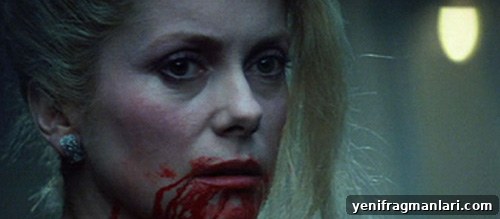
Tony Scott’s The Hunger is an atmospheric, erotic thriller about ageless desire. Catherine Deneuve plays Miriam, an elegant, centuries-old vampire living as a wealthy New Yorker. Her partner, John (David Bowie), begins to age, revealing that Miriam’s gift is immortality without youth: her lovers ultimately deteriorate.
Miriam’s control over Sarah (Susan Sarandon), a young physician searching for life-extension secrets, is a study in subtle seduction. Sarah is instantly captivated—ashamed, hopeful, and responsive to Miriam’s calm command. Miriam rarely needs to exert force; her presence alone is magnetic. Sarah’s eventual rejection of eternal undeath underscores the tragic cost of Miriam’s seductive permanence.
7. Clara Webb – Byzantium (2012)
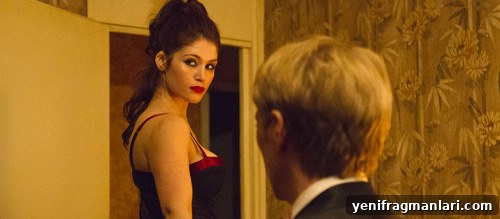
Neil Jordan’s Byzantium follows Clara Webb (Gemma Arterton) and her vampire daughter, Eleanor (Saoirse Ronan), as fugitives from a secretive brotherhood. Once a victim of abuse, Clara reclaimed control by turning herself and her child into vampires. Because they are women who created another, they become targets.
Clara’s sexuality is deliberate and defiant. She uses her attractiveness as armor and weapon—tight clothes, striking makeup, and a hard-won confidence that refuses submission. Clara’s experiences have hardened her: she punishes threats without hesitation, and her physicality is both alluring and dangerous. Her sexuality reads as empowerment, a way to survive in a world that once sought to erase her.
6. Edward Cullen – Twilight (2008)

Stephanie Meyer’s Twilight franchise turned Edward Cullen into a cultural phenomenon and made Robert Pattinson a household name. Despite critics’ dismissal, Edward’s appeal is clear: he is intensely devoted, dangerously possessive, and consumed by desire for Bella (Kristen Stewart).
Twilight presents an eroticized romance where Edward’s restraint and self-control heighten the tension. The first kiss—Edward entering Bella’s room through a window—becomes a charged, intimate moment. He is both monster and protector, craving her blood but refusing to surrender himself. Edward’s magnetic pull lies in being desired to an almost unbearable degree, in the power imbalance between immortal longing and human vulnerability.
5. Armand – Interview with the Vampire (1994)
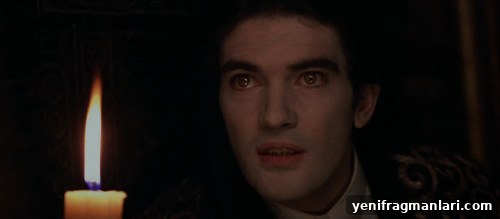
Antonio Banderas’ Armand appears briefly but memorably in Neil Jordan’s Interview with the Vampire. When Louis (Brad Pitt) and Claudia (Kirsten Dunst) travel to Europe seeking the origins of their condition, they encounter Armand and his theatrical troupe of vampires.
Armand exudes cultivated menace: long black hair, amber eyes, and an aristocratic presence that masks a predatory nature. He reigns over a decadent court and projects a refined, almost ritualized sensuality. His stagecraft—stripping a woman in front of an audience—serves as a calculated provocation. Armand’s charisma is hypnotic and dangerously seductive.
4. Queen Akasha – Queen of the Damned (2002)
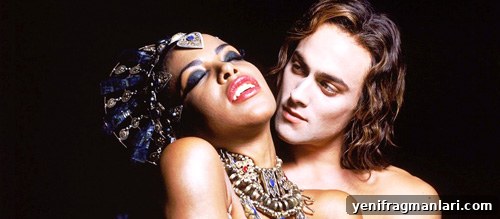
In the modernized adaptation of Anne Rice’s work, Queen of the Damned presents Akasha (Aaliyah), an ancient, merciless queen whose awakening reshapes the vampire order. Lestat’s transformation into a rock icon may capture attention, but Akasha’s commanding sexuality and lethal authority steal the show.
Wearing ornate, jeweled attire and moving with hypnotic precision, Akasha radiates primal power. She revels in domination—ripping a vampire’s heart from his chest and consuming it without hesitation—smiling through the blood. Her beauty and brutality make her irresistibly dangerous; she’s a sovereign who inspires worship and terror in equal measure.
3. David Powers – The Lost Boys (1987)
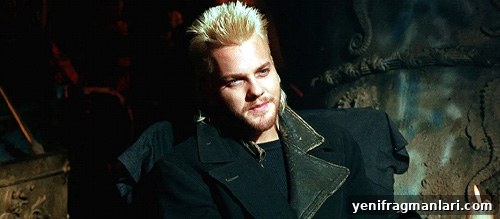
Joel Schumacher’s The Lost Boys blends horror and teen rebellion, anchored by Kiefer Sutherland’s David Powers, the charismatic leader of a vampire biker gang. Michael, newly arrived in town, is pulled into David’s orbit, and the dynamic between them mixes attraction, danger, and peer pressure.
David’s look—bleached hair, a long black coat, an air of cool indifference—captures the archetypal bad boy. He’s reckless, alluring, and intoxicatingly confident: the kind of figure you’re warned against but drawn to anyway. His charisma turns youthful rebellion into something darker and more seductive.
2. Lestat – Interview with the Vampire (1994)
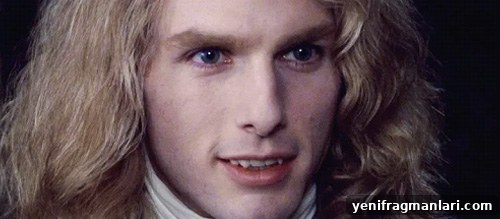
Tom Cruise’s Lestat in Interview with the Vampire is theatrical, magnetic, and dangerous. With marble-like skin and a predatory smile, he seduces with both words and violence. Lestat hunts men and women with equal relish, but his obsession with Louis (Brad Pitt) introduces an intense, intimate dynamic.
Lestat shifts from playful to murderous in an instant; his charm and cruelty exist in tandem. He spouts poetry about immortality one moment and performs grotesque displays the next. When Lestat is gone, the film loses its electric unpredictability: his chaotic sensuality is unmatched and central to the story’s emotional charge.
1. Dracula – Bram Stoker’s Dracula (1992)
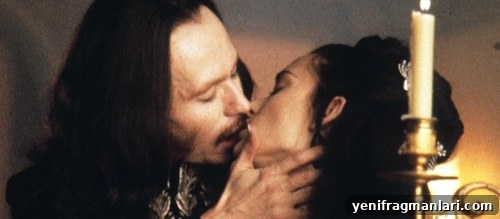
At the top of the list stands Dracula, as imagined in Francis Ford Coppola’s 1992 adaptation of Bram Stoker’s classic. Gary Oldman’s Count is many things—warrior, aristocrat, monster, and tragically romantic lover. His yearning for Mina (Winona Ryder), the reincarnation of his lost wife, is aching and sincere.
This Dracula is explicit about desire: Coppola fills the film with sensual imagery, blood, and intimacy, treating vampirism as both erotic and devastating. The scene where Mina draws blood from Dracula’s chest is charged with longing; Oldman’s flowing hair and period costume amplify the tragic romance. Dracula’s willingness to traverse centuries and defy death for love makes him uniquely seductive.
These on-screen vampires map onto our most basic impulses: the hunger for pleasure, the thrill of danger, and the struggle with forbidden desire. They externalize fears and yearnings—transforming shame, repression, and longing into vivid characters who let us examine the edges of human nature. Between life and death, pain and pleasure, these vampires invite us to imagine what it means to surrender to the night.
Written by Margaret Roarty
You can support Margaret Roarty at the following accounts:
Twitter – @ManicMezzo
Podcast Instagram – @justmythoughtsonitpod
Podcast Twitter – @thoughtsonitpod
Listen to Just My Thoughts on It – Anchor
Pages 1 2 3 4