
The Polar Express (2004)
Director: Robert Zemeckis
Screenwriters: Robert Zemeckis, William Broyles Jr.
Starring: Daryl Sabara, Tom Hanks, Eddie Deezen, Michael Jeter, Josh Hutcherson, Nona Gaye
Christmas movies provoke strong opinions. With glittering lights, falling snow, sweeping scores, and a sense of childhood wonder, the ingredients for a successful holiday film often feel obvious. Yet debates about what qualifies as a Christmas movie continue, and none inspires as much disagreement as Robert Zemeckis’s 2004 animated feature, The Polar Express.
Some viewers call it a seasonal classic while others find it unnerving. The film divided critics and audiences upon release, with many commentators describing its visuals as lifeless or soulless, while notable critics praised its faithfulness to the tone and story of Chris Van Allsburg’s 1985 picture book that inspired the film. That tension between appreciation for its ambition and discomfort with its execution defines much of the conversation around the movie.
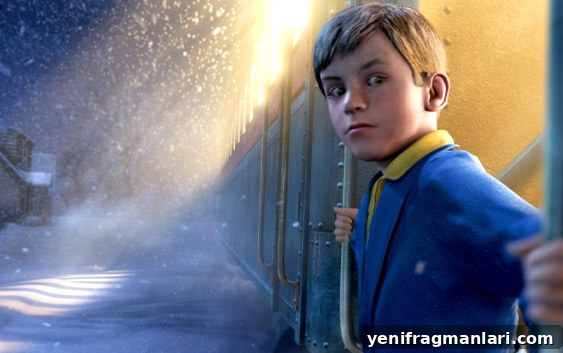
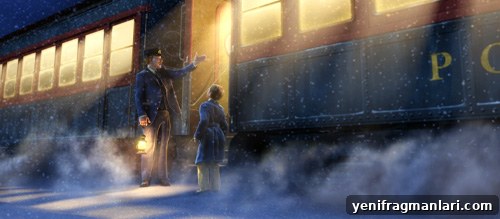
The film opens on Christmas Eve with the Hero Boy (Daryl Sabara) wide awake in bed. His belief in Santa has faded, but he still longs to hear the bells of the sleigh. A sudden train whistle outside his window jolts him from sleep. Throwing on a housecoat, he rushes downstairs to find a mighty locomotive idling in his suburban street. The Conductor (Tom Hanks) invites him aboard the Polar Express, which is bound for the North Pole on a strict timetable.
From there the movie leans into fantasy and adventure conventions while cultivating an eerie, magical atmosphere. The onboard scenes—especially the steaming hot chocolate service and the playful dining car attendants—capture the festive wonder of a children’s tale. Yet the film also uses intense point-of-view sequences and rapid motion to create visceral thrills, such as the roller-coaster-like ride across a frozen landscape, which can unsettle as much as it delights.
The animation, ambitious for its time, is rendered in lifelike detail. The locomotive’s metal surfaces, the warm glow of its headlight, and the curling smoke from its stack convey weight and presence. Close-ups of cracked ice and foaming hot cocoa enhance sensory immersion, making danger and delight feel immediate. That same pursuit of realism, however, led to a contentious response: many viewers found the characters unnerving.

Critics and audiences frequently point to the film as an example of the “uncanny valley”—the discomfort people feel when animated figures are almost, but not quite, human. The actors’ motions and facial expressions, captured through motion-capture technology, sometimes read as stiff or waxy. This technology was groundbreaking: The Polar Express was the first feature filmed entirely using motion-capture, with performers wearing tracking markers on a soundstage so animators could translate their movements into digital characters. The technique preserved the actors’ physicality and vocal traits—Tom Hanks performs multiple roles—yet that fidelity also produces an odd, surreal quality.
The creepiness goes beyond animation. The story is punctuated by unsettling moments that blur dream and reality. Early in the journey, each child receives a golden ticket, but when the Hero Girl (Nona Gaye) loses hers, the Conductor escorts her outside. The Hero Boy finds the ticket and follows. On the train roof in a blizzard he encounters the Hobo (also portrayed by Hanks), a disheveled wanderer who shares a coffee, mocks the boy’s faith, and delivers an ambiguous line about belief and perception. Their exchange—”Seeing is believing, am I right?”—and the Hobo’s reply that the boy called it a dream, not him, cast a somber, existential shadow over the adventure.

The film also flirts with ghostly imagery. After the train skids across a frozen lake and the Hobo rescues the children, he appears to dissolve into snowflakes, suggesting he may be spectral or imagined. Later, the protagonists wander into an abandoned rail car filled with discarded toys—suspended puppets and broken dolls create a disturbing tableau—and a marionette shaped like Ebenezer Scrooge aggressively torments the Hero Boy. These scenes nod to darker traditions in holiday storytelling, where fright and melancholy often coexist with miracle and joy.
This connection to the darker side of Yuletide narratives is intentional. The Polar Express echoes themes from Charles Dickens’s A Christmas Carol and the many film adaptations it has inspired. Dickens’s tale itself is populated by ghosts and heavy themes—loss, regret, and mortality—so the presence of unsettling imagery in a Christmas story is hardly unprecedented. Zemeckis later adapted A Christmas Carol to animation, further underlining his interest in holiday tales that mix wonder with unease.
The North Pole sequences continue this uneasy tone. When the train arrives, the village feels like a deserted workshop, with muffled music and a hollow sense of place. The elves the children meet are not uniformly charming; their severe features and gruff voices give them a harsh, off-kilter energy. The film delays a full emotional resolution: joy and warmth are withheld until late in the narrative, so by the time the classic trappings of a happy Christmas appear—light, laughter, and familial warmth—the viewer has already been pulled through many darker moments.
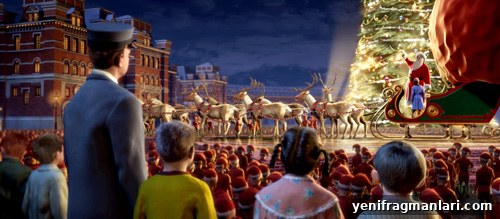
The Polar Express’s primary shortcoming is not its technical ambition or its willingness to explore unsettling territory. Rather, the film dwells so long in that liminal space between belief and doubt, between delight and dread, that the final lift into warmth feels somewhat diminished. The filmmakers took creative risks—pioneering motion-capture animation, layering psychological ambiguity onto a children’s fable, and crafting a score and imagery that alternate between comfort and unease—and those risks both enrich and complicate the viewing experience.
Zemeckis and his team deserve credit for pushing animation and for adapting a concise picture book into a layered cinematic work. The Polar Express continues to attract audiences at holiday screenings and inspires passionate debate about what a Christmas movie can be. It asks what it means to believe in something unseen, and whether belief itself is enough. For some viewers it remains a beloved, haunting seasonal favorite; for others it remains an uncanny curiosity that may leave an echo of unease long after the credits roll.
Score: 15/24
Written by Emily Nighman