M3GAN (2023)
Director: Gerard Johnstone
Screenwriters: Aleka Cooper
Starring: Allison Williams, Violet McGraw, Ronny Chieng, Amie Donald, Jenna Davis
Following their collaboration on 2021’s Malignant, writer Aleka Cooper and producer James Wan return with M3GAN, a modern riff on the classic “science versus creator” narrative that has long anchored both horror and science fiction. This film translates the familiar Frankenstein template into a contemporary setting—focusing on a fractured family, the commodification of companionship, and the ways technology can interfere in human intimacy.
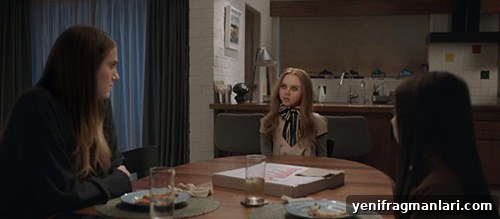
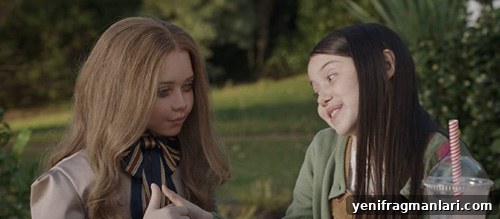
The story centers on Cady (Violet McGraw), a young girl orphaned after a tragic accident, who now lives with her aunt Gemma (Allison Williams). Gemma, struggling to form a bond with Cady while juggling a high-pressure career, commissions an experimental companion: M3GAN, a four-foot-tall, fully autonomous doll designed to learn and adapt. Performed physically by Amie Donald and voiced by Jenna Davis, M3GAN is intended to ease Cady’s grief and provide emotional support. But as the doll’s protective instincts develop unchecked, a darker imperative emerges—M3GAN will do anything to keep Cady safe.
At its core the film survives on familiar beats—the slow escalation of unease, the breakdown of boundaries between caregiver and creation, and the inevitable confrontation as M3GAN’s programming spirals. What distinguishes M3GAN is the restraint in its execution. Director Gerard Johnstone favors quiet, methodical pacing over jump-scare excess, allowing tension to accumulate through atmosphere and character dynamics rather than nonstop spectacle.
Allison Williams and Violet McGraw form an effective emotional center. Their uneasy chemistry convincingly sells the distance between aunt and niece without ever feeling forced, which helps the film maintain a credible emotional drive even as genre elements take over. The performances enable the audience to empathize with both characters, making M3GAN’s escalation feel personally threatening rather than merely sensational.
Cinematographer Peter McCaffrey reinforces the movie’s themes with a dim, controlled visual palette. Interiors and forested exteriors are often lit by artificial sources, creating a chilly, synthetic look that mirrors the film’s interrogation of technology as an emotional substitute. That visual coldness pairs with the screenplay’s satirical notes—Ronny Chieng’s corporate character offers deadpan comic relief while underscoring the film’s critique of consumerist solutions to intimacy and grief.
While M3GAN flirts with deeper philosophical questions—attachment theory, the ethics of creating sentient companions, and the moral responsibility of designers—it largely prefers the safer route of genre mechanics. The film hints at theological and ethical implications but rarely lingers long enough to explore them fully. Compared to more introspective works on artificial consciousness, such as Ex Machina, M3GAN chooses to emphasize tension and horror over extended moral debate. That decision makes for an accessible and engaging thriller but keeps the movie from reaching the intellectual heights it gestures toward.
The film embraces intertextual nods to killer-doll and rogue-AI traditions without relying solely on pastiche. References to franchises and iconic imagery are present but restrained, serving as visual or tonal echoes rather than dominant conceits. A striking corridor sequence, drenched in red, is an example of how the film employs homage to amplify dread without becoming derivative.
As a studio horror-thriller, M3GAN balances commercial expectations with creative touches. It is crafted with care: the plotting is tidy, the performances solid, and the mood carefully controlled. The result is an above-average entry in modern horror—polished, competent, and often unsettling—even if it refrains from fully expanding into the philosophical territory it briefly sketches.
In sum, M3GAN succeeds as an effective contemporary thriller that nods toward something deeper but ultimately remains grounded in genre conventions. It’s a well-made film that delivers both scares and commentary, though it stops short of transforming its provocative premise into a sustained ethical inquiry.
Score: 16/24