
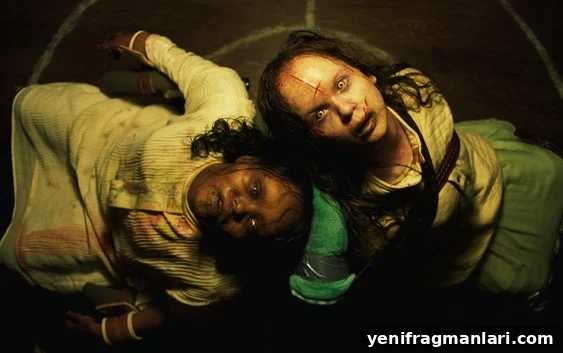

The Exorcist: Believer (2023)
Director: David Gordon Green
Screenwriters: Peter Satler, David Gordon Green
Starring: Leslie Odom Jr, Ann Dowd, Jennifer Nettles, Norbert Leo Butz, Lidya Jewett, Olivia Marcum, Ellen Burstyn
“If the child gives the effect another turn of the screw, what do you say to two children?”
That line, taken from the prologue to Henry James’ gothic novella The Turn of the Screw, seems to capture the thinking behind this installment of the Exorcist franchise: double the children, double the terror. Blumhouse’s The Exorcist: Believer (2023) leans hard on that premise—two young people become victims of possession—yet the film frequently feels less like a bold sequel and more like a formulaic rehash. The one novel idea here is simply that there are two afflicted children; everything else follows familiar exorcism-movie beats.
The story is straightforward and predictable. Two children from single-parent homes go missing and return under a malevolent influence. Conventional medical routes fail, and the narrative pivots toward an exorcism as the only option. The movie attempts to use parental absence and fear as emotional fuel, but the development never succeeds in making those concerns feel urgent or original. Even the presence of Ellen Burstyn—who famously starred in William Friedkin’s 1973 The Exorcist—feels tacked on, a cameo intended to lend franchise legitimacy rather than enrich the plot.
Small moments betray the film’s weaknesses. Early on, Angela (Lidya Jewett) watches a classroom video of Poe’s “The Raven.” The teacher simply watches the clip with the students instead of reading, a detail that feels arbitrary and emblematic of the movie’s careless choices. The film seems intent on nodding at literary or classic horror touchstones without committing to their tone or depth. The result is a movie that refuses to build dread patiently; it short-circuits atmosphere in favor of jump scares and quick shocks.
Pacing undermines the film from the start. The first act spends a surprising amount of time establishing the children’s possession, then rushes into “they’re evil now” territory without the slow-burn escalation that makes possession stories effective. As a consequence, what could have been unnerving becomes mechanical: a string of clichéd creepy-child moments that feel recycled rather than earned. The filmmakers opt for immediate payoff instead of letting menace gather weight, and the scenes that should unsettle come off as cheap and derivative.
When the exorcists finally enter the story, the film hopes their arrival will shift into a gripping, climactic confrontation. Instead, the final act unspools in a series of underdeveloped conflicts. The dialogue often flirts with earnestness but lands awkwardly, and character arcs arrive too late to matter. David Gordon Green’s direction, which showed fresh energy in his early Halloween revival, is here unable to rescue a screenplay that relies on exposition and montage rather than character-driven tension. Attempts at emotional resonance are handled with clumsy sentimentality that feels at odds with the franchise’s bleak origins.
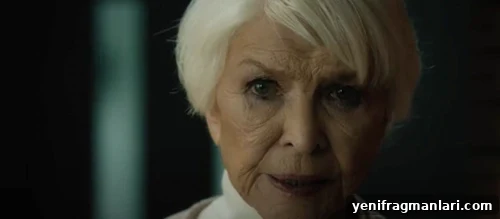
Given Burstyn’s stature, it’s tempting to expect she might anchor the film. Unfortunately, her role is minimal—just a few brief scenes—leaving her presence more like a footnote than a meaningful return. Rather than weaving her character into the narrative in a way that heightens stakes or emotional depth, the film uses her likeness to suggest continuity with the original. That choice highlights a larger problem: Believer often feels like a pre-existing script retrofitted to bear the Exorcist name for brand recognition.
This entry also misunderstands what made the original Exorcist powerful. The 1973 film and the novel that preceded it focused on Father Karras’ spiritual crisis, building dread through patient, character-driven storytelling. The horror unfolded gradually as the characters confronted personal and theological doubts. Believer abandons that interior focus for broader, more conventional scares. It is less interested in spiritual inquiry than in producing marketable frights.
The franchise’s history contains examples of studio interference and ill-fitting additions—previous sequels and prequels made changes that diluted the story’s core. Believer follows that same pattern: sidelining thematic depth in favor of familiar Hollywood tropes. The film’s production choices—script adjustments that prioritize spectacle or brand attachment—leave it feeling hollow. It’s a possession picture in form but not in spirit.
At its best, a modern Exorcist film could explore faith, doubt, and the psychological cost of confronting evil. At its worst, it trades those concerns for procedural beats and tired scares. Believer aligns with the latter. It’s serviceable in moments—there are competent performances and a handful of effective shots—but overall it lacks the atmosphere and moral seriousness that distinguished the original. Worse, the announcement of a follow-up titled The Exorcist: Deceiver (slated for 2025) suggests the series will continue down this franchise-driven path rather than returning to the introspective horror that made the original enduring.
Score: 5/24
Rating: 1 out of 5.