
Psycho (1960)
Director: Alfred Hitchcock
Screenplay: Joseph Stefano
Starring: Anthony Perkins, Vera Miles, John Gavin, Janet Leigh, Martin Balsam, John McIntire
Some films lodge themselves in cultural memory almost by accident. They may not aim to be the grandest technical achievements, yet a single shot, a line of dialogue, or a character’s nuance triggers a collective response that endures for generations. Alfred Hitchcock’s Psycho is one such film: a work that seized public imagination on release and has continued to shape the thriller genre ever since. Its influence reaches across decades of cinema and popular culture, and its reputation as a masterpiece is well deserved.
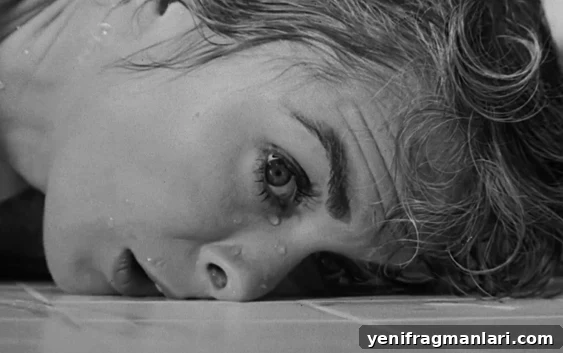
Hitchcock, already established as the Master of Suspense through films such as Rear Window, Vertigo, and North by Northwest, adapted Robert Bloch’s novel with a few key changes that sharpened the psychological edge. The story opens with Marion Crane (Janet Leigh), an office worker who, faced with temptation and desperation, absconds with a large sum of money in the hope of starting a new life with her lover. Her impulse flight ends under a storm at the Bates Motel, an isolated roadside stop dominated by a looming Gothic house and the shy but unsettling proprietor Norman Bates (Anthony Perkins), who insists his mother “isn’t quite herself today.”
The production of Psycho is itself part of cinematic legend. Hitchcock financed the picture largely himself, chose economical black-and-white film stock, and used a crew drawn from television to keep costs down. Those limitations became strengths: Hitchcock’s economy of means intensified focus on composition, performance, and sound design. He treated the film’s release like an event, restricting early press screenings to preserve surprise and even forbidding latecomers from entering once a showing had started—marketing tactics that reinforced the film’s status as must-see entertainment.
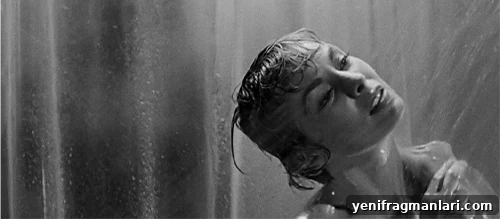
Bernard Herrmann’s score is a defining element of Psycho’s success. Composed primarily for strings, the soundtrack creates a relentless, claustrophobic tension that perfectly complements Hitchcock’s monochrome visuals. The shower sequence, accompanied by Herrmann’s piercing violin stabs, remains one of cinema’s most instantly recognizable moments; Hitchcock valued Herrmann’s contribution so highly he rewarded him with increased billing and pay. The interplay between score, editing, and camera movement in that scene exemplifies Hitchcock’s ability to make the audience feel, as much as observe, terror.
Every shot in Psycho is deliberate. Hitchcock’s direction reflects decades of experience: he knows when to hold a single, lingering frame and when to cut rapidly to control rhythm and audience anxiety. The camera angles, framing, and pacing are all instruments of storytelling. The result is a tightly controlled film in which visual economy amplifies emotional impact. The direction earned Hitchcock an Academy Award nomination, and the film stands as an exemplar of auteur craftsmanship.
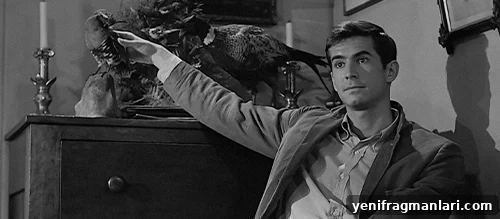
Anthony Perkins’s portrayal of Norman Bates is quietly magnetic. He balances charm and unease in a way that turns the character into one of cinema’s most memorable creations. It remains perplexing to many that Perkins did not receive an Oscar nomination that year; his performance has since become iconic, widely imitated but rarely matched. Janet Leigh and Vera Miles also deliver powerful performances, but it is Perkins’s nuanced, haunting portrayal that anchors the film and lingers in the viewer’s mind long after the credits roll.
Joseph Stefano’s screenplay streamlines and sharpens Bloch’s novel, making Norman more sympathetic and thereby increasing the emotional shock of the film’s revelations. The dialogue is economical and effective, and the narrative structure continuously propels viewers forward: scenes often end with motion—a character exiting, a car driving away—creating a momentum that keeps the story taut and suspenseful. Even the film’s more expository moments feel earned because they serve to resolve a tension Hitchcock has sustained throughout.
Psycho’s influence on later filmmakers and genres is unmistakable. Elements of its visual language, editing patterns, and narrative misdirection can be traced in works by directors from Quentin Tarantino to Michelangelo Antonioni, and it helped inspire generations of thrillers and horror films, including the slasher subgenre. While some modern viewers may find the explanatory coda at the end blunt compared to the film’s earlier subtlety, that final sequence does not diminish Psycho’s achievement. Its legacy as a touchstone of suspense cinema is secure, and its innovations continue to be studied and celebrated by filmmakers, critics, and film lovers.
Score: 24/24
Rating: 5 out of 5.