
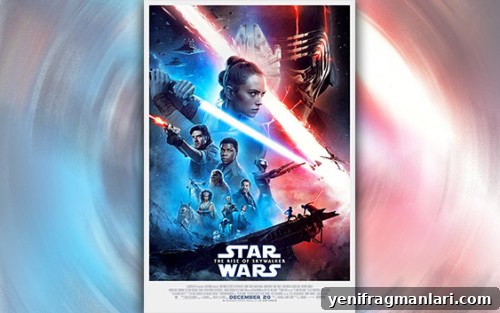
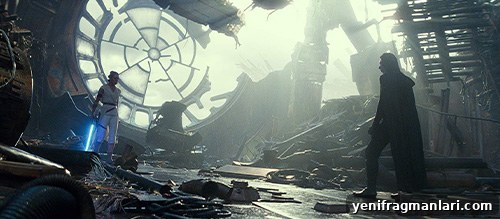
Star Wars: The Rise of Skywalker (2019)
Director: J.J. Abrams
Screenwriters: J.J. Abrams, Chris Terrio
Starring: Daisy Ridley, Adam Driver, Oscar Isaac, John Boyega, Kelly Marie Tran, Carrie Fisher, Mark Hamill
When Lucasfilm needed to steady the ship after the mixed reaction to Rian Johnson’s The Last Jedi and the commercial failure of Solo, Kathleen Kennedy turned to J.J. Abrams to finish the Skywalker saga. Abrams, who previously rebooted the franchise with The Force Awakens, inherited Episode IX amid intense scrutiny. The film had to accomplish several things at once: reconcile divided fans, deliver a box office success for Disney, and provide a satisfying conclusion to a nine-film arc. Those demands shaped the production and, ultimately, the film itself.
The polarizing response to The Last Jedi carried into the reception of The Rise of Skywalker. For many viewers, enjoyment of Episode IX depends largely on how they felt about Johnson’s installment: those who disliked The Last Jedi will find Abrams’ course corrections reassuring, while fans who embraced Johnson’s subversive choices may view many of Abrams’ moves as reversals that undermine prior character development. The result is a movie that often feels caught between competing visions rather than fully committed to a single, cohesive direction.
Much of the film’s energy is consumed by reconciling these creative differences. Episode IX attempts to fix perceived problems from the previous film, reorienting the narrative back toward threads laid out in The Force Awakens. This leads to a brisk, sometimes rushed first act that prioritizes momentum and spectacle over deeper thematic development. At times the film accelerates so quickly that important revelations and emotional beats land without the weight they deserve, leaving parts of the story feeling fragmented.
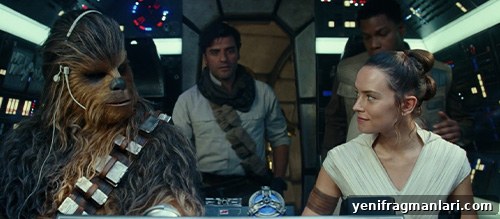
Yet Abrams’ strengths—big, kinetic set pieces, inventive production design, and a knack for rekindling the adventure tone of classic Star Wars—remain on display. Visually, the film is spectacular. The blend of practical effects and CGI creates tactile environments, and many locations feel richly lived-in. Those early sequences that send the heroes to different planets recapture the sense of wonder and discovery that defined the original trilogy, populating the galaxy with distinct characters and new visual flourishes.
John Williams’ score is another major highlight. His music elevates key moments and helps anchor the film emotionally; Williams’ themes are woven throughout the narrative in ways that underscore the saga’s mythic qualities. Sound design and mixing are similarly accomplished, adding impact to the larger-than-life battles and quieter, character-driven scenes.
Performance-wise, the ensemble is strong when given space to breathe. Daisy Ridley, Adam Driver, Oscar Isaac, John Boyega and others deliver committed turns that make the stakes feel personal. At the same time, some scenes reveal how uneven the screenplay can be: sudden shifts in character motivation or brief, explanatory lines meant to erase continuity can undercut more nuanced arcs that were previously established. Those concessions to expediency sometimes prevent moments that should feel earned from truly landing.
One of the film’s redeeming thematic threads is its emphasis on choice. Episode IX returns to the original trilogy’s moral core: a character’s decisions define them. The film repeatedly positions its protagonists and antagonists at pivotal crossroads, and these moments of agency produce some of the movie’s most satisfying emotional payoffs. By framing the Force as something tied to personal choice and acts of courage or compassion, the movie finds opportunities for meaningful character resolution.
Where the film falters is largely structural. Its attempt to please multiple constituencies produces a collage of ideas rather than a single, unified statement. Occasional tonal swings—from intimate conversations to sprawling space combat—can feel abrupt. Narrative reversals intended to placate critics of the last entry sometimes read like retcons rather than organic evolution.
Despite its flaws, The Rise of Skywalker offers plenty of moments that will please long-time fans: set pieces that reward patience, callbacks that evoke nostalgia, and emotional beats tied to the Skywalker legacy. The movie is enjoyable as a popcorn spectacle and contains a handful of genuinely moving scenes that honor the saga’s themes of family, redemption and hope.
In the broader context of the franchise, Episode IX exposes the risks of shifting creative direction mid-course. The behind-the-scenes turbulence—different directors, clashing narrative approaches, and high corporate expectations—bleeds into the final product. These production realities highlight lessons for Disney and Lucasfilm as they plan future installments: a clearer creative roadmap and stronger continuity between entries would help avoid similar fragmentation.
Ultimately, The Rise of Skywalker manages to be entertaining without fully achieving the transcendence its ambitions demanded. It is a visually thrilling, musically resonant conclusion that sometimes sacrifices coherence for spectacle. Fans will debate its merits for years, but many will find it a fitting, if imperfect, coda to the Skywalker saga.
15/24