
Killers of the Flower Moon (2023)
Director: Martin Scorsese
Screenwriters: Eric Roth, Martin Scorsese
Starring: Leonardo DiCaprio, Robert De Niro, Lily Gladstone, Jesse Plemons, Tantoo Cardinal, John Lithgow, Brendan Fraser, Cara Jade Myers, Janae Collins, Jillian Dion
Is there a deeper betrayal than the betrayal of someone who loves you? That question sits at the center of Martin Scorsese’s sweeping new film, Killers of the Flower Moon. Adapted from David Grann’s investigative book, the movie explores a dark chapter of American history when oil discoveries on Osage land in Oklahoma brought wealth, exploitation and a series of brutal crimes that helped shape the early FBI.
Scorsese uses Grann’s reporting as his foundation, but the film functions as a distinct cinematic companion to the book. Rather than simply recreating events, the director finds a perspective that makes the story intimate and devastating: he focuses on love, trust and the corrosion of both by greed. The result is a three-and-a-half-hour true-crime epic that unfolds as much as a tragedy and character study as it does a historical chronicle.
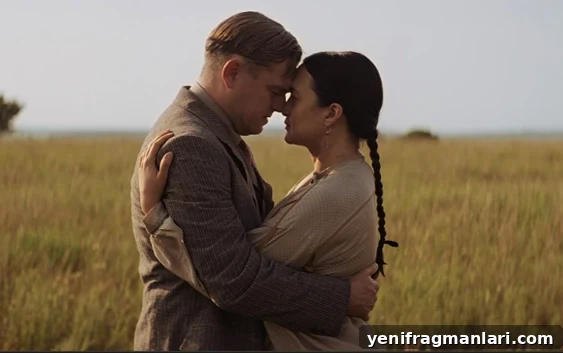
At the heart of the film is the relationship between Ernest and Mollie Burkhart. Leonardo DiCaprio’s Ernest arrives in Osage County as a man eager for prosperity and acceptance. Encouraged by his uncle William Hale—portrayed with chilling calm by Robert De Niro—Ernest courts Mollie, an Osage woman played by Lily Gladstone. Mollie and many members of her community are wealthy because oil was discovered on their land. They drive automobiles, wear fine furs and live conspicuously, but their financial autonomy is constrained by a system of white trustees who control access to their money.
Ernest is candid about his attraction to wealth—“I just love money,” he says early on—yet his affable manner hides an ability to deceive and rationalize violence. Hale, a respected local figure who styles himself as “King,” covets the Osage headrights—the legal claims to mineral wealth—that could be gained through marriage and inheritance. He and his associates pursue a calculated campaign to secure those rights by manipulating marriages and orchestrating deaths. One by one, members of Mollie’s extended family fall victim to mysterious illnesses, explosions and murders until more and more headrights land in Mollie and Ernest’s names.
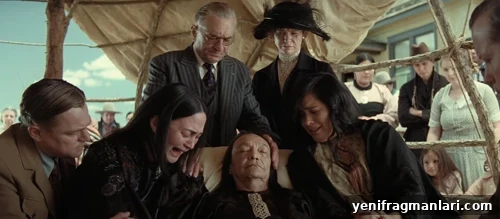
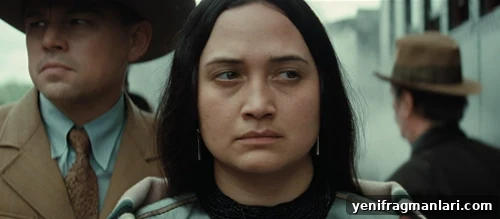
DiCaprio delivers one of his most complex performances as a man who is both loving and complicit. His Ernest is slow-spoken, charming and, at times, disturbingly unaware of his own participation in his wife’s ruin. Opposite him, Lily Gladstone gives a measured, deeply felt portrayal of Mollie. She conveys a woman rooted in her culture and traditions—a person who senses the danger around her yet is vulnerable because of love and duty. Their relationship is tender and heartbreaking; scenes of domestic intimacy and shared grief amplify the cruelty of the betrayals that encircle them.
Robert De Niro’s William Hale is a study in predatory composure. He occupies social spaces as a benefactor and friend while quietly engineering a campaign of theft and murder. De Niro’s performance radiates menace without overt theatrics; the character’s smile and generosity mask a ruthless capacity for manipulation. The film’s supporting cast, including notable turns from Jesse Plemons, Tantoo Cardinal and others, help build a community that feels vibrant yet perilously exposed to the crimes unfolding within it.
Scorsese’s direction is precise and reverent. Every shot feels deliberately composed, the camera tracking intimacy alongside dread. The narrative pacing resists sensationalism: instead of turning the story into a simple crime procedural, the film treats the audience to extended, human moments—grief, ritual, resilience—that make the eventual revelations of betrayal all the more devastating. The cinematography and production design create contrast between the visible prosperity of Osage life and the corrosive legal and social structures that exploit it.
One of the film’s greatest strengths is its vantage point. By foregrounding Mollie’s experience and the domestic world she inhabits, Scorsese avoids the familiar tropes of Westerns and gangster dramas that center only on white protagonists. Instead, the movie invites viewers into the emotional core of its victims and survivors, making the historical injustices feel immediate and personal. Scorsese and his collaborators treat the material with care and respect, acknowledging the ongoing wounds that such exploitation has left on Indigenous communities.
At runtime, the film demands patience and attention, but it rewards both with a richly layered story and powerful performances. The collaboration between Scorsese, DiCaprio and De Niro feels electric and matured by decades of shared artistic history. Lily Gladstone anchors the film with grace and moral force, ensuring that the movie’s tragic arc remains human at every turn.
Score: 24/24
Rating: 5 out of 5.
Recommended reading: Where to Start with Martin Scorsese — a guide to exploring Scorsese’s filmography and recurring themes for viewers who want to place this film within his wider body of work.