
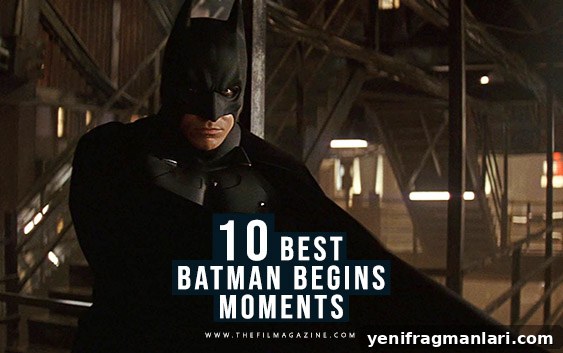
Batman Begins premiered in 2005. At the time director Christopher Nolan was only 34 and lead actor Christian Bale 31. It was Nolan’s fourth feature and had a production budget of approximately $150 million. Warner Bros., confident in Nolan’s track record from films like Memento and Insomnia, invested heavily in promotion. The studio was determined that this reboot of one of its flagship properties would not repeat the failures of earlier attempts.
Nolan assembled an exceptional cast and crew both on and off camera. Actors including Michael Caine, Morgan Freeman, Rutger Hauer and Liam Neeson supported Bale on screen, while Hans Zimmer, James Newton Howard, David S. Goyer and Wally Pfister contributed behind the scenes. Batman Begins raised the bar for superhero cinema at the time, offering a tense, character-driven take that treated the material seriously and set a new standard for blockbuster filmmaking.
This article celebrates Nolan’s work and the many memorable sequences in Batman Begins, ranking the film’s most important and impactful moments. Below are the top ten moments from the film, chosen for their narrative significance, emotional weight and cinematic craft.
10. Batman Meets Scarecrow
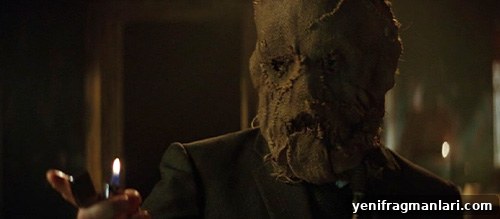
“Do you want my opinion? You need to lighten up.”
Scarecrow’s involvement in Rachel Dawes’s life becomes a growing threat as Bruce Wayne’s feelings for her deepen. By the time Batman confronts Dr. Jonathan Crane, the potency of Crane’s fear toxin has already been demonstrated on mob boss Falcone. This scene shifts the challenge from purely physical confrontations to a psychological one. When the toxin takes effect, Batman struggles in the environment where he usually holds the advantage, signaling the larger mental trials he will face later in the film.
The sequence culminates with Batman falling several stories while aflame, an arresting visual. Bruce then wakes to Alfred and Lucius Fox, haunted by a dream of his father and reminded of the lesson that grounds his mission: “Why do we fall?” This moment combines action, character development and foreshadowing effectively.
9. Rachel’s Final Decree
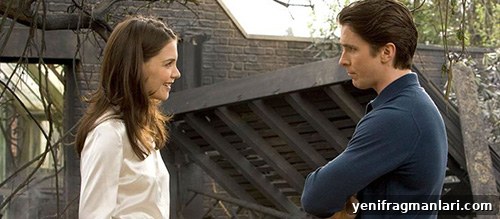
“The man I loved, the man who vanished, he never came back at all […] Maybe once Gotham no longer needs Batman, we’ll see him again.”
After Gotham is saved, Rachel’s honest assessment forces Bruce Wayne to confront a painful truth: his life as Batman demands personal sacrifice. She makes clear that the man she loved is gone, and the life Bruce once might have had cannot coexist with the mission he has chosen. This bittersweet moment defines Bruce’s emotional isolation and sets up the deeper losses and choices he will face in the sequels.
8. “I Bought Most of the Shares”
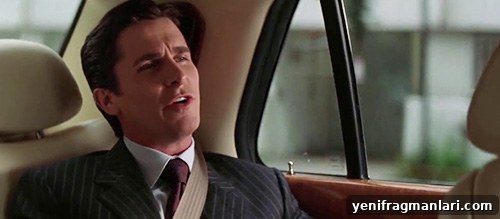
As the story winds down, Bruce resolves the corporate subplot that has paralleled Gotham’s criminal decay. With the line “I bought most of the shares,” Wayne reclaims his family company, removes the corrupt board member Richard Earle from power and installs Lucius Fox to run the business. This move reinforces Bruce’s commitment to fixing Gotham’s institutions as well as fighting crime on the streets, showing that his battle for the city is both public and private.
7. James Gordon Comforts Bruce Wayne
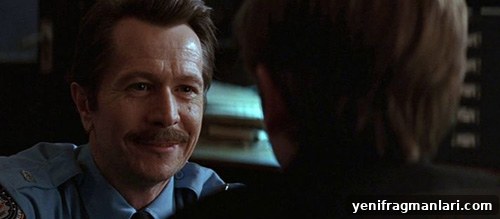
After the murder of his parents, a young Bruce Wayne sits in a police station, terrified and grief-stricken. Officer James Gordon wraps Thomas Wayne’s coat around him and offers a rare, simple kindness: “It’s okay.” This small act resonates throughout the trilogy, establishing Gordon as one of the few honest and compassionate figures in Gotham. It’s a foundational moment that helps explain why Bruce continues to believe his city can be saved.
6. Bruce Destroys the League of Shadows, Saves Ra’s
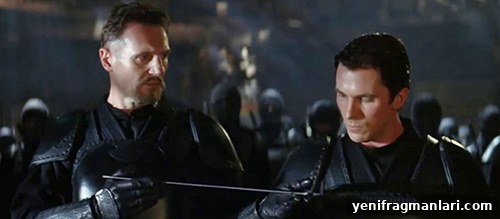
During his training with the League of Shadows, Bruce refuses an order to execute a criminal, declaring that killing is revenge, not justice. That refusal establishes the film’s central moral conflict between him and Ra’s al Ghul. When the hidden Ra’s attacks Wayne Manor and his allies, Bruce ultimately destroys the League’s stronghold but chooses to save the man he knows as Ducard, who is later revealed to be Ra’s. The rescue—Bruce dragging an unconscious adversary from a cliff—dramatically reinforces his commitment to mercy and foreshadows the moral dilemmas he will face later.
5. “Swear to Me!”
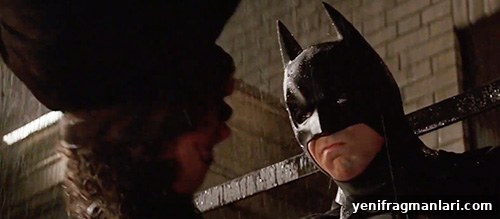
Nolan shifted Batman away from camp toward a grittier, more realistic tone. A nighttime interrogation of corrupt cop Arnold John Flass exemplifies that change. Batman suspends Flass high above a rain-soaked alley to extract information, demanding a vow with the now-famous prompt “Swear to me!” The scene’s tension, blocking and camera steadiness emphasize a Batman who operates in moral grey areas, using fear and intimidation without crossing the line he has set for himself.
4. The Dark Knight Rises Moment
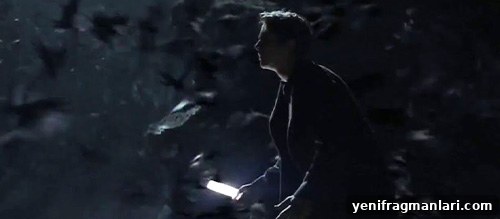
One iconic sequence shows Bruce confronting his childhood trauma in the caves beneath Wayne Manor. Surrounded by bats, he initially flinches but then stands and rises as the score swells, delivering a powerful image of a man transforming fear into strength. This moment is thematically central: Bruce’s choice to use his fear as a weapon becomes the foundation for the persona he adopts as Batman.
3. Ra’s Reveal
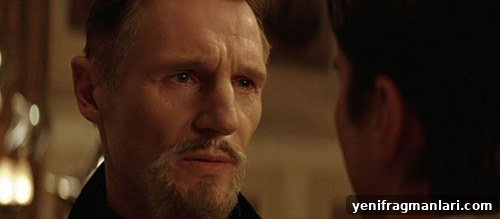
At a Wayne Manor gathering, Bruce plays the drunken playboy to deflect suspicion while threats loom. The man Bruce knows as Henri Ducard is unmasked as Ra’s al Ghul, revealing the true architect behind Gotham’s destruction. The attack on Wayne Manor destroys the physical symbol of Bruce’s past and legacy, forcing him to rebuild his identity and recommit to the mission in the ruins of what he once was.
2. Batman Saves Rachel, Stops Scarecrow
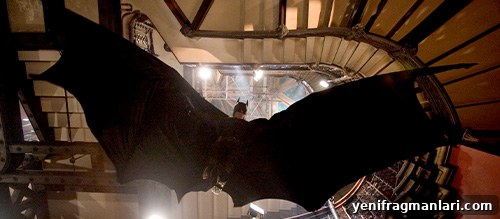
“He’s here.” / “Who?” / “The Batman…”
Rachel is kidnapped by Scarecrow and held where a deadly toxin is being deployed into Gotham’s water supply. Batman’s rescue escalates into a larger confrontation that exposes corruption within the police force and highlights the dual nature of Gotham’s enemies. The sequence features memorable imagery—a swarm of bats used to distract pursuers and a striking shot of Batman descending into a stairwell surrounded by flight. It’s one of the film’s most unforgettable action set pieces.
1. “I’m Batman!”
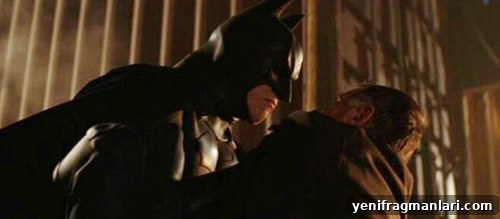
Nolan keeps Batman’s full reveal deliberately paced, waiting nearly an hour before delivering a powerful introduction. During a raid on a Falcone operation, Batman appears, striking from the shadows with a controlled mix of menace and brevity. The moment culminates when Falcone growls, “What the hell are you?” and Batman replies, “I’m Batman.” That line, delivered with intensity, became an instant signature for the character in Nolan’s grounded, physical take on the hero.
These moments collectively showcase how Batman Begins redefined the character for modern audiences: emotionally grounded, morally complex and cinematically ambitious. Each scene listed above contributes to Bruce Wayne’s evolution and to Nolan’s lasting impact on superhero storytelling.
Share your thoughts: which moments would you include or rank differently? The film contains many scenes that resonate for different reasons—narrative, emotional, or purely cinematic—and great debate is part of appreciating a movie that helped reshape a genre.