
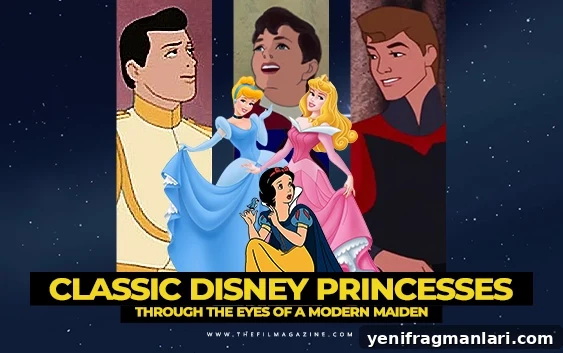
Classic Disney stories were built around the idea that love conquers all. Male characters—whether a young deer, an elephant, or a wooden puppet—often received affection from a parent or a romantic interest. Female protagonists, by contrast, were usually defined by their eventual romantic rescue: handsome, princely suitors arrived after a period of hardship and quickly provided happily-ever-afters.
That formula dominated for decades.
Good characters were unmistakably virtuous and villains unmistakably evil; nuance and moral complexity were rare. Female jealousy became shorthand for monstrosity, turning queens into witches and positioning many of the studio’s early antagonists as powerful, wealthy women who were framed as threats. For girls of the 1940s and 1950s, these portrayals offered a strange, mixed message: limited career opportunities but aspirational images of commanding, dramatic women.
Modern Disney has shifted. Recent releases such as Encanto (2021), Luca (2021), Strange World (2022) and Turning Red (2022) explore broader, more diverse themes and complex character dynamics. Contemporary princesses still wear gowns at times, but they also wield agency—and sometimes weapons—showing that heroism and leadership come in many forms.
So how does a child raised with modern values respond to the earliest Disney classics: Snow White and the Seven Dwarfs (1937), Cinderella (1950) and Sleeping Beauty (1959)? These films remain beloved by many, but from a feminist perspective—or for a nine-year-old growing up with feminist principles (let’s call her E)—they can feel dated and problematic.
E had avoided these films until now because she sensed they might over-emphasize domestic servitude, romanticize impulsive attraction, and include non-consensual moments that feel inappropriate for a twenty-first-century child. The question was whether these classics would surprise her or simply confirm her mother’s concerns about their stereotypes and heteronormative assumptions.
Snow White and the Seven Dwarfs (1937)
Snow White and the Seven Dwarfs Review
When Snow White premiered in 1937 it was a landmark achievement in animation. Its influence shaped Disney’s visual language for generations. The hand-drawn animation—hundreds of individual drawings per second—creates a luminous, dreamlike world that still impresses modern viewers.
E’s first observation was blunt: “You can tell that’s drawn.” For a child accustomed to contemporary CGI storytelling, the tactile, stylized look of Snow White felt antiquated yet also admirable as a feat of craftsmanship. The film’s vocal style, however, troubled her more. Adriana Caselotti’s ethereal, high-pitched performance sounded like an affectation to E, and the historical practice of limiting an actor’s outside work to preserve a character’s illusion felt unsettling.
One line in the film stood out as particularly troubling: “I’m so ashamed of the fuss I’ve made,” spoken immediately after an attempted murder by a trusted figure. The scene exposes a passive expectation that the heroine should downplay her trauma almost immediately, a reaction that sits uneasily with contemporary notions of agency and self-advocacy.
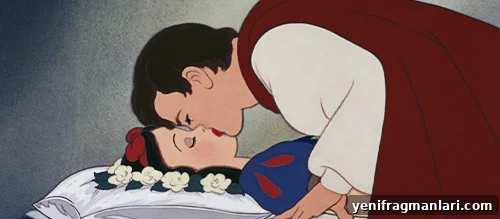
Snow White, at least, reads as young and authentically adolescent. Her curiosity and naivety fit a character of roughly thirteen years old, which is more believable than the perpetually adultized portrayals that later emerged. The film also established the “true love’s kiss” trope—here it arrives in the most problematic form, with a prince kissing a presumed-dead girl he barely knows. E, familiar with later Disney films where the trope is treated differently, was less shocked than her mother, but still uneasy about the implications of consent and romantic destiny.
E also noticed how the film’s merchandising and marketing have historically targeted girls, even though the story includes many male characters. That gendered presentation influences how young audiences perceive who these stories are “for.”
Cinderella (1950)
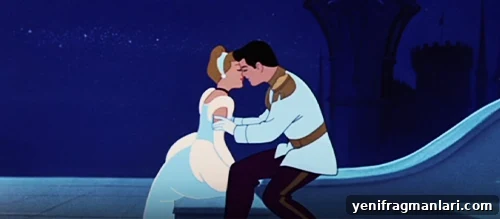
Cinderella deepens the pattern of instantaneous romantic attachment: the heroine and her prince fall in love almost immediately. Unlike Snow White’s lack of interaction, Cinderella speaks to her suitor before the kiss, yet the film still frames her happiness as reliant on male rescue—whether by a prince or a helpful animal.
Cinderella is more outspoken than Snow White, and her small acts of rebellion and kindness give her personality. Yet she remains dependent on the men around her for transformation and recognition. Her autonomy is limited to small domestic choices, which can feel unsatisfying to viewers raised on stories where women make consequential decisions and lead their own narratives.
E didn’t immediately register the film’s gender stereotypes, perhaps because she has been exposed to modern Disney heroines who routinely defy those expectations. A scene where a mouse dismisses sewing as “women’s work” read to her not as a rigid stereotype but simply as a comment about skill—illustrating how children’s perceptions are shaped by the broader media they consume.
Sleeping Beauty (1959)
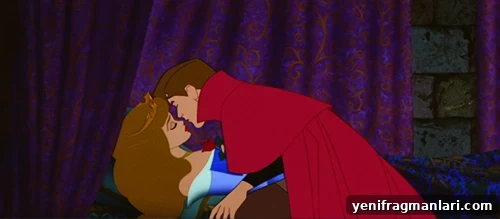
Sleeping Beauty contains one of the more uncomfortable legends surrounding the tale: older versions suggest the princess was awakened by intimate contact from a newborn, an element removed from the Disney adaptation. Still, the Disney film contains a persistent lack of agency: Aurora’s fate is largely determined by others—cursed, hidden away, and awakened by a kiss arranged by fate and expectation.
E found Sleeping Beauty “a bit too lovey” and somewhat dull. For children raised on action, suspense, and fast-paced visual inventiveness, Maleficent’s menace and the film’s central conflicts can feel underwhelming. The stakes seem less urgent and the heroine’s role more passive than in modern adventures.
Of the three films, Aurora has the least autonomy. Snow White makes poor decisions but they are her own; Aurora’s life is scripted by external forces. Visually, Sleeping Beauty and later films also ushered in a more stylized, idealized depiction of young princesses—long limbs, narrow waists, and a heightened glamour that distances them from everyday girls.
Watching these early Disney classics with a modern child was illuminating. The films showcase extraordinary artistry and the storytelling foundations that allowed Disney to evolve, yet they also reveal why many contemporary viewers crave more complex, independent protagonists. E was clear: she had no desire to rewatch Snow White or Sleeping Beauty, indicating these stories no longer align with what she seeks in entertainment.
Disney’s catalogue today must compete with a vast array of content and reflect modern values to hold young viewers’ attention. Contemporary films offer protagonists who run, rebel, lead, and problem-solve—characters who broaden the idea of what a heroine can be. Classic titles like Cinderella paved the way for that shift: they remain culturally significant, but their role has changed. Nostalgia preserves them, yet many families prefer newer stories that celebrate autonomy and diverse forms of courage.
In the end, these early Disney films are important historical touchstones and display remarkable creativity, but they also make clear how storytelling expectations have evolved. For children growing up today, the expanded range of Disney narratives—less focused on romantic destiny and more on personal growth, community, and self-determination—is a positive development. Snow White, Cinderella, and Aurora will remain part of cinematic history, but they no longer define what a young heroine must be.