
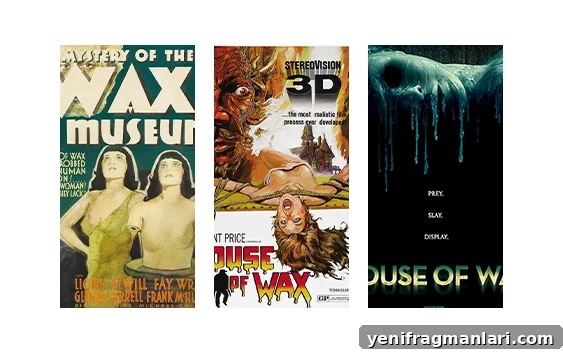
House of Wax: Three Versions of a Classic Horror Tale
Horror remakes often have a reputation for being cash-ins, but when handled with creativity or distance from the original, they can offer compelling new perspectives on familiar stories. The tale of a wax museum, a disfigured artist and horrifying tableaux has been told at least three times in cinema history, and each version reflects the filmmaking priorities and cultural concerns of its era.
The Origin: Mystery of the Wax Museum (1933)
Directed by Michael Curtiz, best known for his later work on classic films, Mystery of the Wax Museum was released in 1933 and stands out today as an artifact of early color filmmaking, using the two-strip Technicolor process. More than a technical curiosity, it’s surprisingly dark for its time. As a pre-Code film, it explored themes and images that soon became censored: grave robbery, post-mortem mutilation, substance abuse and the transformation of a brilliant artist into a scarred killer.
The central figure—an obsessive sculptor—runs a failing wax museum and becomes horribly disfigured. Consumed by his art and rage, he assembles his masterpieces from wax-coated corpses, creating an uncanny museum where the line between life and art is grotesquely blurred. The film’s willingness to confront unsettling imagery and moral ambiguity helps explain why the story has been revisited repeatedly.
The Classic Reinvention: House of Wax (1953)
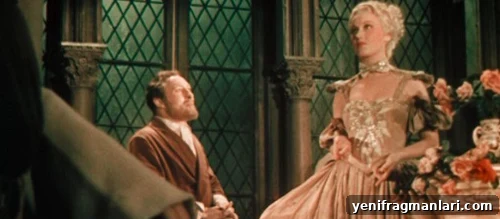
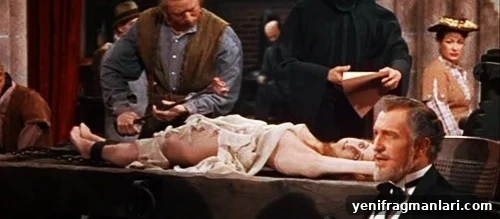
Two decades later the story was reimagined as House of Wax. This 1953 version capitalized on the 3-D craze and the desire for spectacle. Vincent Price, whose theatrical style suited the material perfectly, starred as a version of the sculptor updated for the film’s more Gothic setting. Director Andre DeToth—ironically unable to see the 3-D effect himself—used the medium to heighten atmosphere and audience engagement.
While the basic plot beats mirror the 1933 story—the artist’s obsession with perfect historical or heroic figures, the discovery of uncanny women who resemble those idols, and the revelation that many “wax” figures are actually human corpses—the 1953 film relocates the action to an earlier time period. The move to a gas-lit, turn-of-the-century ambience gives the film a misty, old-fashioned feel and allows for heightened chiaroscuro cinematography and moodier set pieces.
House of Wax leans into theatrical horror tropes of the period, including the idea that disfigurement drives a person to madness and the use of a hulking assistant to embody menace. Still, it delivers memorable moments—the final reveal of a hidden, scarred face beneath a supposedly living mask is one of the franchise’s enduring images. The film’s improved production values and effects helped it become a major box-office hit for its studio, demonstrating that classic stories could be successfully re-presented with modern technology and marketing.
The Modern Take: House of Wax (2005)
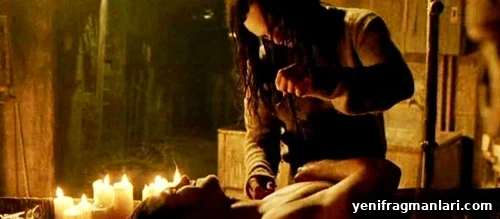
More than half a century after the 1953 film, a new House of Wax arrived in 2005. Shaped by the trends of early-2000s horror, this version strips away much of the mystery and doubles down on visceral violence and explicit explanation. The story follows a group of teenagers who stumble into an abandoned town inhabited by two enigmatic brothers. The wax museum here is an obsession magnified into criminal fixation: the brothers preserve townspeople in eerie wax dioramas that mimic frozen slices of daily life.
Tonally and structurally, the 2005 film leans heavily on slasher conventions. Its characters are largely disposable, and the film’s horrors are shown in graphic detail, including scenes that depict the painful process of covering flesh in hot wax. The result is a movie focused on shock and gore rather than subtle atmosphere. That said, it does culminate in a physically inventive and ambitious final act. The museum—built almost entirely from wax—catches fire and begins to melt around the protagonists in a sequence that relies on practical effects and creative staging for maximum impact.
Critical reception was mixed. Audiences and reviewers often criticized the heavy-handed exposition and simplified characterization, though a segment of genre fans appreciated the film’s commitment to practical effects and its willingness to embrace grisly spectacle.
Why the Story Endures
Each version of this story has something to offer. The 1933 film remains bold for its era, with moral ambiguity and shocking imagery that predate stricter censorship. The 1953 remake refines the concept with enhanced production values, strong central performance, and a theatrical approach that benefited from contemporary technology. The 2005 reinterpretation trades subtlety for visceral thrills and practical gore sequences that satisfy viewers who favor explicit horror over suggestion.
What unites all three films is a haunting premise: wax figures that are almost human, an artist whose devotion tips into depravity, and the uncanny sense that lifeless likenesses can be more disturbing than outright monsters. Depending on your taste—psychological atmosphere, classic showmanship, or brutal practical effects—there’s a version to recommend. Watch them to see how a single macabre idea has been reinvented across eras and to remind yourself that a well-executed wax figure can be unnervingly alive in the imagination.