
Blazing Saddles (1974)
Director: Mel Brooks
Screenwriters: Mel Brooks, Norman Steinberg, Andrew Bergman, Richard Pryor, Alan Uger
Starring: Cleavon Little, Gene Wilder, Harvey Korman, Madeline Kahn, Slim Pickens, Mel Brooks, Burton Gilliam, Alex Karras, David Huddleston, Liam Dunn, John Hillerman, George Furth, Jack Starrett, Carol Arthur, Richard Collier, Robyn Hilton, Dom DeLuise
“It’s often said that they could never make Blazing Saddles today.” That claim is a modern shorthand for misunderstanding context and intent. As Mel Brooks’ western spoof reaches its fiftieth anniversary, it’s worth revisiting what made the film so potent: sharp satire, affectionate parody, and a willingness to confront American prejudice through exaggerated, often outrageous comedy.
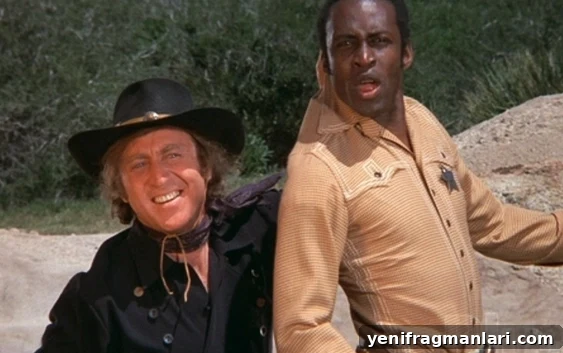
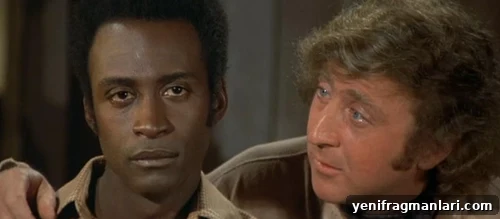
Blazing Saddles opens in the small frontier town of Rock Ridge, which is being targeted by a corrupt political scheme aimed at driving its residents away so a railroad can take the land. Attorney General Hedley Lamarr engineers raids by hired thugs and then manipulates the town into accepting a new sheriff—Bart, a Black railroad worker played by Cleavon Little—hoping the appointment will inflame racial tensions and force the townspeople to leave. Bart’s arrival sets him on a collision course with the town’s fears and bigotry, and he must ally with Jim, the Waco Kid (Gene Wilder), to rally Rock Ridge and defend its future.
Brooks’ attention to genre detail is a major part of the film’s success. From the opening theme—performed in full parody by a renowned Western balladeer—to the whip cracks and title-card flair, the movie lovingly reproduces the conventions of classic westerns before gleefully subverting them. The effect is not merely crude lampooning; it’s a precise, affectionate send-up that demonstrates deep familiarity with the material it spoofs.
One of the most persistent criticisms leveled at Blazing Saddles concerns its frequent use of racial slurs. Taken out of context, these moments can seem alarming; understood within the film’s satirical framework, however, the language is a deliberate tool. With writers including Richard Pryor, the screenplay uses offensive language to expose and ridicule the casual bigotry of the townspeople who wield it. The film forces audiences to confront how ugly, reflexive prejudice looks when amplified on screen—while positioning Bart and other Black characters as competent, witty, and morally grounded in contrast to the ignorance they face.
Brooks punctures the pretense that small-town ignorance should be accepted without consequence. Characters occasionally offer defenses of closed-mindedness as cultural inevitability, but the film undercuts those defenses with blunt comic observations: “You’ve got to remember that these are just simple farmers… morons,” Jim snaps, turning a pastoral myth into a scathing punchline that exposes the absurdity behind romanticized views of the frontier.
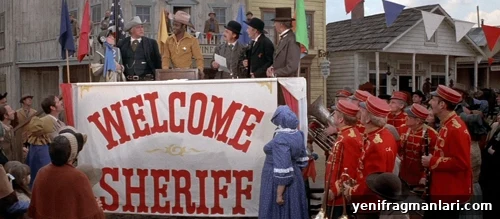
The movie contains several now-iconic set pieces that pushed comedy boundaries in 1974 and still land decades later. From the campfire sequence where outlaws suffer the consequences of a bean-heavy meal to the chaotic raid on Rock Ridge and the outrageous recruitment rally of cinematic misfits, Brooks stages escalating absurdity with surgical timing. The film culminates in a fourth-wall-breaking finale that spills the western into other filmic worlds, a sequence both daring and hilarious in execution.
Madeline Kahn’s performance as Lily Von Schtupp—an over-the-top saloon singer modeled after cabaret divas—is a highlight. Kahn’s mastery of comedic timing and vocal control allows her to perform intentionally bad singing in a way that amplifies the gag while keeping the character entertaining and memorable. Gene Wilder, as Jim the Waco Kid, injects the film with a darker, melancholic edge; his bittersweet monologues and comic restraint balance Bart’s charismatic straight man, making their partnership emotionally grounded amid the farce.
The film sprinkles Looney Tunes-style gags and visual jokes among its satirical observations, which keeps the tone lively and unpredictable. Even as Brooks tackles heavy themes—racism, corruption, and hypocrisy—he never abandons the goal of making audiences laugh. These lighter, almost childish moments serve to counterbalance sharper, more serious punches, ensuring the satire remains accessible.
That said, the film reflects its era in imperfect ways. Brooks appears in several small roles that don’t always land, and some jokes—particularly those targeting sexual orientation—feel dated and problematic today. Those moments do not negate the film’s achievements, but they do underscore how standards and sensibilities have shifted since the 1970s.
Despite initial studio skepticism and a degree of controversy at release, Blazing Saddles has earned its reputation as one of the most inventive and funniest studio comedies in American cinema. Its breathless gag rate ranges from witty to outrageous, and its ensemble cast delivers committed, fearless performances. More than a string of jokes, the film functions as a revisionist pulse-check on the western genre, prefiguring later movies that revisited the moral and racial complexities of America’s frontier. When viewers understand the film’s satirical aim—punching up at bigotry and exposing cultural hypocrisy—Blazing Saddles remains both funny and provocative.
Score: 22/24
Rating: 4 out of 5.