
Uncle Frank (2020)
Director: Alan Ball
Screenwriter: Alan Ball
Starring: Paul Bettany, Sophia Lillis, Peter Macdissi, Steve Zahn, Judy Greer, Margo Martindale, Stephen Root
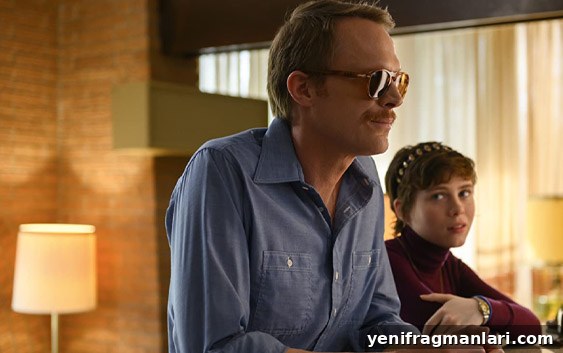
Alan Ball’s Uncle Frank is a film that squarely examines the harshness of conservative Southern values toward those who fall outside their prescribed norms. Set in 1970s Creeksville, North Carolina, the story centers on Frank (Paul Bettany), a closeted literature professor in New York who has long been estranged from his traditional Southern family. When his teenage niece Beth (Sophia Lillis) arrives in Manhattan having been accepted to the college where Frank teaches, she discovers not the conventional relationship Frank had let her imagine but a quieter domestic life with Walid (Peter Macdissi), who is revealed to be Frank’s long-term partner.
The film builds its emotional core around the bond between the unconventional uncle and his inquisitive niece. Frank becomes a mentor figure for Beth, encouraging her to pursue an education and a life beyond the constraints of Creeksville. Their connection is warm and believable, and it sets the stage for the central conflict: a sudden phone call informs them that Frank’s father, known as Daddy Mac and portrayed with venomous disdain by Stephen Root, has died. Frank, who endured sustained bullying and rejection from his father, is understandably reluctant to return home for the funeral.
Pressed by Walid and motivated by Beth’s yearning for family connection, Frank reluctantly agrees to a cross-country road trip back to North Carolina. The journey becomes both literal and psychological: as the group travels, Frank is forced to confront the painful memories that have shaped him. His trauma, the fear of being exposed, and the weight of familial shame resurface, sometimes leading him toward alcohol as a temporary refuge. The road-trip structure allows Ball to explore memory and family dynamics, but it also spreads the film across multiple tonal ambitions—coming-of-age, family melodrama and a social drama about queer life in a hostile environment.
At times that ambition works; at others, the film feels overburdened. With so many themes to address in relatively little runtime, some scenes that should land emotionally come across as underdeveloped. By telling much of the story through Beth’s perspective, Ball aims to frame Frank’s experience in a way that emphasizes growth and understanding, yet the approach occasionally drifts into familiar cinematic shorthand: Frank can read as the compassionate guide whose role is to gently educate straight characters about queer life. This tendency flirts with what critics have called the “Magical Homosexual” trope, in which a queer character’s emotional labor primarily serves to further someone else’s arc rather than receive full, nuanced development of their own.
There are also moments of implausible characterization. Walid, an immigrant who has known violence and persecution for being gay in his home country, sometimes responds with an almost unreal optimism to the dangers Frank anticipates in the South. Small plot devices—such as Beth’s compelled cross-country travel because her mother fears flying—read as contrivances that push the narrative forward at the expense of deeper motivation. Likewise, some characters transition from entrenched bigotry to sudden forgiveness or reconciliation in ways that feel more like wishful storytelling than earned change.
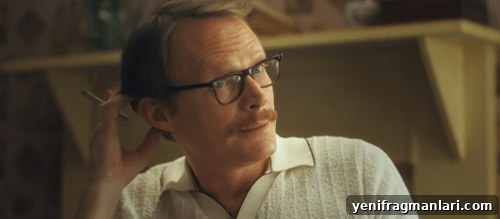
Despite these shortcomings, the film is elevated by strong performances. Paul Bettany gives a restrained, layered turn as Frank, portraying a man whose intelligence and warmth are shadowed by persistent grief and fear. Bettany conveys the character’s internal contradictions—his longing for acceptance and his guardedness—without resorting to melodrama. Sophia Lillis continues to prove her range; she brings curiosity, sincerity and a grounded emotional sensitivity to Beth that helps anchor the film. Peter Macdissi is a quietly powerful presence as Walid, radiating tenderness and loyalty, while Margo Martindale captures the cadence and presence of a Southern matriarch with warmth and precision.
When Uncle Frank finds its footing, it offers genuinely touching moments about the families people choose and the love and protection that can exist outside biological ties. The film repeatedly asserts that family is defined by care and solidarity rather than blood alone, and those scenes—intimate, carefully observed—are the film at its best. Still, the movie is often pulled back by a need to tidy its emotional conflicts into tidy resolutions, trading difficult ambiguity for sentimental closure.
Overall, Uncle Frank is a thoughtful, imperfect film. It succeeds most clearly when it leans into the quiet humanity of its central relationships and the performances that bring them to life. Where it falters is in trying to be many things at once and occasionally smoothing over the harsher realities it depicts. For viewers interested in a character-driven examination of Southern family dynamics, queer identity and the compromises people make to survive, the film offers compelling moments and strong acting, even if its narrative choices sometimes feel calculated rather than fully sincere.
12/24