
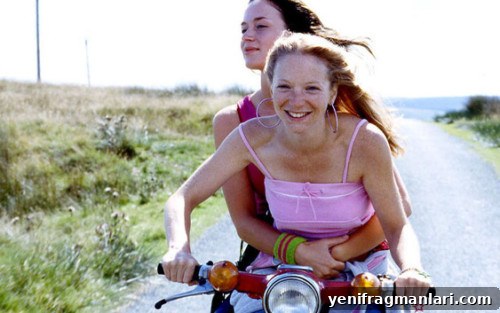

My Summer of Love (2004)
Director: Pawel Pawlikowski
Screenwriter: Pawel Pawlikowski
Starring: Natalie Press, Emily Blunt, Paddy Considine
Pawel Pawlikowski’s English-language debut, My Summer of Love, is a delicate, quietly intense romantic drama set among the rolling hills of the Yorkshire countryside. From its opening moments the film already displays many of the visual and thematic concerns that would define Pawlikowski’s later work: a careful attention to faces and light, an economical yet expressive mise-en-scène, and a fascination with questions of faith, class, and identity. Watching this early film now feels like revisiting the first notes of a distinctive cinematic voice.
The film centers on Mona (Natalie Press) and Tamsin (Emily Blunt), two young women from strikingly different social backgrounds whose brief relationship becomes a catalyst for deep change. Pawlikowski stages their differences visually as much as narratively. Mona’s muted, introspective presence is contrasted with Tamsin’s sunlit charisma: one arrives on a moped, the other atop a horse. That introductory sequence—Tamsin framed against the sun and Mona watching from below—establishes class, control, and movement as key motifs. Tamsin appears powerful and in command of her circumstance; Mona drifts, pulled by forces she cannot fully steer.
The film uses these contrasts to explore how a single season of intimacy can shape two lives very differently. For Tamsin, the summer is a transient affair framed by privilege and escape; for Mona, tied to a poorer, more constrained existence, it threatens to redefine possibility itself. Pawlikowski allows that tension to unfold gradually, revealing cracks in Tamsin’s stories and the varied consequences that arise when love collides with inequality. Themes of abuse and religious pressure quietly thread through the narrative, adding emotional weight without ever becoming melodramatic.
Pawlikowski’s direction rewards close attention. He often lingers on facial detail and quiet gestures—Natalie Press’s expressive restraint becomes a canvas for nuance, while Emily Blunt’s physicality and presence mark a clear counterpoint. The cinematography, which favors natural light and carefully composed frames, helps the film feel intimate and immediate. There are moments when the camera catches a face, a gesture, or a shifting expression with a clarity that hints at the influence of classic European auteurs, yet the film never feels derivative. Instead it channels those sensibilities into a distinctly British story that balances observation with emotional urgency.
Paddy Considine’s performance as Phil, Mona’s brother, bolsters the film’s sense of realism and provides a grounded counterbalance to the central relationship. Aside from him, the narrative largely follows Mona and Tamsin alone, allowing the film to concentrate on dynamics of desire, misunderstanding, and power. Pawlikowski’s script resists easy categorization: it is neither a conventional romance nor a straightforward coming-of-age tale. Instead it interrogates romantic idealism and asks who is allowed to expect more from love when social circumstances differ so drastically.
Structurally, the film is economical and assured. Pawlikowski’s use of landscape—small-town streets, quiet rooms, and open fields—mirrors the characters’ inner states. The Yorkshire setting becomes both a picturesque backdrop and a social map: proximity does not erase difference, and closeness can magnify both tenderness and harm. The director’s interest in religion and moral authority surfaces in subtle ways, shaping the characters’ choices and tensions without ever spelling out tidy answers.
More than two decades after its release, My Summer of Love remains a powerful study of intimacy and consequence. It introduces many of the themes that would come to define Pawlikowski’s later films: a precise visual language, an interest in inner conflict, and an ability to mine emotional complexity from understated performances. For viewers who appreciate character-driven drama, thoughtful camerawork, and stories that examine how love is colored by class and belief, this film is a richly rewarding experience.
20/24