
Blazing Saddles (1974)
Director: Mel Brooks
Screenwriters: Mel Brooks, Norman Steinberg, Andrew Bergman, Richard Pryor, Alan Uger
Starring: Cleavon Little, Gene Wilder, Harvey Korman, Madeline Kahn, Slim Pickens, Mel Brooks, Burton Gilliam, Alex Karras, David Huddleston, Liam Dunn, John Hillerman, George Furth, Jack Starrett, Carol Arthur, Richard Collier, Robyn Hilton, Dom DeLuise
Every few years someone declares “They could never make Blazing Saddles today,” often without considering what the film actually does. As Mel Brooks’ Western spoof approaches its half-century mark, it’s worth revisiting the movie’s influence and why it endures. Far from a relic to be dismissed out of hand, the film remains a provocative, frequently brilliant satire that both pays homage to and skewers the conventions of the classic American Western.
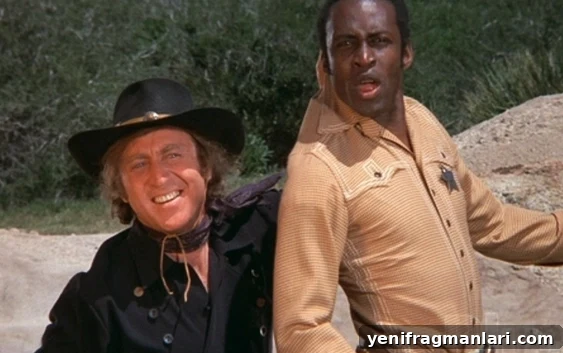
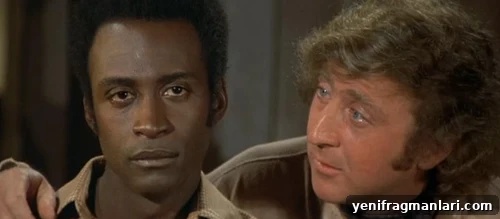
The plot is simple and deliberately broad: the corrupt Attorney General Hedley Lamarr (Harvey Korman) schemes to drive the townspeople out of Rock Ridge so the railroad can take their land. To destabilize the town he rigs the sheriff’s office by appointing Bart (Cleavon Little), a Black railroad worker, as sheriff, expecting the townspeople to rebel. Bart, with the cynical yet lovable gunslinger Jim, the Waco Kid (Gene Wilder), must win the town over and defeat Lamarr’s gang.
From the opening credits—complete with a pastiche Western theme sung in full-throated style—Brooks sets a tone that is affectionate toward the genre even as it dismantles it. The film lovingly recreates familiar Western tropes, then pushes them to comic extremes. This duality—reverence mixed with ridicule—is a hallmark of Brooks’ best work. He doesn’t punch down at a property or a culture he despises; he exaggerates its absurdities out of affection and critical intent.
One major criticism leveled at Blazing Saddles over the years centers on its frequent use of racial slurs and its blunt depiction of bigotry. That depiction, however, serves a deliberate purpose. With writers that included Richard Pryor, the script uses harsh language and outrageous behavior to expose and mock the ignorance and cruelty behind prejudice. The film deliberately flips the audience’s expectations: the Black protagonist, Bart, is intelligent, composed and morally centered, while many of the white townspeople and villains reveal themselves to be foolish, cowardly or morally bankrupt.
Brooks’ satire is pointed: he highlights the absurdity of racial prejudice rather than endorsing it. One of the film’s memorable lines, delivered with withering clarity, undercuts romanticised notions of frontier virtue: “You’ve got to remember that these are just simple farmers… You know… morons.” That sting of contempt is aimed at the haters and the hypocrites, not at the people targeted by prejudice.
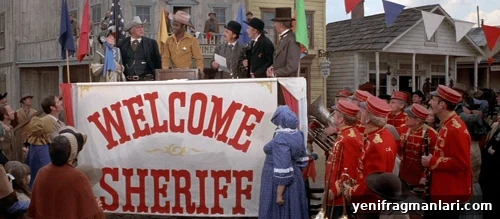
Blazing Saddles remains famous for outrageous, boundary-pushing comedy set pieces: a campfire scene built around embarrassing bodily functions; a chaotic, slapstick-driven raid on Rock Ridge; a recruiting speech that blends grandiose rhetoric with self-aware mockery; and a final act that deliberately breaks the genre’s rules and the fourth wall in increasingly audacious ways. Madeline Kahn’s portrayal of Lily Von Schtupp—a saloon singer who channels Marlene Dietrich—stands out for its combination of musical comedy and perfectly timed innuendo. Kahn turns barbed humor into an art form, delivering comic singing that is intentionally off-kilter and endlessly entertaining.
Gene Wilder’s Waco Kid provides emotional depth beneath his comic surface. Wilder balances manic energy with a melancholy that informs his character’s reluctance to rejoin gunfighting life. His monologue about why he abandoned the gunslinger life is a standout moment: it blends self-deprecating humor with a sharp, surprising payoff that reveals Wilder’s skill at timing and pathos.
The film also deploys deliberately childish, Looney Tunes–style gags, a reminder that Brooks wants audiences to laugh at all levels. Silly strategies, cartoonish character beats and an almost gleeful willingness to be outrageous keep the tone buoyant even when the subject matter is serious. Those choices help the film sustain its satirical edge without becoming dour.
That said, not every joke lands equally well today. Brooks’ occasional appearances in the film and some of the homophobic gags reflect the era’s limitations and can feel uncomfortable now. Those moments are reminders that even boundary-breaking comedy can carry the biases of its time. Acknowledging those flaws does not erase the film’s achievements but invites a nuanced view of its legacy.
Despite initial studio skepticism and controversy on release, Blazing Saddles is widely regarded as one of the most inventive and funniest studio comedies of its time. Its blend of rapid-fire gags, sharp satire and memorable performances helped redefine what a mainstream comedy could be. The film also anticipated later revisionist Westerns by highlighting the moral complexity and racial realities of the American frontier, a theme other filmmakers would further explore in subsequent decades.
Score: 22/24
Rating: 4 out of 5.