

Early critical success creates expectations that can be hard to meet. Alexander Payne faced that exact pressure when Election and Sideways were hailed as defining films of their decades and earned Academy Award recognition.
A film school graduate who briefly cut his teeth directing softcore features for Playboy, Payne quickly made a name for himself with sharp, darkly comic examinations of contemporary American life. He has a talent for shaping memorable, often unflattering protagonists and for drawing nuanced performances from lead actors.
Born and based in Omaha, Nebraska, Payne frequently sets his films in the Midwest and writes with a clear-eyed, occasionally bleak view of human behavior. His characters are frequently flawed, selfish, or petty, yet he finds ways to make them sympathetic or at least understandable. His films can be uncomfortable, but they usually pair that discomfort with wit and a small, hopeful streak.
While Payne’s later work has sometimes been judged harshly when compared to his breakthrough hits, his filmography still offers plenty of rich, distinctive work that critics and audiences have debated. Based on critical reception and lasting impact, this is The Film Magazine’s ranking of all eight Alexander Payne feature films, from least to greatest.
8. Downsizing (2017)

In a near-future premise, humans facing climate collapse choose to undergo a procedure to become five inches tall and live in scaled-down communities built for a smaller population. Matt Damon plays Paul Safranek, who embraces the procedure and forms a bond with Ngoc Tran, a Vietnamese political dissident played by Hong Chau.
Downsizing is an ambitious misstep in Payne’s filmography. Its imaginative set-up and initial act work well, but the film loses dramatic and tonal focus as it progresses. Damon gives a solid everyman performance, while Christoph Waltz’s turn leans into caricature as the hedonistic neighbor. Hong Chau’s performance was widely discussed, though her character could have had more agency beyond her relationship with Paul.
Payne attempted his largest-budget film to date, but the movie needed a clearer sense of scope and a stronger narrative throughline to fully realize its provocative idea.
7. About Schmidt (2002)

After four decades as an actuary, Warren Schmidt (Jack Nicholson) retires and struggles to find purpose. A sudden bereavement prompts a cross-country trip in a Winnebago as he prepares himself for his daughter’s upcoming wedding and reflects on his life.
Nicholson treads a quieter path here than in many of his famous roles, delivering a restrained and textured performance as a cantankerous man who rants to himself and to a Tanzanian boy he sponsors. The film resists a tidy transformation, instead allowing Schmidt to remain complicated and imperfect. About Schmidt began as an early screenplay for Payne and evolved into a long-gestating passion project; its strengths are character detail and understated comic moments, though the film occasionally meanders in its two-hour-plus runtime.
6. Citizen Ruth (1996)

Laura Dern plays Ruth, a pregnant woman with an addiction who becomes a pawn in the bitter U.S. abortion debate. Both sides, from conservative Christian activists to pro-choice campaigners, try to exploit her for publicity and political gain.
Citizen Ruth is Payne’s most overtly political and uncompromising film. Dern gives a raw, affecting performance that anchors the story, which skewers the performative extremes of both sides of a polarizing issue. The film is sharper in tone than many of Payne’s comedies and leaves one of its most indelible images lingering: Ruth walking unnoticed between opposing protesters too absorbed in attacking each other to see her.
5. The Descendants (2011)

George Clooney stars as Matt King, a Hawaii-based lawyer forced to confront family secrets and difficult decisions after his wife is incapacitated in a boating accident. He must reconnect with his daughters and decide the future of a large parcel of family land.
The Descendants mixes sorrow and understated humor against a stunning Hawaiian backdrop. Clooney shows surprising physical comedy and vulnerability. Standout supporting turns from Shailene Woodley and Amara Miller add emotional heft, making the film a moving portrait of a privileged man grappling with loss, accountability, and the fraying idea of family.
4. The Holdovers (2023)
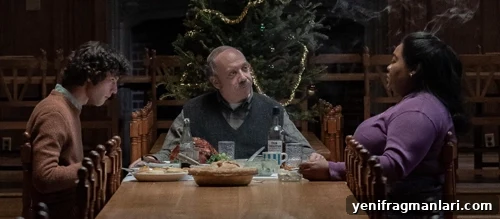
Paul Giamatti plays Paul Hunham, a boarding school teacher tasked with overseeing students who remain on campus during the holidays. He forms unlikely connections with the kitchen manager Mary (Da’Vine Joy Randolph) and a lonely pupil, Angus (Dominic Sessa).
Seen as a welcome return to form after Downsizing, The Holdovers is a quietly observed character study. Payne uses a muted palette and careful pacing to let the relationships develop organically. Giamatti, Randolph, and Sessa create a believable, slowly warming trio whose bonds feel earned. The film expands in the final act to deliver unexpected emotional turns while maintaining a restrained tone.
3. Nebraska (2013)

Bruce Dern plays Woody Grant, an aging, cantankerous man convinced he has won a sweepstakes prize. His estranged son, played by Will Forte, drives him to Nebraska, and the trip forces both men to reckon with regret, family history, and mortality.
Shot in expressive black-and-white, Nebraska is Payne’s most art-house-leaning film. The cinematography highlights weathered faces and wide plains, heightening the story’s melancholy. The film unfolds as a series of quiet vignettes that reveal character and history, and Bruce Dern’s award-winning performance anchors the film’s contemplative mood.
2. Election (1999)
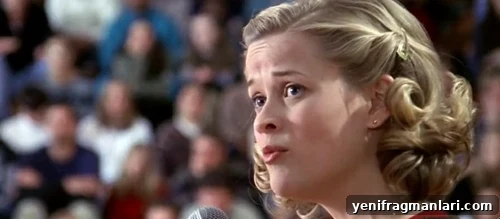
Reece Witherspoon stars as Tracy Flick, an overachieving high school student running for student body president. Matthew Broderick plays a popular teacher who, driven by personal frustration, tries to sabotage her campaign.
Election is Payne’s sharpest comedy, built on precise performances, a razor-smart script, and inventive editing. Witherspoon’s breakthrough performance is relentless and magnetic, while Broderick reveals a darker, more conflicted side. The film balances broad satire with darker undertones—touching on inappropriate relationships and social issues—while remaining one of the finest high-school movies of its era.
1. Sideways (2004)
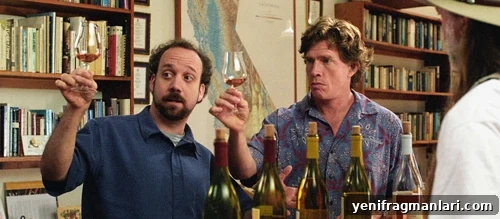
Miles (Paul Giamatti), a depressed English teacher, and Jack (Thomas Haden Church), a soon-to-be-married actor, take a wine-country road trip the week before Jack’s wedding. The trip exposes personal failures, dashed hopes, and the friends’ complicated bond.
Sideways remains Payne’s masterpiece for many viewers: a perfectly balanced blend of melancholy, humor, and character insight. Giamatti and Church form an unforgettable odd couple whose self-sabotaging choices create both comic and tragic moments. The film is a road movie, a bittersweet romantic comedy, and an intimate study of friendship and regret, crafted with sharp writing and strong performances.
Alexander Payne’s films often derive their power from mixing sympathy and scorn, making selfish or foolish characters feel vividly human. By focusing on flawed individuals and letting small details reveal larger truths, he has become a singular voice in contemporary American cinema.
Which of his films resonates most with you? Share your thoughts in the comments. Follow The Film Magazine on social platforms for more curated film lists and thoughtful criticism.