

El Conde (2023)
Director: Pablo Larraín
Screenwriters: Guillermo Calderón, Pablo Larraín
Starring: Jaime Vadell, Gloria Münchmeyer, Alfredo Castro, Paula Luchsinger, Stella Gonet
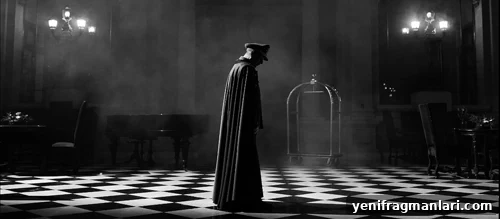
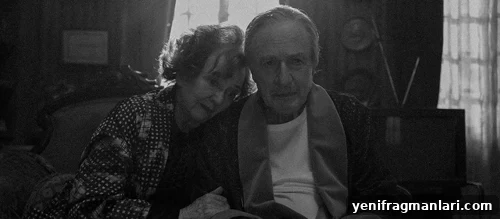
Pablo Larraín’s latest film, El Conde, is a sharp historical satire that imagines Chile’s former dictator Augusto Pinochet as a literal vampire. Jaime Vadell portrays the immortal Count, a monstrous figure who has haunted the world for 250 years, dedicated to crushing socialism, unions and revolution. Now elderly and finally ready to die, he and his near-vampiric family retreat to a secluded country estate to resolve a tangled inheritance. His wife, Lucía (Gloria Münchmeyer), hungry for power, and his lethal butler Fyodor (Alfredo Castro) surround him. An accountant arrives to sort the finances, but she is also a nun tasked with exorcising the Count, blurring the lines between bureaucracy, faith and retribution.
This is a film with no clear heroes. Vadell’s Pinochet is petulant and stubborn, oddly childlike in his refusal to accept responsibility. He lives in a delusion in which those around him adore and enable him, even as they quietly perpetuate his crimes. The exorcist, who openly reproaches him for his human rights abuses, also seems trapped in a complicated affection for the man and the myths that sustain him.
Larraín has repeatedly returned to the political history of Chile in his films. His Oscar-nominated No (2012) centered on the 1988 plebiscite that decided Pinochet’s future, while Neruda (2016) explored political persecution through the life of the poet Pablo Neruda. His English-language features, including Jackie (2016) and Spencer (2021), have shown his talent at portraying controversial leaders and the atmospheres that surround them. El Conde is his most direct engagement with the dictator himself, and the film wears its intentions plainly: its release date, timed to coincide with the 50th anniversary of Pinochet’s rise to power, is intentional subtext, and every choice feels designed to send a message.
When the satire lands, it lands vividly. The film’s metaphorical language—depicting the Count as someone who coldly devours human hearts—effectively evokes the brutality and dehumanization of the dictatorship. Scenes such as Pinochet and Lucía slow dancing to a brass band playing parade music capture a bitterly comic dissonance: the pomp of public spectacle performed against the reality of oppression. Larraín’s sense of tone balances grotesque humor and moral outrage, giving viewers moments that are both horrifying and darkly funny.
However, the film’s message sometimes overwhelms its narrative momentum. Despite a rich mixture of gore, greed, eroticism and family drama, the plot advances slowly and often feels secondary to the satire. Viewers quickly understand the film’s premise and tone, and after the first few scenes the story frequently settles into a series of set pieces and symbolic gestures rather than a conventional forward drive.
The choice to shoot in black and white—an homage to the early vampire films from Germany and Universal Pictures—creates a sumptuous, velvety visual texture that both beautifies and softens moments of extreme violence. That aesthetic choice gives the film a dreamlike quality, occasionally blurring the line between nightmare and grotesque farce. The irony at the heart of the movie is unsettling: while the Count is presented as a fantastical monster, the real horror lies in the fact that political monsters are human, ordinary and stubbornly alive.
There is much to admire in El Conde. Its best sequences are dazzlingly grotesque and laugh-out-loud funny, and its cinematography is consistently striking. Larraín’s direction and the committed performances—particularly Vadell’s unnervingly childish menace—make the film compelling even when its narrative ambition outstrips its plot. The ending lands with precise, stinging clarity, leaving a final image that functions like a stake through the heart of myth.
Ultimately, El Conde confronts a difficult and divisive chapter of Chilean history with boldness and theatricality. It is not flawless, but it is provocative and frequently memorable, the work of a confident creative team unafraid to turn political critique into dark, operatic cinema.
Score: 19/24
Rating: 4 out of 5.