
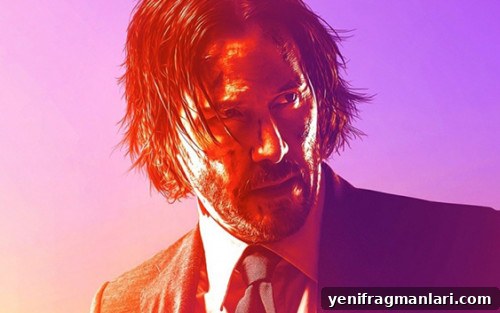
John Wick Chapter 3 — Parabellum: Film Analysis and Review
I hadn’t revisited the earlier John Wick films before watching John Wick Chapter 3 — Parabellum, so I entered the theater nearly blind to the trilogy’s full context. My strongest recollections were the trigger incident—the death of his dog—the brutal tally of kills, and the Continental, the hotel sanctuary for assassins. What initially drew me in, though, was the film’s commitment to realistic guncraft: Keanu Reeves trained with expert Taran Butler to master proper grip, weapon transitions and practical reloading under pressure, details most action movies ignore. That realism continues to be one of the franchise’s most compelling features in this third installment.
Beyond the choreography and technical craft, I was surprised by how accomplished Parabellum is as a piece of cinema. It’s not merely an action spectacle; it deliberately uses color, lighting and mythic references to shape mood and meaning.
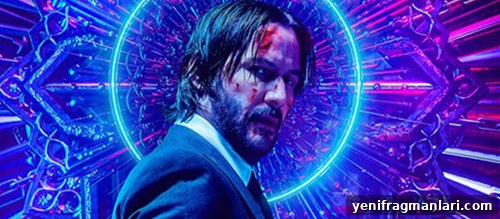
Parabellum operates with an expressionist visual language. The film consistently contrasts blue, red and yellow lighting to guide our emotional reading of scenes and characters. It opens with John fleeing through a blue-tinted New York after killing the antagonist from the previous film inside the Continental—a violation that renders him “excommunicado” from the assassin order. The editing is urgent, matching the countdown to his excommunication, and he flees to a library where he keeps tools that will serve him later.
Blue lighting in the film often denotes the High Table—the shadowy bureaucratic order that governs the assassin world. Members and emissaries of the High Table are shown wearing blue or appearing in blue-lit environments, reinforcing the organization’s cold authority. Red is used in opposition to that blue: red represents John himself, his allies, and the path of bloodshed he leaves in his wake. Early sequences bathe John in red or place him against red backdrops, signaling his lethal agency and foreshadowing success in combat when red dominates the frame.
Yellow functions as a cautionary color. Winston appears under yellow lights in the Continental, a visual warning about the danger John faces. The same yellow recurs when John confronts formidable foes, such as the towering adversary played by NBA veteran Boban Marjanović—an expressionist device that underscores John’s underdog status in certain moments. When yellow appears in scenes without a John ally, it heralds peril, such as when the Adjudicator recruits the assassin Zero, shifting a red restaurant into a threatening yellow tableau.
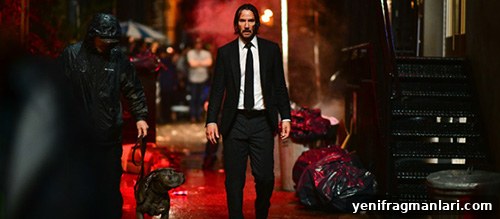
Mythic allusion runs through the story as well. John echoes classical heroes and demigods: a renowned killer sent on trials and symbolic journeys. He is instructed to travel into the desert and follow a celestial dog—an allusion to Orion and his companion—until he reaches a point of test and possible death where an Elder can find him. That desert trial carries echoes of biblical temptation and of heroes tested in isolation. The Elder’s bargain—life offered in exchange for the severing of John’s wedding finger and the loss of his ring, the last tangible reminder of his wife—functions like a Faustian bargain. John’s sacrifice of memory in exchange for survival reframes the film’s moral stakes around identity and what he is willing to surrender to continue fighting.

The film also stages a humanist take on myth. The High Table reads like a modern pantheon, its enforcers and adjudicators replacing gods; Laurence Fishburne’s Bowery King and his network of outcasts represent an underworld analogue, a kind of cinematic Tartarus. When the Bowery King is punished and sent “below the Table,” the production design places him in a subterranean throne room with raging fires—an expressionist nod to Hell and an externalization of rage and revenge. John’s arc suggests a Sisyphean punishment: he moves from hunted to hunter and, despite his victories, finds himself prepared only to keep fighting as new wars loom.
The film’s strengths create some unanswered questions, especially around the theme of rules and consequences. Parabellum repeatedly emphasizes that breaking the order’s strict codes invites harsh retribution: John becomes the target of a global bounty, sanctioned spaces are deconsecrated, and maiming or death are presented as tools of punishment. That said, mercy and inconsistency also surface. Characters such as Sofia—who helps John and is associated with red, signaling her partial allegiances—do not suffer immediate consequences. Winston’s defiant choices lead to a complex, ambiguous resolution rather than a straightforward punishment. The result prompts the central question: are rules sacrosanct in this world, or can force of will rewrite fate?
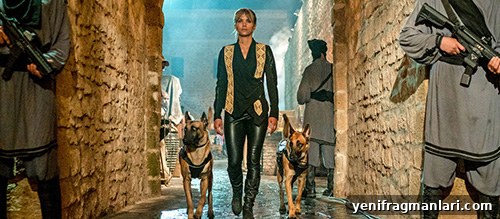
Another tension in the picture is its moral framing. The film seems to insist on clear categories of right and wrong—the High Table as the antagonist and John as an almost mythic force of individualism—but it rarely interrogates the moral cost of John’s mass violence. By conservative counts, the body toll is staggering: 167 people are killed over the course of the trilogy’s first three films as a direct result of John and his allies. When does self-defense become mass killing? The film asks us to root for John, but it largely avoids a sustained ethical examination of his actions, choosing instead to center his survival and personal code.
Stylistically, Parabellum largely succeeds. The fight choreography, sound design and production design combine to create memorable set pieces that feel dangerous and tactile. Sequences such as the underwater shootout in a pool or John’s escape through an antique store that ends with an unexpected horse-riding getaway are audacious and visceral. Those moments deliver a peculiar, tense humor that arises from the collision of oddity and seriousness. By contrast, the script’s occasional attempts at jokey, self-aware one-liners can undercut rather than enhance the film’s gravitas.
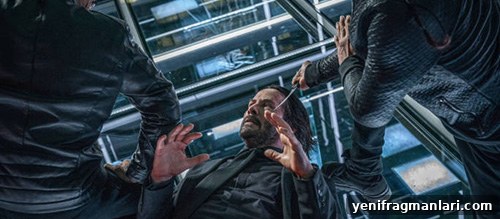
Small structural gripes persist: the film sometimes relies on repeated visual conventions—cutting away to groups of assassins lining up to pursue John in near-identical ways—that feel formulaic given the movie’s otherwise committed realism. Likewise, a few contrivances, like John always producing the perfect weapon at the perfect moment, jar with the choreography’s gritty unpredictability.
Still, Parabellum stands as an exhilarating entry that elevates action cinema with intentional visual design, strong performances and meticulous technical craft. It leaves the franchise poised for continued expansion, even as it raises ethical and formal questions about rules, retribution and the price of survival. For fans of disciplined action and expressionist cinematography, it’s a powerful, unforgettable ride—and a welcome way to kick off the summer movie season.
John Wick Chapter 3 — Parabellum earns praise not just for its visceral action but for the care behind its worldbuilding and audiovisual storytelling. It’s an ambitious, highly stylized action film that invites repeated viewings to unpack the layers beneath its gunfights and neon lights.