
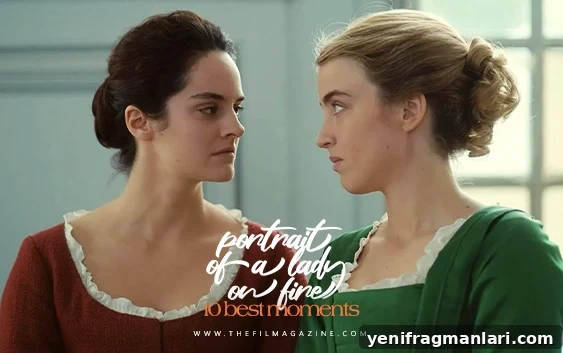
Portrait painter Marianne (Noémie Merlant) is commissioned to paint an extremely reluctant Héloïse (Adèle Haenel) for a prospective husband—an arrangement made by Héloïse’s mother (Valeria Golino), not by Héloïse herself.
Written and directed by Céline Sciamma, Portrait of a Lady on Fire (2019) unfolds as a slow-burning exploration of desire, passion, and love. The film is a sensory triumph: spare, precise, and emotionally resonant.
The isolated island setting, the stiff fabrics of eighteenth-century costume, and the rigid social conventions of the period create layers of constraint the two women gradually shed. The film is unmistakably a love story, but it is also a broader portrait of women whose lives and voices were often ignored.
This list counts down the most beautiful, impactful, and unforgettable moments from Sciamma’s romantic masterpiece: the 10 Best Portrait of a Lady on Fire Moments.
Follow @thefilmagazine on social platforms for more film essays and lists.
10. The Art Class
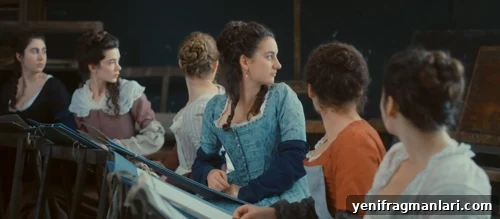
The film opens with Marianne teaching an art class. The camera pans through the room, revealing an audience composed entirely of women. This choice immediately announces the film’s focus on the female gaze and establishes a tone centered on women’s perspectives, creativity, and quiet solidarity.
9. Diving Into the Sea
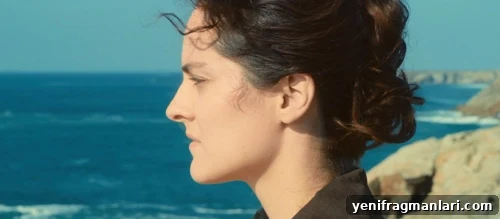
When Marianne’s art supplies fall from the boat into the surf and the men aboard remain passive, she plunges into the choppy water to recover them. Though she has barely spoken, this single action reveals Marianne’s character: resourceful, determined, and unafraid to act when others will not.
8. Marianne’s Mission
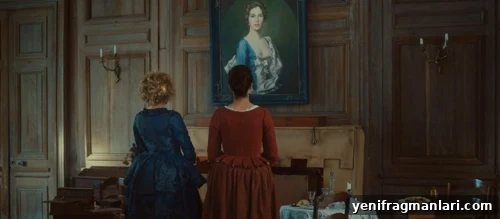
La Comtesse commissions Marianne to paint Héloïse—but the portrait must be completed in secret, without Héloïse’s knowledge. That covert requirement shapes the film’s intimacy: the clandestine sittings create the circumstances for lingering looks, stolen moments, and the gradual friendship and passion between the two women.
7. Portrait of a Lady on Fire
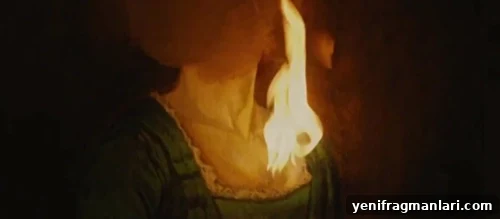
An earlier portrait, painted by a man who never saw Héloïse’s face, is burned. That act reads as a powerful repudiation of the male gaze and the objectifying assumptions of Marianne’s profession. Burning the failed portrait erases the past and clears space for a new, more honest representation—one shaped by intimacy, attention, and mutual recognition.
6. “Is that how you see me?”
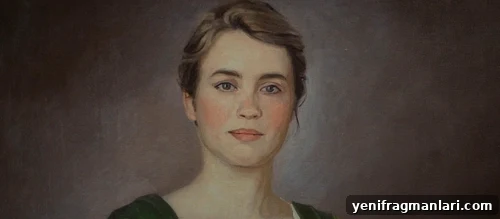
Unable to continue the deception, Marianne reveals the secret portrait to Héloïse. Héloïse’s shock is not only at the lie but at the unfamiliarity of her own image—she doesn’t recognize herself. Marianne explains how her work is constrained by rules set by men; the conversation becomes a metaphor for the women’s constrained lives. Héloïse demands to be seen fully and insists Marianne accept the truth of their feelings.
5. “If you look at me, who do I look at?”
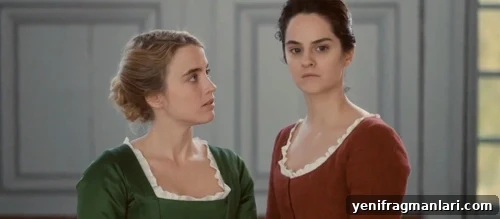
Marianne, more prone to melancholy and foresight than Héloïse, wrestles with the knowledge that she is painting the woman she loves for another man. Héloïse refuses to accept distance or resignation: she makes it plain that Marianne’s feelings are reciprocated, that the mirror between them returns the same look, the same longing.
4. Vivaldi
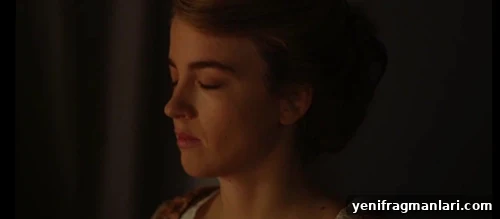
The film offers two quiet endings, both showing Marianne observing Héloïse from a distance. In the final sequence Héloïse sits in a public space, deeply moved as she listens to Vivaldi’s Four Seasons. Through her expressions—grief, memory, a private joy—Adèle Haenel conveys a life forever marked by love and the small, sustaining consolation of memory.
3. The Lady on Fire
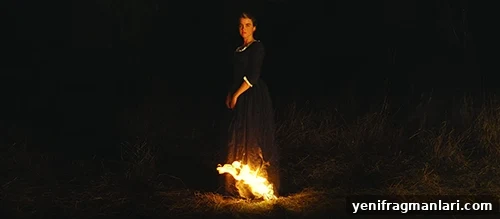
At a community bonfire, a women’s choir begins in discord and, at the last moment, resolves into harmony. The scene celebrates women’s creativity—Sophie embroiders, Marianne paints, Héloïse reflects—and the sudden joy of shared music. Héloïse, lost in the moment, catches fire when her dress ignites. The image becomes literal and metaphorical: she is the woman who can inspire and consume, forever burned into Marianne’s imagination.
2. Painting the Abortion
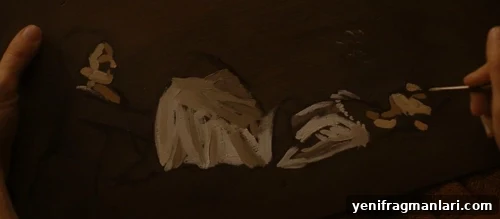
The film insists on the importance of women’s experiences that history has often ignored. Sophie’s abortion is treated as a subject worthy of attention and artistic documentation. The three women silently decide to recreate and record that intimate moment. The scene is understated yet radically humane: they honor one another by witnessing and preserving a shared truth.
1. Page 28
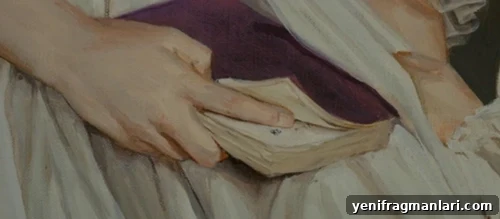
In a later scene Marianne sees a portrait of Héloïse displayed at an exhibition under Marianne’s father’s name. Héloïse appears with a child, but the quieter revelation is the book she holds open to page 28—the page where Marianne’s nude self-portrait appears, drawn during the height of their affair. The gesture is precisely rendered: a private sign that Héloïse still remembers, still keeps a piece of Marianne with her. It is a moment of longing, tenderness, and melancholy.
Portrait of a Lady on Fire offers many fleeting, deeply felt moments; choosing ten of them can never capture the film’s full emotional range. Which scenes stayed with you—romantic, devastating, or quietly revelatory? Share your thoughts and memories of the film and revisit these moments that celebrate women’s creativity, feeling, and mutual recognition.